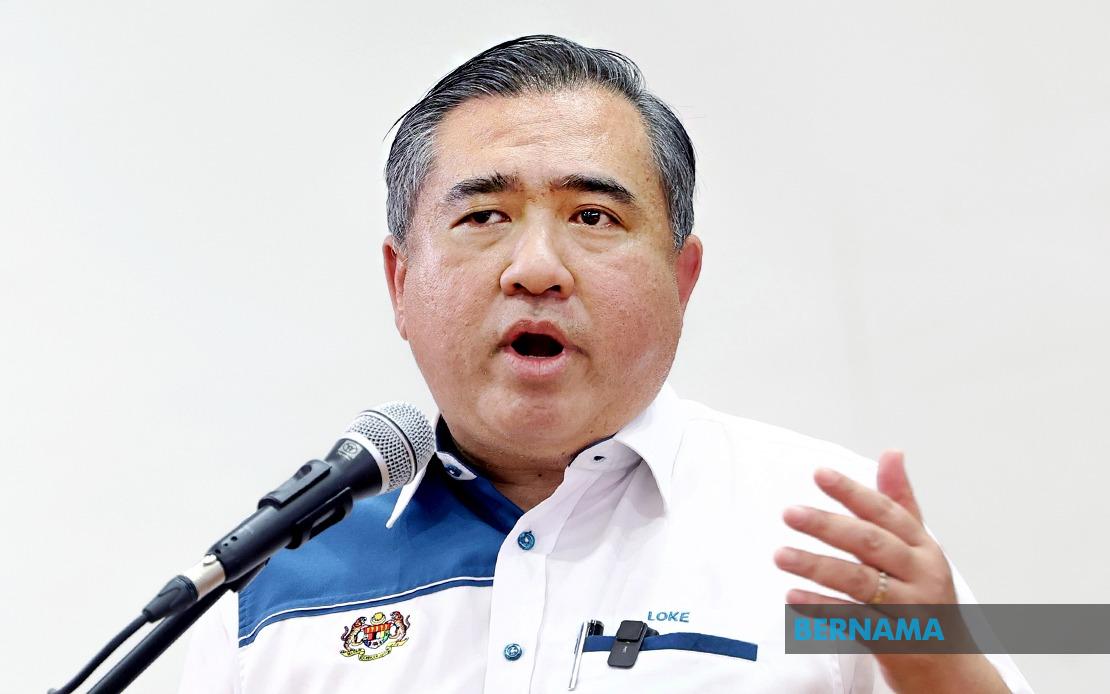
Transport Minister Anthony Loke has directed the Road Transport Department to issue summonses against individuals found riding motorcycles without helmets during the Johor state election campaign, following evidence gathered from viral social media videos. The enforcement action represents the ministry's commitment to maintaining consistent road safety standards across the election period, regardless of which political party the riders represent or support.
The decision comes after footage emerged of campaign workers—including those from the Democratic Action Party—engaged in motorcade activity without proper helmet use during the ongoing state polls. Rather than treating this as an isolated incident involving opposition figures, Loke framed the matter as a broader issue of public responsibility and rule of law application that transcends partisan boundaries.
In his statement released through the Transport Ministry, Loke emphasised that his position on this issue has remained unchanged over several years. He recalled raising the same safety concerns during the Slim by-election campaign nearly six years ago, when the focus was on Barisan Nasional leaders engaged in similar conduct. His consistent messaging underscores a principle he considers fundamental: motorcycle campaigning is permissible under Malaysian electoral practice, but helmet use is non-negotiable.
What distinguishes this announcement is Loke's explicit willingness to enforce the law against members of his own coalition and party. As both Transport Minister and DAP secretary-general, he occupies a position where political loyalty could theoretically conflict with ministerial responsibilities. By openly stating that he would not spare even his own campaign colleagues from summonses, Loke attempted to signal genuine commitment to impartial law enforcement rather than selective application based on political convenience.
The minister's framing reflects a wider tension in Malaysian politics between campaign enthusiasm and regulatory compliance. Election periods often generate energy and spontaneity among party workers and supporters, sometimes at the expense of routine safety standards. Helmets, dust masks, and other protective equipment can seem like bureaucratic inconveniences in the heat of door-to-door canvassing and convoy rallies. Yet Loke's stance suggests that normalising unsafe behaviour during campaigns risks undermining road safety culture more broadly.
The Road Transport Department's involvement adds enforcement credibility to what might otherwise be perceived as a rhetorical commitment. JPJ wields genuine authority to issue summonses and collect fines, making this directive more substantive than mere public statements. The use of viral video evidence as the trigger for investigation demonstrates how social media scrutiny has become integrated into regulatory oversight in contemporary Malaysia, even within traditional enforcement agencies.
For Malaysian voters and road users, this development has practical implications. During election periods, campaign convoys and motorcades become highly visible elements of the political landscape, particularly in states like Johor where motorcycles serve as primary transport for many residents. If enforcement genuinely proceeds as announced, it may gradually shift campaign culture toward greater safety compliance. Alternatively, if enforcement proves selective or inconsistent, it could reinforce public cynicism about law application in Malaysian politics.
The announcement also carries implications for how other ministries and departments handle rule enforcement during politically sensitive periods. If Loke's principle—that law supersedes partisan interest—becomes operational practice rather than mere rhetoric, it could establish a valuable precedent. Conversely, any apparent leniency toward specific political actors would quickly undermine the credibility of such statements.
From a Southeast Asian perspective, Malaysia's experience navigates a challenge common across the region: balancing electoral expression and participation with regulatory frameworks designed to protect public safety. Countries throughout Southeast Asia face similar questions about how to manage campaign activity without constraining political engagement, while maintaining standards that protect both campaign participants and the general public.
Loke's stance also reflects broader patterns within DAP and the Pakatan Harapan coalition regarding governance standards and public accountability. The party has positioned itself as focused on institutional integrity and rule of law principles, distinguishing itself from rivals on these grounds. Demonstrating willingness to enforce standards against one's own supporters becomes rhetorically important for maintaining credibility around such claims.
Moving forward, attention will focus on whether JPJ's enforcement actually materialises and whether it remains consistent across political actors throughout the Johor campaign period. Monitoring how many summonses are issued, to which parties they target, and whether the Transport Ministry publicly reports on enforcement outcomes will indicate the genuine substance behind this announcement. Road safety compliance may ultimately prove less controversial than political inconsistency in enforcement.

