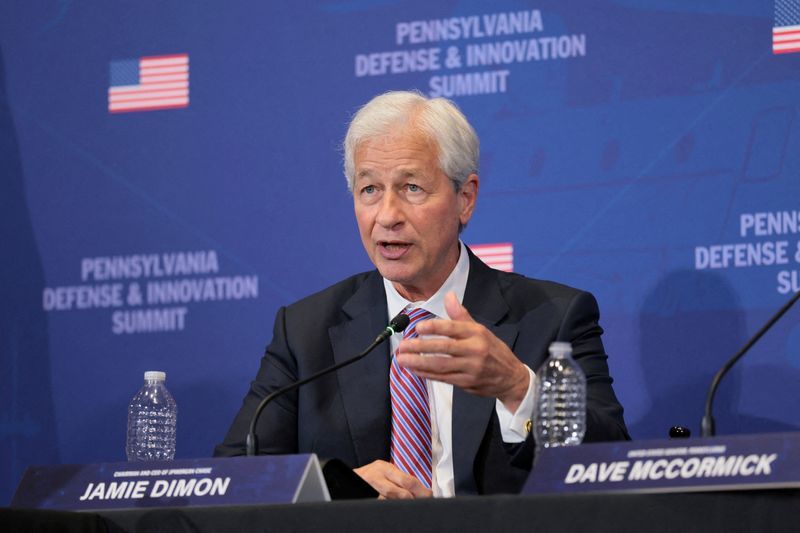
Jamie Dimon, chief executive of the United States' largest banking institution JPMorgan Chase, is rallying corporate leaders from across multiple industries to join a coordinated response to the mounting risks posed by artificial intelligence deployment. The initiative, which expanded from the Alliance for Critical Infrastructure in recent weeks, reflects growing alarm among the American business establishment about the potential vulnerabilities created as enterprises accelerate their adoption of advanced AI systems. Dimon has personally contacted executives at major banks, regional financial institutions, and technology companies to recruit participants in what promises to become one of the most significant cross-sector collaborative efforts on AI governance.
The participation roster spans sectors fundamental to modern economic functioning. Financial services firms sit alongside energy providers, water utilities, telecommunications operators, airlines, and railroad companies—each representing sectors whose disruption could have cascading consequences throughout the economy and for everyday American life. With the outreach effort that began in July now encompassing more than 40 corporations, this coalition represents unprecedented coordination among industries typically competing fiercely with one another. The Alliance for Critical Infrastructure, which JPMorgan co-founded alongside Mastercard and Berkshire Hathaway Energy, provides the institutional framework for this expanded mission, having originally been designed to enable cross-sector coordination on resilience planning and threat response.
The stated objectives of the renewed initiative centre on developing a comprehensive shared understanding of how organisations across sectors are implementing artificial intelligence, what specific risks this technology introduces to their operations, and which safeguards prove most effective. Equally important is establishing formal channels for information sharing when vulnerabilities emerge. The collaboration explicitly intends to engage the Trump administration as it develops policy approaches to AI governance. Recent cybersecurity incidents targeting water systems in Minnesota and neighbouring states have underscored the urgency of strengthened coordination, as attackers increasingly target infrastructure systems that depend on interconnected digital networks.
Dimon's leadership of this effort carries particular significance given his outsized influence on Wall Street and beyond. As head of America's dominant financial institution, his public statements on economic conditions, regulatory matters, and technological transformation command attention from policymakers, investors, and corporate boards. Unlike many technology executives who publicly embrace artificial intelligence's transformative potential, Dimon has belonged to a smaller, cautious cohort of business leaders willing to articulate substantive concerns about advanced AI systems. His visibility on these issues has positioned him as a credible voice in conversations about balancing innovation with prudent risk management.
Dimon's previous warnings about artificial intelligence have been characteristically direct. In July, he expressed alarm about Anthropic's advanced AI capabilities, employing a striking metaphor to convey the stakes: equipping individuals with access to cutting-edge AI models, he suggested, amounted to "giving ballistic missiles to individuals." These comments underscore a central concern animating the new collaborative effort—that unrestricted access to increasingly powerful AI systems could enable malicious actors to inflict extraordinary damage on vulnerable infrastructure. This perspective contrasts with those in the technology sector who emphasise the democratising benefits of AI accessibility.
The infrastructure sectors targeted for participation face particular exposure to AI-related risks. Financial institutions must protect systems handling trillions in daily transactions. Energy companies operate networks whose disruption would cascade across multiple industries. Water utilities safeguard systems upon which public health depends. Telecommunications providers maintain the digital backbone connecting all other sectors. Airlines and railroads move millions of passengers and freight. Each operates with minimal margin for error, making them attractive targets for actors seeking maximum disruption. When sophisticated artificial intelligence systems become available to potential attackers, these sector vulnerabilities multiply exponentially.
The organisational structure under development seeks to convert the Alliance for Critical Infrastructure into an operational forum for both reactive and proactive threat management. Rather than serving merely as a discussion platform, the revamped ACI would function as a genuine intelligence-sharing mechanism enabling participating companies to alert one another to emerging vulnerabilities discovered by advanced AI systems. This information-sharing function, coordinated with federal agencies, could enable organisations to implement defensive measures before weaknesses are widely exploited. One source familiar with the initiative indicated that organisers aim to have the expanded effort fully operational by the conclusion of 2024.
The federal government has begun its own coordinated response to proliferating AI risks. The Gold Eagle initiative, launched in July, assembles representatives from AI development companies, operators of critical infrastructure, and relevant federal agencies to exchange information about vulnerabilities uncovered by sophisticated AI models and to synchronise remediation efforts. This governmental initiative complements the private-sector effort led by Dimon, creating multiple channels through which emerging threats can be identified and addressed. The parallel tracks suggest recognition across both public and private sectors that traditional cybersecurity approaches require fundamental augmentation to address AI-specific risks.
For Malaysian and Southeast Asian stakeholders, these developments carry important implications despite originating in the American context. As global capital flows increasingly concentrate investment in artificial intelligence infrastructure and deployment, risks emerging in American critical systems eventually manifest in connected regional networks. Malaysian financial institutions, energy providers, and telecommunications companies maintain extensive operational and technological linkages with American counterparts. Moreover, the governance frameworks that American corporations and regulators develop tend to influence international standards, regulatory thinking, and corporate best practices.
The collaborative model Dimon is advocating suggests a particular approach to AI governance—one emphasising industry self-regulation and information sharing rather than heavy-handed governmental mandates. This framework contrasts with regulatory approaches being developed elsewhere, including more prescriptive models emerging in Europe and Asia. The success or failure of this American cross-sector initiative may influence whether regional governments adopt similar collaborative approaches or pursue more regulatory routes. For Malaysian policymakers overseeing financial services, critical infrastructure, and technology sectors, the outcomes of this effort warrant close observation.
The timing of this initiative reflects the accelerating pace of AI advancement and deployment. Each month brings new demonstrations of artificial intelligence capabilities that previously seemed years away. This acceleration has compressed the window available for developing governance frameworks, protective standards, and information-sharing mechanisms before widespread deployment creates irreversible systemic vulnerabilities. Dimon's personal involvement signals that he views these risks as sufficiently material to warrant executive attention—a signal that likely carries weight with other corporate leaders considering participation.
The initiative also reflects tension between innovation incentives and prudent risk management that permeates discussions of emerging technologies globally. Companies cannot afford to ignore artificial intelligence, as competitors who integrate these tools gain significant operational advantages. Yet unconstrained AI deployment by some actors could create systemic risks affecting all market participants. The cross-industry collaboration Dimon is driving represents an attempt to navigate this tension—enabling innovation while establishing guardrails that prevent the worst potential outcomes. Whether such voluntary frameworks prove sufficient remains an open question that will shape technological governance for years ahead.

