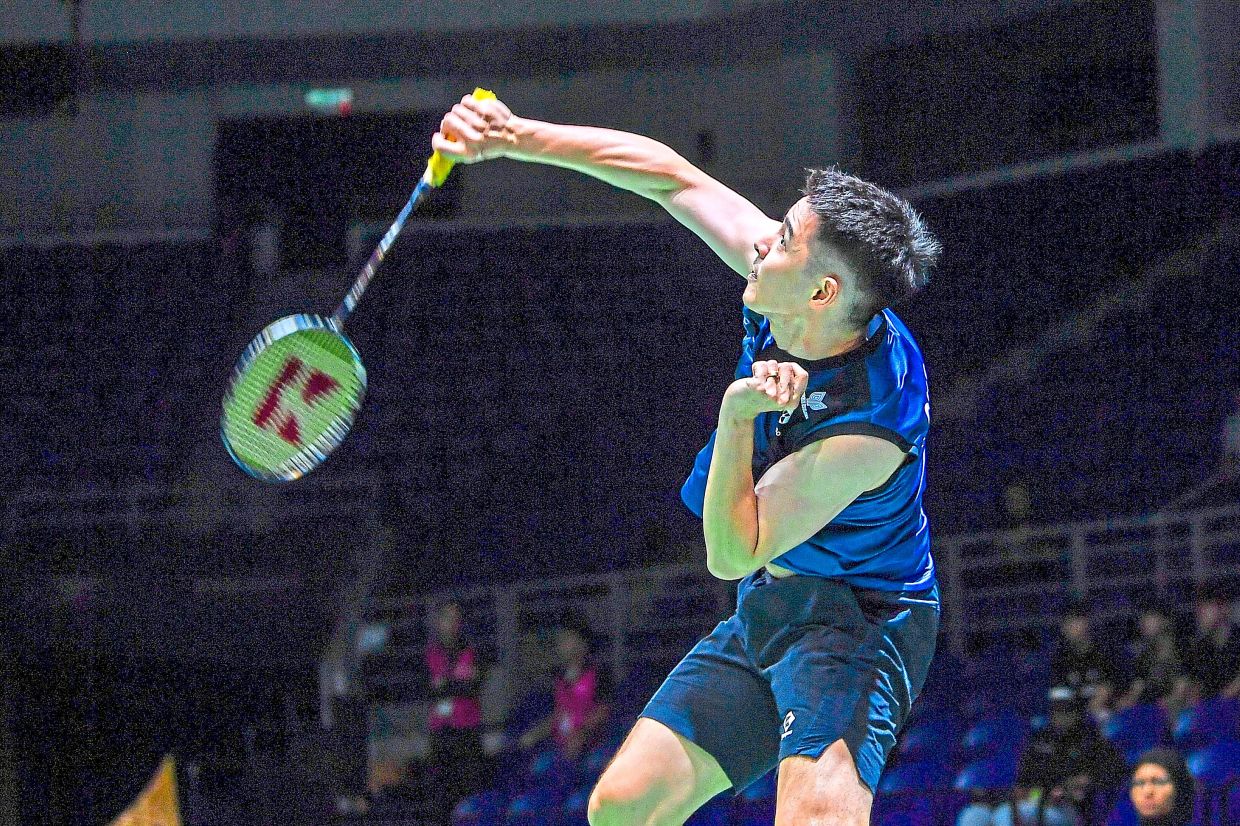
Malaysian shuttler Cheam June Wei maintained his breakthrough form at the Korean Masters by ousting Taiwan's Su Li-yang in a gripping quarter-final contest, securing his passage to the semi-finals on Friday at the Asan Yi Sun-sin Gymnasium in what marks an increasingly impressive showing for the independent player.
June Wei's three-set victory—achieved with a scoreline of 23-21, 10-21, 21-18—extends a tournament narrative that has captured attention across the badminton circuit. The Malaysian produced composed tennis-like tactical exchanges against Li-yang, the seventh seed, demonstrating the kind of maturity and tactical flexibility that separates occasional tournament performers from genuine contenders.
In post-match comments, June Wei reflected on his unexpected progression with characteristic humility, noting that reaching the semi-finals had not been part of his pre-tournament calculations. His remarks centred on the quality of rallies he had endured, suggesting that the physical and mental demands of the quarter-final had tested him thoroughly. The emphasis on point-by-point focus reveals the mental framework that has allowed him to navigate increasingly difficult opposition, a discipline that often distinguishes players who can sustain success from those who enjoy isolated upsets.
The context of June Wei's run becomes more remarkable when examined against the calibre of opponents already dispatched. His opening-round elimination of world number 29 Jason Teh signalled that this was no ordinary tournament for the Malaysian, while his subsequent second-round disposal of China's Dong Tianyao, ranked 49th globally, suggested that his quarter-final appearance was built on substance rather than fortunate seedings.
Malaysia's men's doubles contingent delivered further cause for celebration, with Man Wei Chong and Soh Wooi Yik advancing through their quarter-final against India's Krishna Prasad Garaga and Pruthvi Krishnamurthy Roy with commanding efficiency. The 21-7, 21-8 victory demonstrates the kind of dominant performance that suggests deeper tournament potential, though opponents ranked outside the world's elite often struggle against the intense pace of Malaysian doubles combinations.
An all-Malaysian quarter-final in the doubles saw Tee Kai Wun and Yap Roy King emerge victorious against Aaron Chia and Aaron Tai, prevailing 21-12, 21-15 in a contest that offered no surprises despite the family-like connections within Malaysia's badminton ecosystem. Such domestic matches, while necessary for tournament progression, rarely provide the competitive intensity that generates lasting momentum.
The mixed doubles category proved less forgiving for Malaysian combinations, with all three pairings eliminated at the quarter-final stage in what reflects broader competitive imbalances in the mixed format. Jimmy Wong and Cheng Su Yin fell to South Korea's second seeds Kim Jae-hyeon and Jang Ha-jeong, managing only 17-21, 18-21 in a match that suggested seeding disparities proved decisive.
The partnership of Loo Bing Kun and Noraqilah Maisarah Ramdan encountered similarly stiff resistance from China's third-seeded Gao Jiaxuan and Wu Mengying, with their 14-21, 15-21 defeat indicating that the top Chinese combinations retain clear technical advantages in the mixed discipline. Chen Tang Jie and Clarissa San's loss to Japan's Haruki Kawabe and Kokona Ishikawa, decided 20-22, 17-21, rounded out a mixed doubles showing that suggests Malaysian strength remains concentrated in singles and men's doubles categories.
The mixed doubles struggles deserve particular scrutiny given Malaysia's historical emphasis on developing competitive pairings across all disciplines. While the individual eliminations carry conventional disappointment, they highlight a broader strategic consideration: resource allocation within badminton programmes often reflects investment patterns that prioritise proven strengths, leaving emerging mixed doubles talents operating at competitive disadvantage against better-resourced national programmes.
June Wei's semi-final berth nonetheless represents a significant narrative achievement for Malaysian badminton, particularly given his independent status. The absence of comprehensive national support infrastructure means that victories against seeded opponents carry additional significance, suggesting either personal technical refinement or fortunate matchups that aligned with his playing strengths. His ability to sustain concentration through demanding three-set encounters implies a maturity that could translate into future tournament performances, though the transition from semi-final positions to championship victories remains the ultimate measure of genuine breakthrough.
The Korean Masters, while not commanding the ranking prestige of Super 1000 events, provides meaningful data points within the Asian circuit for Malaysian shuttlers navigating the perpetual challenge of competing against better-resourced Chinese and Indonesian programmes. June Wei's progression offers encouragement regarding untapped talent pools within the Malaysian system, while the mixed doubles exits confirm familiar patterns regarding the sport's competitive hierarchies within the region.

