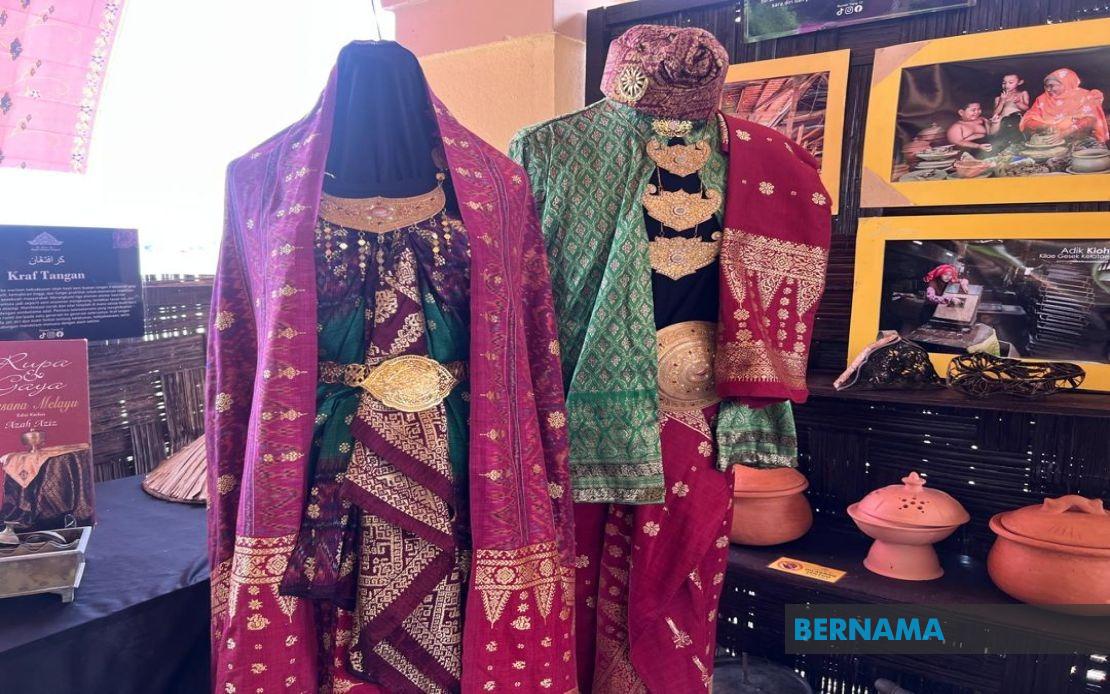
Malaysia's most refined traditional textile, Kain Lima, stands at a critical juncture as the number of master weavers continues to diminish, threatening the survival of a centuries-old craft that once adorned nobility and remains a symbol of cultural sophistication. The alarm over this impending loss has prompted cultural institutions and heritage enthusiasts across the nation to intensify preservation efforts, particularly through public exhibitions and educational initiatives designed to rekindle interest in the craft among younger generations.
Unlike the more widely recognised songket, Kain Lima represents a more technically demanding weaving tradition that demands extraordinary precision and artistic vision. The fabric's hallmark involves a complex technique where artisans tie or apply dye to individual threads before weaving them together, creating intricate patterns and distinctive colour-play effects that cannot be replicated through simpler methods. This labour-intensive approach distinguishes Kain Lima fundamentally from other traditional textiles, as it combines multiple coloured threads in carefully orchestrated arrangements to achieve motifs of remarkable fineness and visual depth.
According to Nik Mohd Murdani Nik Hassan, the caretaker at Galeri Rumah Tiang 12 in Kelantan, the production process requires extraordinary attention to detail at every stage. Each motif must be meticulously positioned, with weavers coordinating numerous coloured threads before commencing the actual weaving. This convergence of planning, colour theory, and manual dexterity explains why Kain Lima commands substantially higher prices than conventional fabrics. Contemporary market valuations range between RM3,000 and over RM4,000 per piece, with pricing influenced by factors including age, design complexity, preservation condition, and the finesse evident in the weaving itself.
Historically, Kain Lima occupied an elevated position in Malay material culture, functioning as an unmistakable marker of status and refinement. Royal courts regarded the textile as essential ceremonial wear, incorporated into sarongs, shawls, and formal dress that signified rank and privilege. This historical association with nobility has endowed the fabric with cultural significance that transcends mere economic value, positioning it as a tangible repository of pre-modern Malay aesthetic sensibilities and craftsmanship standards.
The contemporary challenge lies in the disconnect between heritage value and market viability. As younger Malaysians pursue alternative livelihoods and formal education pathways, the transmission of weaving knowledge from master craftspeople to apprentices has fractured. Few young people view textile production as an economically sustainable career, despite the labour intensity and skill requirements that should command premium compensation. This economic reality, combined with the availability of cheaper mass-produced alternatives, has created conditions where traditional knowledge risks being lost entirely within a single generation.
Galeri Rumah Tiang 12 has positioned itself as a counterforce to this decline by assembling private collections of Kain Lima and presenting them publicly. Since Nik Mohd Murdani joined the gallery in 2020, the institution has functioned as an educational resource where visitors can examine authentic examples and understand the technical distinctions separating Kain Lima from songket and other heritage textiles. The gallery model recognises that preservation requires more than archival storage; it demands active public engagement that generates appreciation for the craft's complexity.
The recent Festival Kesenian Rakyat Kelantan in Tok Bali provided a venue for such educational work to reach beyond specialist audiences. Handicraft entrepreneur Nur Anira Akmal Che Abdul Aziz, aged 34 from Pasir Mas, represents the younger cohort attempting to engage meaningfully with traditional textile knowledge. Her attendance at heritage exhibitions reflects a deliberate effort to absorb technical understanding and design principles from classical examples, which she then incorporates into contemporary craft production. Her approach demonstrates that the dichotomy between preservation and innovation need not be absolute; heritage knowledge can inform modern creative practice when cultural institutions facilitate such knowledge transfer.
Craft professionals like Akmal Che Abdul Aziz articulate a motivation centred on cultural identity and local distinctiveness. Each exhibition visit yields specific design insights and reinforces understanding of why heritage preservation matters beyond nostalgia. For working artisans, exposure to traditional textiles functions as both technical education and philosophical reminder that materials and techniques embody cultural values deserving respect and continuation. This perspective suggests that preservation strategies should prioritise connecting heritage knowledge with contemporary craftspeople rather than sequestering textiles in museums.
The Malaysian context adds particular urgency to Kain Lima's predicament. Within Southeast Asia's broader landscape of traditional textiles—from Thai silk to Indonesian batik—Kain Lima occupies a distinctive position as a Malay-specific craft tradition. Its disappearance would represent not merely the loss of a weaving technique but the erasure of a specific cultural knowledge system and aesthetic vocabulary that distinguishes Malay material heritage. Regional organisations and cultural bodies across Southeast Asia have begun recognising that textile traditions embody irreplaceable knowledge about colour, pattern, mathematics, and design philosophy.
The economic dimension of preservation cannot be ignored in discussions about Kain Lima's future. Current market prices suggest genuine demand exists among collectors and those seeking culturally significant ceremonial textiles. However, the supply-side constraints imposed by labour scarcity mean that market forces alone will not sustain the craft. Government support for craft education, subsidies for aspiring weavers during training periods, and mechanisms for linking heritage textile producers with premium market segments might establish conditions where weaving becomes economically rational for new practitioners.
Movement toward preservation has also begun incorporating digital documentation efforts. Recording weaving techniques through video, photographing completed pieces with detailed analysis, and creating accessible databases of motif variations ensure that technical knowledge persists even if active weaving temporarily ceases. Such approaches, while no substitute for living practice, function as insurance against total knowledge loss and provide resources for potential future revival.
The intersection of cultural heritage preservation with economic sustainability remains unresolved in Malaysia's approach to textiles like Kain Lima. The challenge demands coordination among cultural institutions, government agencies, educational bodies, and contemporary craftspeople. Without deliberate intervention to create pathways for knowledge transmission, market incentives for young weavers, and public understanding of the craft's significance, Kain Lima risks joining the category of lost traditions that exist primarily in museum collections and historical records rather than as living practices embedded in contemporary Malaysian culture.

