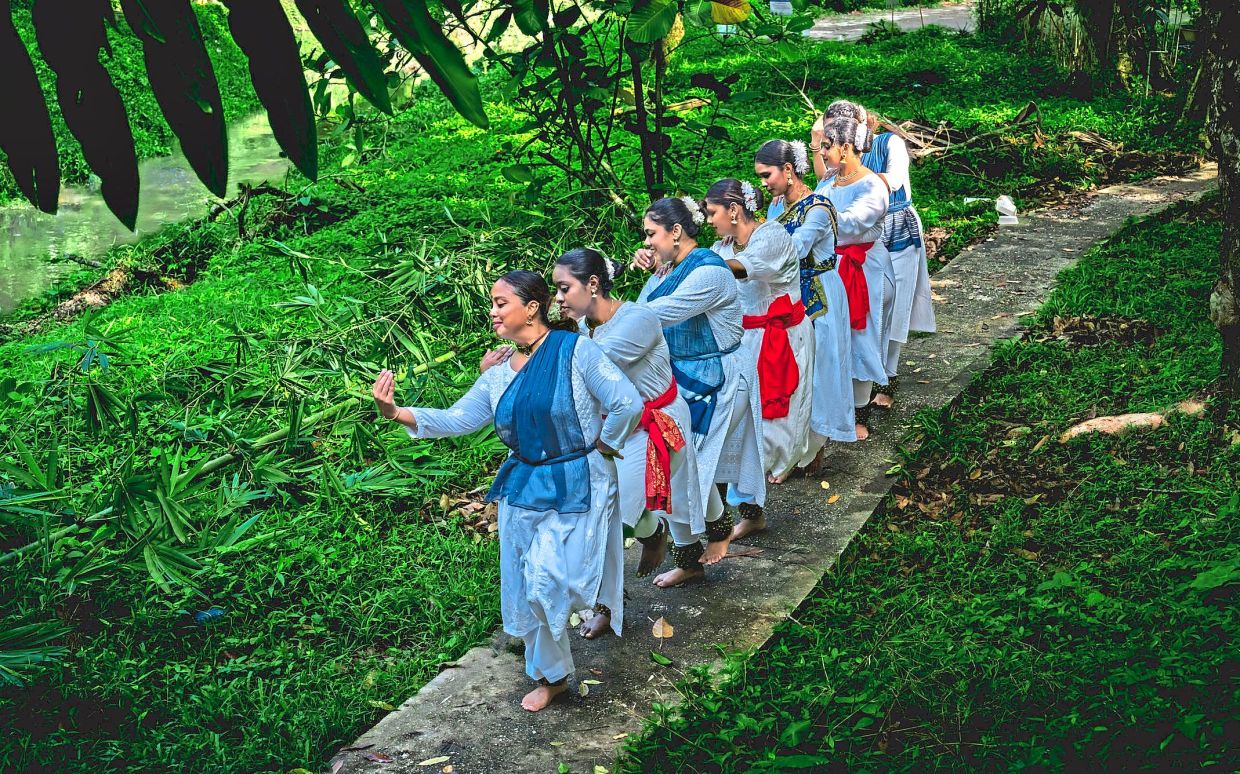
Three decades of creative perseverance has brought Kuala Lumpur's Kalpana Dance Theatre to a defining moment. Like a river carving its own course through landscape, the company has navigated the turbulent waters of Malaysia's arts industry—marked by unpredictable funding and cultural uncertainties—to reach its 30th anniversary this year. Founder-director Shangita Namasivayam is marking this milestone with an ambitious bharatanatyam concert scheduled for August 8 at the Shantanand Auditorium within Temple of Fine Arts, one of Southeast Asia's most respected cultural institutions. The production represents far more than a celebratory retrospective; it signals how contemporary dance practitioners are repositioning classical art forms as vehicles for addressing urgent contemporary crises, particularly environmental degradation.
The concept anchors itself to two of India's most spiritually and economically vital waterways. The Ganga in the north stands as Hinduism's most sacred river, woven into religious practice, mythology and daily life across a subcontinent. The Kaveri in the south, traditionally called the "Ganga of the South," sustains agriculture, hydroelectric power and livelihoods across Tamil Nadu and Karnataka. Both rivers have served as muses for Indian classical and folk traditions for centuries, their waters symbolising purification, fertility and cyclical renewal. Yet Shangita's artistic vision transcends mere aesthetic appreciation of these geographical features. She positions the rivers as metaphorical vessels for examining humanity's relationship with nature itself—the Ganga representing compassion's shore, the Kaveri embodying prosperity's nourishment. Together, she explains, they communicate a singular truth: rivers are not merely hydrological systems but reflections of inner peace and spiritual equilibrium.
This thematic direction emerged from Shangita's conviction that contemporary audiences demand art addressing their lived anxieties. Water scarcity, pollution and ecosystem collapse represent defining challenges for her generation of young dancers, many of whom have grown up in urbanised Southeast Asia disconnected from natural systems. By centring the bharatanatyam production on water's sacred and material dimensions, Shangita intends to awaken her dancers—ranging from six to 62 years old, including performers with disabilities—to their complicity in environmental destruction. She articulates this pedagogical mission clearly: the choreography becomes a vehicle for consciousness-raising, transforming the stage into a space where artistic expression meets ecological responsibility.
Materialising this vision required forging unexpected partnerships beyond the dance community. Kalpana Dance Theatre allied with The Alliance of River Three (ART!), a volunteer-driven environmental organisation founded in 2018 by Kennedy Michael. Operating as a grassroots movement rather than institutional behemoth, ART! has mobilised Malaysians around the urgent task of rehabilitating the Klang River through community-constructed River Three Parks, weekly cleanup operations and long-term ecosystem restoration strategies. The organisation's credentials carry weight: it received recognition as a winner of The Star Golden Hearts Awards in 2020, cementing its status as a serious environmental actor. Since January, Shangita's dancers have participated directly in cleanup activities at Taman Melawati River Three SDG Park and Mid Valley River Three SDG Park, both targeted for completion within the UN Sustainable Development Goals timeframe of 2030. This ground-level engagement transforms abstract environmental awareness into embodied experience—young dancers gaining visceral understanding of pollution's human costs through manual labour alongside artistic practice.
The production itself represents an extraordinary logistical and artistic achievement. Fifty-four dancers will move across the stage in a ninety-minute thematic narrative performed in Tamil with English narration, deliberately rejecting the soloist hierarchy traditional to many classical dance productions. Instead, every performer—regardless of age or ability—receives substantive choreographic material, embodying an ethos of inclusive participation. The script, developed through extensive collaboration with Chennai-based practitioners, weaves together poetic language and philosophical inquiry. Choreographer PT Narendran, musician OS Arun and scriptwriter Dr Va Ve Subramanian represent Shangita's decades-long creative partnerships, relationships characterised by artistic comfort and shared aesthetic vision. Their collective expertise ensures the production achieves technical sophistication while maintaining thematic coherence.
The musical dimension involves thirty instrumentalists, though logistical constraints prevent the entire ensemble's physical presence in Malaysia. Rather than compromise artistic standards, Shangita has strategically engaged international master artistes to work with Malaysian dancers during rehearsals and performances. This model creates pedagogical value beyond the immediate production. Young Malaysian dancers gain exposure to world-class practitioners who embody different technical approaches and philosophical frameworks within bharatanatyam's vast traditional universe. These mentorships cultivate sensibilities that transcend mechanical technical proficiency; they develop dancers into thoughtful practitioners capable of understanding bharatanatyam as a living, evolving form rather than frozen historical artefact. For Southeast Asian dancers particularly, such international exposure remains relatively rare and invaluable in a region where classical Indian dance exists within a complex postcolonial cultural landscape.
Shangita's determination to realise this ambitious production despite formidable constraints—particularly chronic funding inadequacy—reveals the precarious position artists occupy within Malaysia's cultural economy. She articulates the fundamental tension clearly: performing arts education cannot remain confined to classroom instruction; students must experience the transformative pressure of public performance, where technique must merge with presence, training must crystallise into artistry. Yet staging such experiences demands resources perpetually in shortage. Malaysian arts funding structures, reliant on corporate sponsorship and government grants of variable reliability, place extraordinary burdens on individual artists to manifest their visions through sheer willpower and resourcefulness. Shangita's ability to persist despite these systemic limitations speaks to the profound commitment required to sustain artistic practice in the region.
The environmental framing of this production carries particular resonance for Malaysian audiences. The nation confronts serious water challenges: the Klang River's ecological degradation reflects broader patterns of industrial pollution, inadequate waste management and urban sprawl consuming natural systems at accelerating rates. Kuala Lumpur and surrounding areas experience periodic water supply disruptions, droughts intensifying as climate patterns destabilise. Young Malaysians growing up in this context need cultural narratives that help them conceptualise their place within ecological systems, that demonstrate how inherited artistic traditions can illuminate contemporary crises. Kalpana Dance Theatre's August performance offers precisely such a narrative—connecting ancient spiritual wisdom about rivers to urgent present-day environmental activism, demonstrating that classical arts practice and ecological consciousness represent complementary rather than competing commitments.
The partnership between Kalpana Dance Theatre and ART! also illustrates how Malaysian civil society increasingly functions through cross-sector collaboration. Environmental organisations recognise that behaviour change requires emotional engagement and cultural meaning-making, capacities arts practitioners possess. Simultaneously, artists recognise that their work gains deepened purpose and audience relevance when connected to tangible community struggles. This symbiotic relationship suggests emerging models for arts sustainability in Southeast Asia—where cultural production becomes explicitly woven into social movements rather than cordoned off as separate sphere. The young dancers gaining firsthand experience of river cleanup alongside rehearsals embody this integration. They learn that artistic development and environmental stewardship constitute aspects of a unified commitment to building more liveable communities.
Looking forward, this production may catalyse broader conversation about how Malaysian cultural institutions position themselves relative to environmental crisis. Classical art forms imported or adapted from South Asian traditions—bharatanatyam, kathak, odissi—remain somewhat marginalised within Malaysia's majority-Muslim cultural framework despite significant Tamil and Indian diasporic communities. Yet these forms possess extraordinary capacity for meaningfulness, for encoding complex ideas about nature, divinity and human responsibility. If Kalpana Dance Theatre's environmental approach gains traction, it could inspire other classical dance practitioners, musicians and theatre artists to similarly locate their work within pressing contemporary questions. Such reorientation would strengthen these art forms' institutional sustainability while simultaneously enriching Malaysian public discourse about environmental futures.
Shangita's vision for her company's milestone production ultimately transcends celebration. The August 8 performance represents a declaration that classical arts practice remains vital not as heritage museum piece but as living methodology for awakening consciousness and mobilising communities toward transformation. By enlisting bharatanatyam's aesthetic power in service of environmental restoration, by positioning young dancers as ecological agents, by forging partnerships that integrate artistic development with grassroots activism, Kalpana Dance Theatre demonstrates that arts institutions can be laboratories for imagining different futures. In a region confronting environmental emergency with insufficient urgency, such artistic interventions may prove as essential as policy reform or technological innovation.

