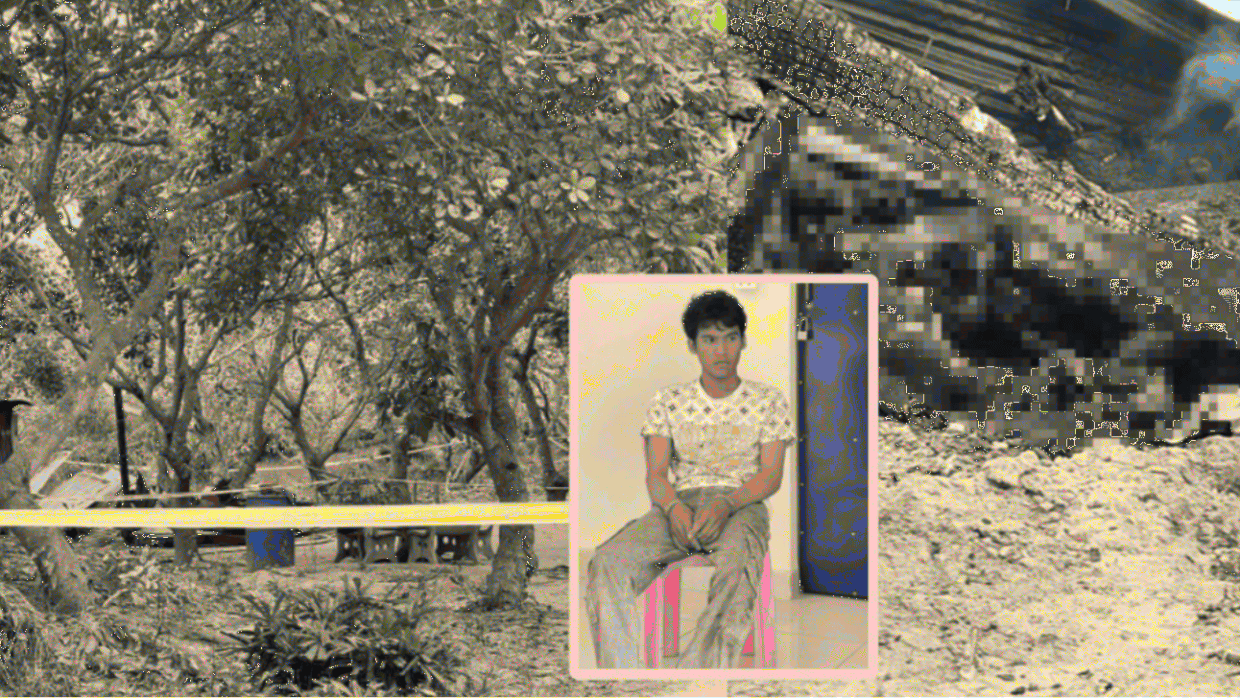
A Kampong Cham Provincial Court has imposed the maximum penalty of life imprisonment on Soben Minea, born September 1, 2005, for the systematic murder of nine family members in one of Cambodia's most shocking domestic crimes. The verdict, delivered on July 30, found the defendant guilty of both murder and premeditated homicide following a brutal November 2025 incident in Tuol Sambuor village, Stueng Trang district, that has renewed concerns about family violence and community safety across the region.
The court's judgment details a horrifying sequence of events on November 23, 2025, when Minea carried out attacks that combined extreme violence with calculated planning. Court documents indicate that he decapitated one family member in a frenzied attack before deliberately torching a residential dwelling, trapping eight relatives who were asleep inside and perishing in the flames. The deliberate use of fire as a killing mechanism—preventing escape and ensuring multiple fatalities—underscores the premeditated nature of the crimes and distinguishes this case from spontaneous domestic altercations.
Beyond the custodial sentence, the Kampong Cham court has ordered Minea to compensate surviving civil plaintiffs with US$20,000 in moral damages, acknowledging the profound psychological and financial toll on those left behind. However, legal observers have questioned the enforceability of this penalty, with uncertainty surrounding whether the defendant possesses any assets or income capacity to satisfy the judgment. This gap between judicial remedy and practical restitution mirrors broader challenges in Cambodia's civil compensation framework, particularly in cases involving impoverished defendants or those incarcerated long-term.
Investigations revealed that Minea harboured deep-seated animosity toward his wife, stemming from an extended pattern of domestic discord and marital breakdown. During police questioning, he admitted to deliberately targeting his mother-in-law, spouse, brother-in-law, and several younger relatives, suggesting that the attack was neither spontaneous nor confined to a single grievance but rather an act of systematic elimination of those he blamed for his personal dissatisfaction. This calculated targeting within the family unit indicates psychological motivation extending beyond mere passion or temporary rage.
The case has illuminated persistent vulnerabilities within Cambodian households, where domestic disputes frequently escalate without intervention mechanisms in rural areas. Kampong Cham province, situated along the Mekong River corridor, hosts substantial rural communities where traditional conflict resolution sometimes supersedes formal dispute channels, and social services remain sparse. The geographic location of the murders in Tuol Sambuor village, a densely populated settlement in Stueng Trang district, suggests that community isolation or limited emergency response capacity may have contributed to the tragedy's scale.
For Southeast Asian observers monitoring human rights and social welfare developments, this incident underscores a troubling phenomenon whereby domestic violence escalates without adequate early-warning systems or crisis intervention infrastructure. Malaysia and other neighbouring nations have similarly grappled with family violence cases, though the lethal intensity of this Kampong Cham incident—nine deaths in a single night—ranks among the region's deadliest known family-related mass casualties. Thai and Vietnamese courts have encountered comparable cases, often linked to mental health crises, substance abuse, or severe financial strain combined with relationship breakdown.
The severity of Minea's crimes and the court's maximum sentencing reflect Cambodian judicial determination to impose deterrent penalties for familial homicide. Life imprisonment without explicit parole eligibility provisions means Minea will likely spend decades in a Cambodian correctional facility, where conditions have drawn international scrutiny regarding inmate welfare and rehabilitation potential. Whether the sentence serves rehabilitative purposes or functions primarily as retributive punishment remains debated within Cambodian legal circles, particularly given the defendant's young age at conviction and the profound mental state deterioration required to commit such acts.
The verdict also raises questions about pre-crime detection and community responsibility within village structures. Neighbours, extended family members, or local authorities may have observed warning signs—violence, threats, or psychological instability—preceding the November incident. The absence of documented intervention attempts suggests either inadequate awareness-raising regarding domestic violence warning indicators or reluctance within traditional communities to report family disputes to authorities, a cultural barrier common across rural Southeast Asia.
Cambodia's judicial response demonstrates commitment to prosecuting extreme family violence through its domestic courts, yet systemic gaps remain in victim support, survivor trauma counselling, and perpetrator mental health evaluation. The US$20,000 damages award, while symbolically significant, cannot restore nine lives or repair the devastation experienced by remaining family members who witnessed the destruction and survive the psychological aftermath.
Moving forward, this case may catalyse broader discussion within Cambodia regarding domestic violence prevention frameworks, family counselling accessibility, and community education programs—particularly in provinces like Kampong Cham where rural demographics and limited service infrastructure intersect. Regional governments, including Malaysia's, may examine whether their own early-intervention protocols, shelter systems, and mental health resources adequately address escalating domestic disputes before catastrophic violence occurs, ensuring that such incidents remain exceptional rather than symptomatic of systemic failure.

