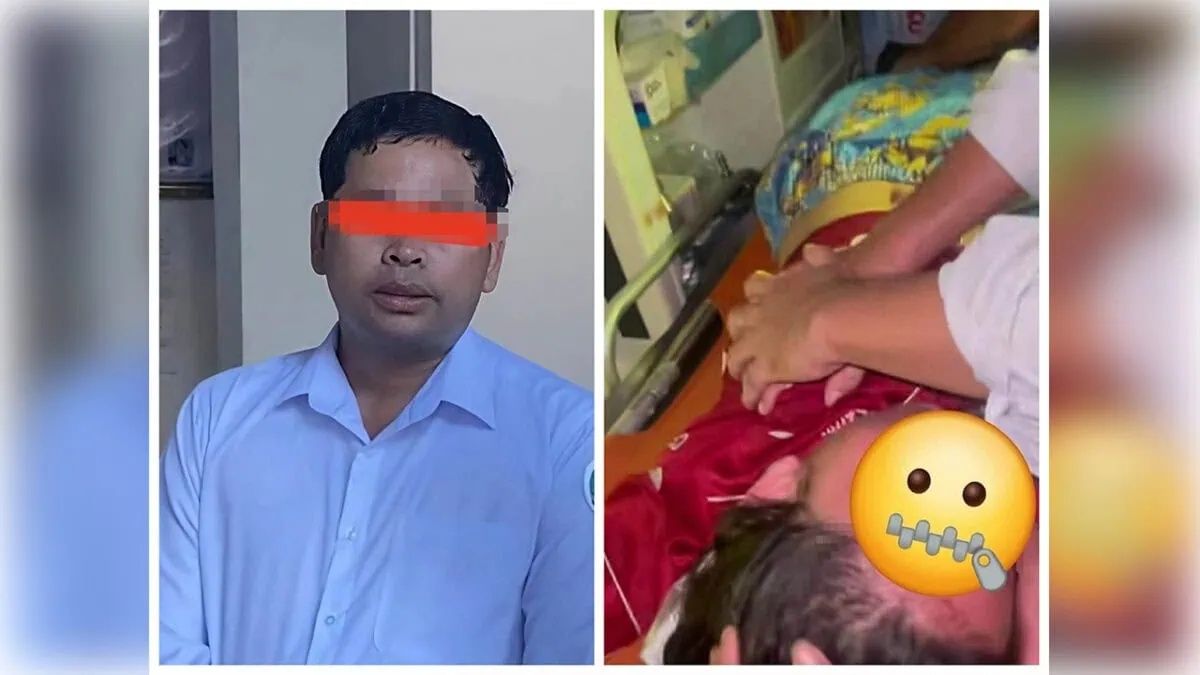
The head of a provincial health facility in Cambodia has been stripped of his leadership role following widespread social media backlash over a video documenting emergency medical care. Kandal provincial governor Kuoch Chamroeun issued an administrative order on Tuesday removing Chhun Phally from his position as chief of Setbo Health Centre, reassigning him instead to work as a health official under provincial administration. The order became effective immediately, marking a swift response to mounting public pressure that erupted after footage of the incident circulated across social media platforms.
The controversy centres on Phally's handling of a 17-year-old patient who arrived at the facility experiencing seizures and severe respiratory distress. A family member recorded the treatment process to relay information to other relatives about the girl's medical condition, but the video subsequently spread widely online, triggering extensive debate and criticism. Many social media commentators alleged that the manner of treatment constituted harassment and violated the patient's fundamental rights to dignity and privacy. Others raised questions about whether the medical response followed established clinical protocols and best practices for emergency resuscitation.
While Chamroeun's administrative order did not explicitly state grounds for Phally's reassignment, the timing and nature of the decision clearly reflect the political and public pressure mounted through digital channels. The governor's office appears to have determined that removing Phally from his senior position was necessary to contain reputational damage to the provincial health administration. The speed of the action demonstrates how viral social media campaigns can now force rapid governmental responses in Southeast Asia, particularly when issues involve perceived violations of patient welfare or professional conduct.
The Kandal provincial health department has launched a formal investigation to establish whether medical procedures conformed to professional standards and whether misconduct occurred. Kiem Piseth, the acting provincial health director, outlined the investigative scope in statements to media, indicating that authorities would examine both procedural compliance and potential wrongdoing. Piseth made clear that the investigation's scope extends beyond administrative remedies, suggesting that legal consequences could follow if findings substantiate allegations of sexual harassment or other misconduct.
In response to the public outcry, Phally issued a statement expressing regret and defending his intentions. He acknowledged that his actions during the emergency response may have generated misunderstanding and apologised to both the general public and the patient's family. However, he maintained that his conduct was motivated solely by the need to preserve the patient's life during a critical medical situation. Phally explicitly denied any intention to sexually harass or behave inappropriately toward the teenager, framing the episode as a good-faith emergency intervention that became misinterpreted through the lens of a decontextualised video.
This incident exposes significant tensions within Cambodia's healthcare system regarding professional standards, patient protection, and the role of social media accountability. Healthcare workers operating in resource-constrained environments, particularly in provincial settings, often face competing pressures between delivering rapid emergency care and adhering to formal protocols around patient dignity and documentation. The episode illustrates how digital platforms can rapidly amplify concerns about professional conduct, sometimes creating situations where the context of emergency medicine becomes secondary to perceptions of impropriety based on video footage alone.
The case also raises broader questions about training and oversight within Cambodia's medical sector. Many observers have called for strengthened institutional safeguards that simultaneously protect patient dignity and privacy while ensuring healthcare personnel receive adequate instruction in emergency procedures. Rural and provincial health centres operate with limited resources and personnel compared to urban facilities, potentially affecting both the quality of medical response and the capacity to maintain formal procedural standards. This structural reality complicates efforts to impose uniform professional standards across Cambodia's geographically dispersed healthcare infrastructure.
The incident resonates with broader Southeast Asian concerns about patient rights and healthcare system accountability. As social media penetration increases across the region, medical professionals face greater exposure to public scrutiny. Healthcare systems must navigate the challenge of empowering communities to hold providers accountable while protecting practitioners who work under genuine resource constraints and emergency pressures. Cambodia, alongside other developing nations in the region, continues grappling with how to modernise healthcare governance in an era of digital transparency.
The investigation's outcome remains pending, with authorities having made no announcement regarding final findings or whether additional disciplinary or legal measures will be pursued. This extended timeline suggests the complexity of determining appropriate responses when allegations involve both potential procedural violations and conduct that may have crossed professional boundaries. The case will likely influence how other provincial administrators respond to similar situations, and may prompt broader discussions about professional standards training and patient protection mechanisms across Cambodia's health sector.

