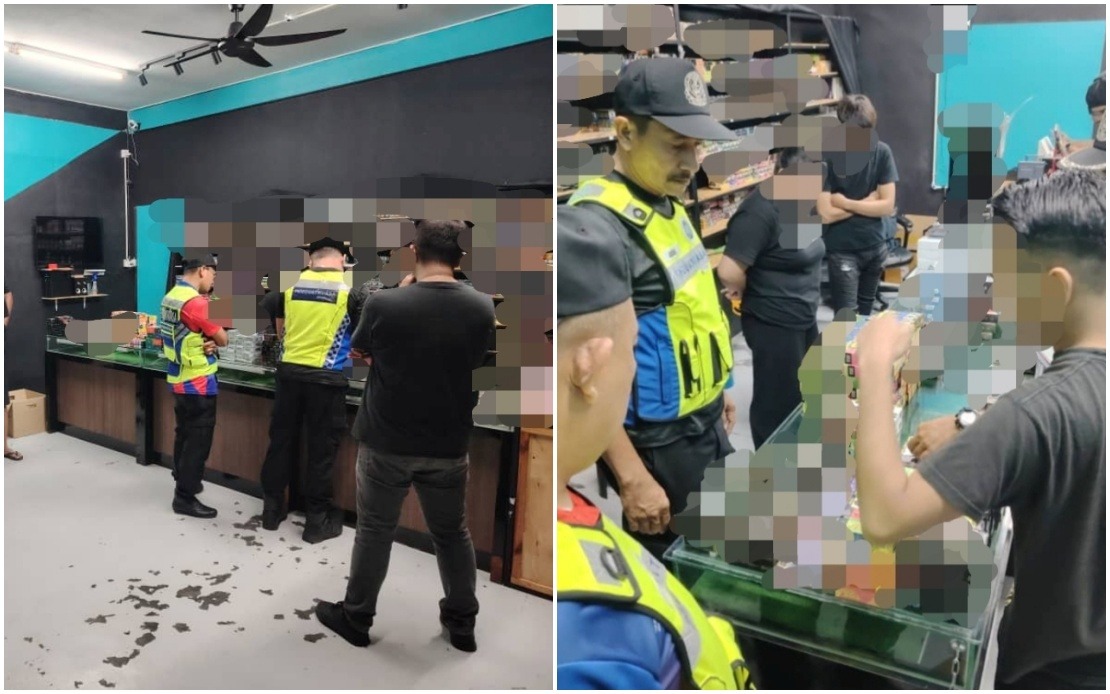
The Kangar Municipal Council (MPK) has intensified its regulatory enforcement by conducting a late-night operation that resulted in the seizure of 400 units of electronic cigarette liquid and 70 associated devices, with a combined value estimated at RM15,000. The raid, which took place at a commercial premises located on Jalan Padang Behor in Kangar between 10.30 pm and 1 am, represents a significant effort to combat the unauthorised operation of vape retailers ahead of a comprehensive state-level prohibition.
According to MPK president Affendi Rajini Kanth, the operation was conducted in partnership with the Royal Malaysia Police (PDRM) and drew authority from the MPK Trade, Business, and Industry Licensing By-Laws. The action aligns with an executive decision by the Perlis state government to outlaw all vape sales premises from August 1, 2025, marking a decisive stance on the commercial distribution of vaping products within the state. This coordinated enforcement demonstrates the commitment of local authorities to implement the state's policy directive before the prohibition deadline takes effect.
The targeted establishment has faced repeated regulatory action prior to this enforcement operation. The premises had previously been issued multiple fines for non-compliance with licensing requirements and received a formal business cessation notice in August 2025. Despite these interventions and official warnings, the operators continued to conduct their vape business activities, suggesting either a deliberate disregard for regulatory authority or a miscalculation regarding the enforcement capacity of local authorities. This pattern of persistent violation prompted the decision to conduct the overnight raid.
The legal framework governing this enforcement action derives from the MPK's municipal by-laws, which provide specific financial penalties for commercial licensing violations. Proprietors of unlicensed or non-compliant businesses face fines reaching RM2,000, with an additional daily penalty of up to RM200 imposed for each consecutive day that the breach continues following conviction. These escalating penalties are designed to create a financial deterrent against ongoing violations, though their effectiveness depends on consistent enforcement and prosecution.
The timing of this operation carries particular significance given Perlis's planned statewide vape prohibition. The August 1, 2025 deadline creates a defined endpoint for legal vape sales operations, after which all commercial distribution becomes prohibited rather than merely regulated. Authorities are conducting enforcement actions now to suppress operations that might otherwise attempt to continue until the final date, while also gathering evidence against premises that have demonstrated a pattern of non-compliance. This pre-emptive approach aims to prevent a potential surge in illegal vaping distribution once the formal ban takes effect.
For Malaysian readers, Perlis's action reflects a broader regional trend toward stricter regulation or prohibition of vaping products, even as these items remain legal in other Malaysian states. This creates a complex landscape for both retailers and consumers navigating differing jurisdictional rules. The raids and seizures represent an escalation beyond mere regulation toward enforcement-oriented action by local authorities. The value of confiscated goods—RM15,000 in this single operation—underscores the economic scale of the retail vape market even in a relatively small state capital.
The partnership between MPK and PDRM in executing this operation highlights how local municipalities and federal police coordinate on commercial enforcement matters. The presence of federal police in a municipal licensing action suggests either that the scale of the violation warranted higher-level involvement or that the state government has requested systematic police support for the vape prohibition rollout. This inter-agency coordination will likely continue as the August deadline approaches.
The political dimensions of Perlis's vape prohibition warrant consideration. Several Malaysian states have taken varied positions on vaping regulation, ranging from permissive licensing to outright prohibition. Perlis's decision to implement a comprehensive ban reflects a policy choice by the state government to eliminate the legal vape market rather than regulate it. This contrasts with states that maintain licensing systems for compliant retailers and may signal broader public health or social policy priorities within the Perlis administration.
The enforcement action also raises practical questions about how retailers and consumers will respond to the August deadline. Some shops may cease operations voluntarily, others may attempt to relocate to states without prohibitions, and some may transition to illegal distribution networks. The seizure of 400 units of liquid suggests that retail inventory levels remain substantial, meaning that implementing an effective prohibition will require sustained enforcement beyond the ban date itself. Authorities will likely need to monitor for black-market vape distribution, particularly near state borders where consumers might attempt to source products from jurisdictions where they remain legal.
For the specific premises targeted in this operation, the consequences extend beyond the confiscation itself. The history of repeated violations and warnings, combined with the high-value seizure, positions this location as a prime candidate for more severe enforcement measures, potentially including prosecution of proprietors and permanent closure orders. The establishment serves as a visible demonstration to other vape retailers in Kangar and surrounding areas that authorities are prepared to take enforcement action against non-compliance.
Looking forward, the Perlis vape prohibition will test the effectiveness of local government enforcement mechanisms and inter-agency cooperation. The success of the ban will depend not only on issuing orders and conducting raids but on sustained vigilance, prosecution of violators, and potentially community reporting of illegal operations. The RM15,000 seizure demonstrates that meaningful volumes of product remain in circulation despite regulatory pressure, suggesting that the transition to a fully prohibited market will present ongoing enforcement challenges for local authorities.

