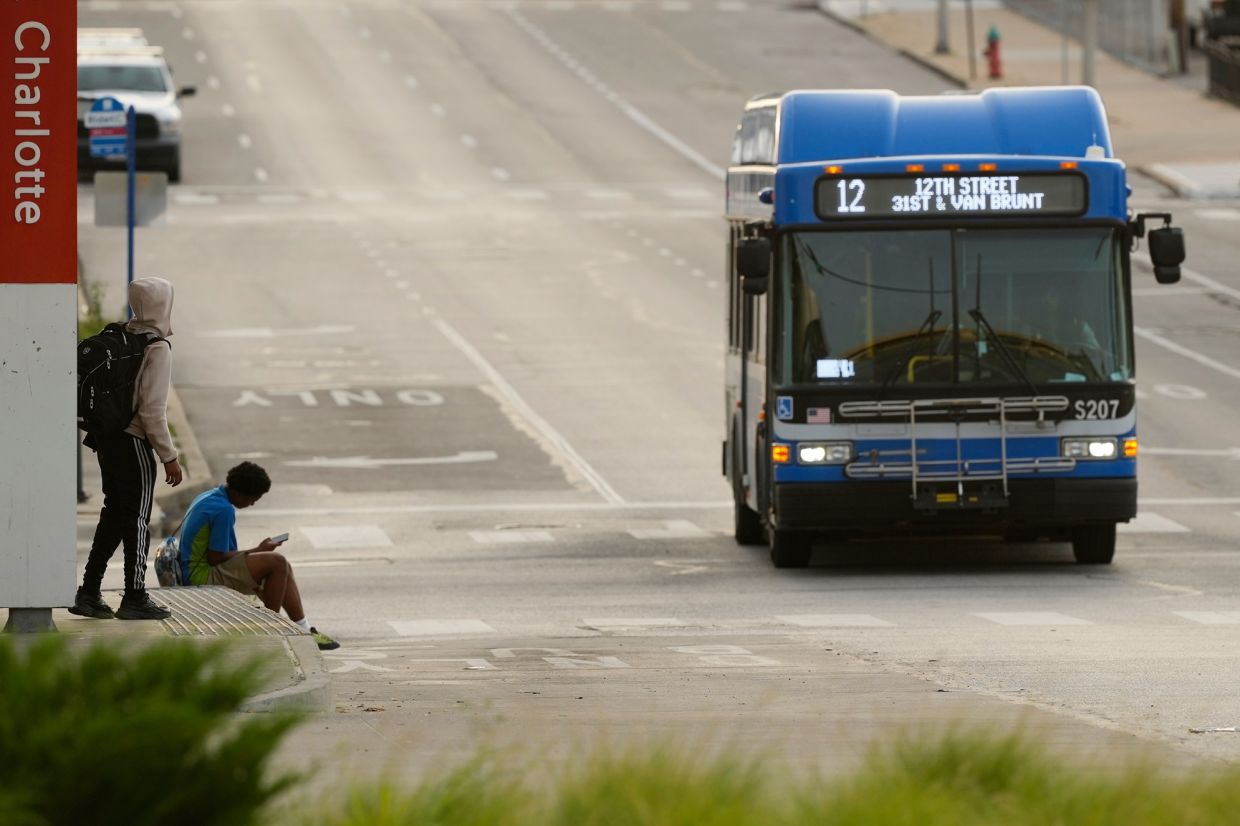
Kansas City, Missouri, stands on the cusp of becoming the first major American city to deploy live facial recognition technology on public buses, a move that has transformed the transit system into a focal point for one of the most contentious debates surrounding artificial intelligence and civil liberties. Transportation authorities in the city are preparing to equip cameras aboard buses with software capable of instantly identifying passengers who match profiles on watch lists—including banned riders, missing persons, and individuals flagged by law enforcement. The initiative has attracted intense scrutiny from privacy advocates, technology experts, and civil liberties organisations, all viewing Kansas City's experiment as a critical milestone that will determine whether other US cities embrace similar surveillance measures on their public transit networks.
The significance of this project extends beyond Kansas City's borders, as it represents a departure from two and a half decades of restraint regarding real-time facial recognition deployment in shared public spaces. Jay Stanley, a senior policy analyst at the American Civil Liberties Union's Project on Speech, Privacy and Technology, emphasised that the technology crosses a fundamental threshold that authorities have previously avoided. The distinction between having security cameras and actively analysing faces in real time marks a qualitative shift in surveillance capabilities, transforming passive recording into active identification systems that operate continuously on unsuspecting travellers.
Despite initial expectations that Missouri state government would contribute funding, the project encountered significant resistance at the state level due to apprehensions about the facial recognition component. However, Kansas City Transportation Authority officials have resolved to proceed using local resources supplemented by federal grants, demonstrating institutional determination to advance the initiative regardless of broader political reservations. Tyler Means, the authority's chief mobility and strategy officer, has sought to reframe the technology as an evolutionary step rather than a revolutionary one, arguing that because buses already carry conventional security cameras, introducing facial recognition represents merely a modernisation of existing infrastructure rather than a wholly novel surveillance mechanism.
SafeSpace Global, a Knoxville, Tennessee-based technology company, will operate the facial recognition system for Kansas City. The enterprise has previously deployed similar technology in nursing homes to monitor resident movements, correctional facilities, and school environments—applications that have generated their own privacy controversies. This venture into public transportation marks the company's first foray into the transit sector, potentially opening an entirely new market for this category of surveillance software. According to Scott Boruff, the company's chief executive, the system operates with built-in safeguards: facial data captured aboard buses undergoes immediate comparison against active alerts, and if no match appears, the biometric information is discarded rather than stored. Standard video footage would be retained on local servers for up to five years, creating a distinction between temporary facial analysis and longer-term video archiving.
Yet privacy advocates harbour profound doubts about the sustainability of such technical and procedural limitations. Stanley warned that historical experience demonstrates how surveillance systems inevitably expand beyond their original narrow mandates once artificial intelligence infrastructure becomes embedded within government operations. What begins as checking names against a specific watch list today possesses the architectural capacity to encompass far broader identification and tracking purposes tomorrow. The concern reflects a pattern observed repeatedly in surveillance technology deployments: initial constraints erode as institutional needs evolve, technological capabilities improve, and political resistance weakens. This trajectory suggests that the current watch list might represent merely the initial justification for installing permanent facial scanning infrastructure.
Proponents of the technology point to the normalisation of security cameras across urban environments and note that law enforcement agencies already utilise facial recognition to identify suspects from existing video footage. Moreover, some municipalities have deployed AI-powered cameras on buses to read vehicle license plates and generate tickets for traffic infractions, though these systems have also sparked privacy concerns. Kansas City officials frame facial recognition as a logical extension of these existing practices rather than a categorical transformation of surveillance. However, the critical distinction lies in proactive identification of individuals as opposed to reactive analysis of recorded images—a difference that fundamentally alters the nature of government observation and its implications for citizen privacy.
The historical record provides cautionary examples of facial recognition overreach. Following the September 11 attacks, Tampa, Florida, police installed facial recognition cameras in the Ybor City neighbourhood to locate crime suspects, but public opposition proved so vigorous that authorities abandoned the program relatively quickly. More recently, New Orleans police secretly operated facial recognition surveillance through privately operated cameras despite municipal ordinances explicitly prohibiting the technology. These episodes underscore how surveillance systems, once installed, develop entrenched constituencies and institutional defenders who resist removal even when democratic opposition emerges. Will Owen, communications director for the Surveillance Technology Oversight Project, has cautioned that Kansas City residents risk becoming test subjects for unproven, potentially biased technology developed by Silicon Valley companies.
Detroit's experience with surveillance technology offers a more complex picture of how cities navigate these controversies. The police department partnered with gas stations and liquor stores beginning in 2016 to install high-definition cameras providing live feeds of violent crimes to law enforcement. After community backlash, James Craig, then Detroit's police chief, acknowledged public concerns and implemented stricter policies governing facial recognition usage without entirely abandoning the technology. Craig continues advocating for facial recognition provided it is deployed within robust policy frameworks emphasising transparency and accountability. His perspective reflects a tension between recognising technology's potential law enforcement benefits and addressing legitimate civilian apprehensions about unrestrained surveillance powers.
Kansas City's deployment timeline has experienced significant disruptions. The system was originally scheduled for installation during spring, with ambitions to activate the technology in time for World Cup matches hosted in the city. However, technical complications and financial constraints forced organisers to delay the initiative. The technical obstacles involved upgrading Wi-Fi infrastructure to support both facial recognition cameras and new fare collection systems simultaneously. The financial challenge stemmed from Missouri state funding withdrawals, illustrating the substantial headwinds that American cities encounter when attempting to implement facial recognition infrastructure despite local political support and federal grants.
Despite these setbacks, Kansas City Transportation Authority officials maintain confidence that deployment will occur during the current year, potentially scaled more ambitiously than the original conception. Rather than beginning with nine buses as initially planned, the expanded pilot programme might ultimately encompass as many as thirty buses. SafeSpace Global has signalled readiness to commence installation once funding becomes available, though company officials estimate that configuring software for Kansas City's specific operational requirements will require three to four months. Ryana Parks-Shaw, a City Council member serving as mayor pro tem, has expressed that the delay actually serves beneficial purposes, allowing time for careful implementation accompanied by transparent processes and explicit safeguards.
To manage security during the World Cup without facial recognition cameras, Kansas City implemented an alternative approach deploying up to forty additional police officers at transit stops and centres throughout the system. This reversion to conventional human security represents what transit officials characterised as returning to traditional methods while technology deployment faces postponement. The contrast between envisioned AI-powered surveillance and actual human-based security measures highlights how technological solutions often promise efficiency gains that may be difficult to realise in practice. As Kansas City navigates this implementation process, other American cities will undoubtedly monitor the project's evolution, determining whether facial recognition on public buses represents the future of urban transit security or becomes another cautionary tale about surveillance technology's risks to democratic values.

