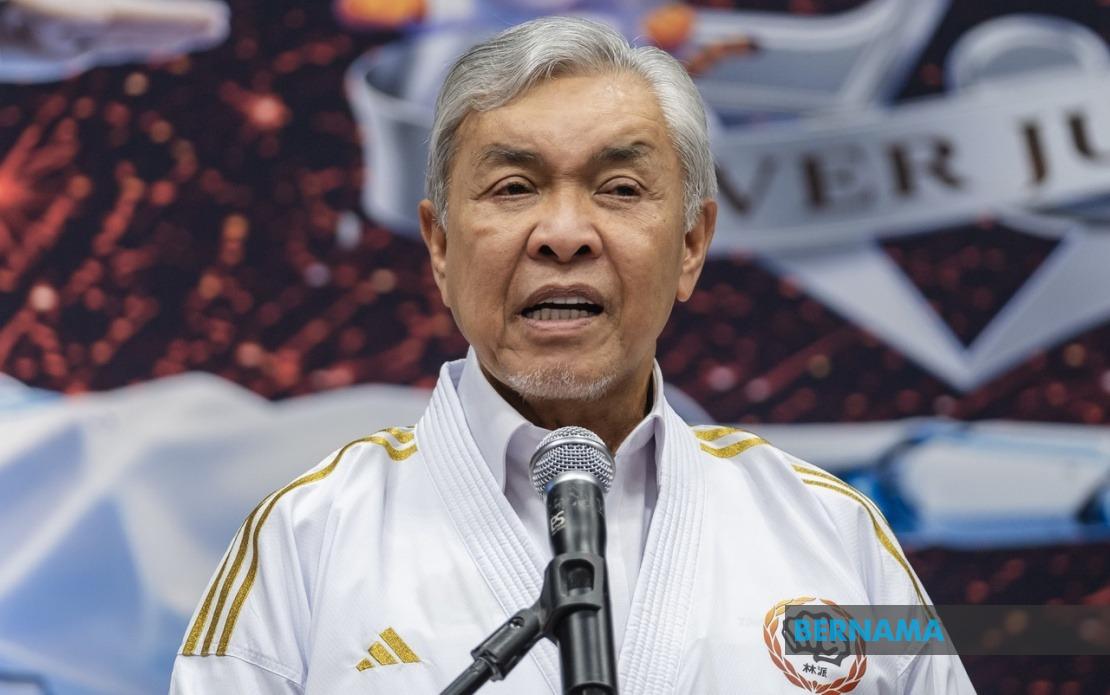
Malaysia's push to embed karate within the national school sports calendar has reached a critical juncture, with Deputy Prime Minister Datuk Seri Dr Ahmad Zahid Hamidi confirming that the proposal will be tabled before Cabinet in the coming week. Addressing reporters at Titiwangsa Stadium in Kuala Lumpur, Ahmad Zahid—who chairs the Cabinet Committee on Sports Development—outlined the next steps for what supporters view as essential infrastructure for cultivating competitive talent in a discipline increasingly popular among Malaysian pupils.
The initiative gained visible momentum during the International Open Karate Championship 2026, which concluded at the same venue. Now celebrating its 25th iteration, the tournament drew participation from more than 1,850 athletes representing 17 countries, underscoring karate's international profile and the calibre of competition Malaysia can host. This strong showing provided the backdrop for renewed advocacy for the sport's integration into the Malaysian Schools Sports Council, or MSSM, competitive framework—a development that would transform karate from an extracurricular pursuit into a formally structured component of national school sports infrastructure.
Education Minister Fadhlina Sidek will be tasked with evaluating the proposal, placing the decision squarely within her ministry's purview. Ahmad Zahid's positioning of the matter as a Cabinet-level initiative signals governmental recognition that broadening the MSSM calendar carries implications beyond sporting development, touching on curriculum alignment, resource allocation, and the strategic promotion of martial disciplines within educational institutions. The relative ease with which Ahmad Zahid committed to Cabinet discussion suggests institutional readiness, though formal inclusion would ultimately depend on the Education Ministry's assessment of practical feasibility.
Localised advocacy has been building steadily. Datuk P. Thiagu, president of the Putrajaya Karate Association and architect of the International Open championship, has become the public face of the grassroots push. Thiagu articulated a compelling case: that formal MSSM recognition would consolidate karate's existing informal presence in schools while creating structured pathways for talent identification and development. The argument centres on a practical reality—karate already enjoys substantial uptake among Malaysian students—and the notion that official recognition would simply formalise and amplify what is already organically occurring.
The grassroots development rationale carries particular weight in Malaysian sports discourse. Unlike cricket or archery, which rely on specialist facilities, karate requires minimal infrastructure investment, making it economically attractive for schools across different socioeconomic contexts. This accessibility has allowed the sport to flourish in institutions nationwide, establishing a constituency of young practitioners before any formal policy framework materialised. Bringing karate into MSSM would reverse the conventional sequence—recognition following rather than preceding adoption—and would validate the investment already made by coaches, school administrators, and families.
Malaysia's historical dominance in martial sports, particularly through excellence in silat, provides cultural context for karate's integration. While silat remains the indigenous flagship discipline, karate's Olympic recognition since 2020 (and continued status thereafter) positions it strategically within global competitive hierarchies. Inclusion in MSSM would acknowledge this international standing whilst anchoring the sport within domestic competitive structures that traditionally feed athletes into national teams and Commonwealth Games contingents.
The timing reflects broader regional trends. Neighbouring countries including Indonesia, Thailand, and the Philippines have formally embedded karate into school sports systems, creating competitive advantages in international tournaments. Malaysia's deliberation occurs within this competitive landscape, where policy decisions about sporting infrastructure carry implications for regional standing. A Cabinet decision to proceed would place Malaysia in alignment with regional peers and would signal confidence in karate's trajectory within the Asian sports calendar.
Implementation challenges, though not yet publicly articulated, will require attention. MSSM coordination across state education systems demands administrative synchronisation, standardised competition formats, and clarity regarding whether karate would operate under kata (forms) competition, kumite (sparring), or both. Resource implications—though modest compared to traditional field sports—include referee certification, equipment provision, and coaching accreditation. These technical matters would likely be delegated to the MSSM secretariat once Cabinet approval is secured.
Thiagu's reference to producing more talented athletes through structured pathways reflects a strategic vision extending beyond school-level competition. MSSM recognition typically functions as a funnel system, with outstanding school performers transitioning into state and national selection processes. For karate, this would mean converting individual excellence into systemic talent development, potentially enabling Malaysia to maintain or enhance its competitive standing at Southeast Asian Games, Asian Championships, and other international platforms where karate maintains regular competition calendars.
The proposal's progression through established governmental channels—from sports development committee chairman to Cabinet consideration, with education ministry evaluation—suggests institutional seriousness. Ahmad Zahid's commitment to specific Cabinet timing indicates that bureaucratic consultation has already occurred, and that the proposal carries backing from relevant stakeholders. Whether implementation follows immediately upon approval or occurs through phased introduction across states remains to be clarified, but the trajectory toward formal recognition appears increasingly secure. For Malaysian karate practitioners, educators, and sports administrators who have advocated this change, the Cabinet discussion represents validation that grassroots enthusiasm can catalyse policy evolution, potentially establishing karate as an integral component of the national school sports ecosystem within the next academic cycle.

