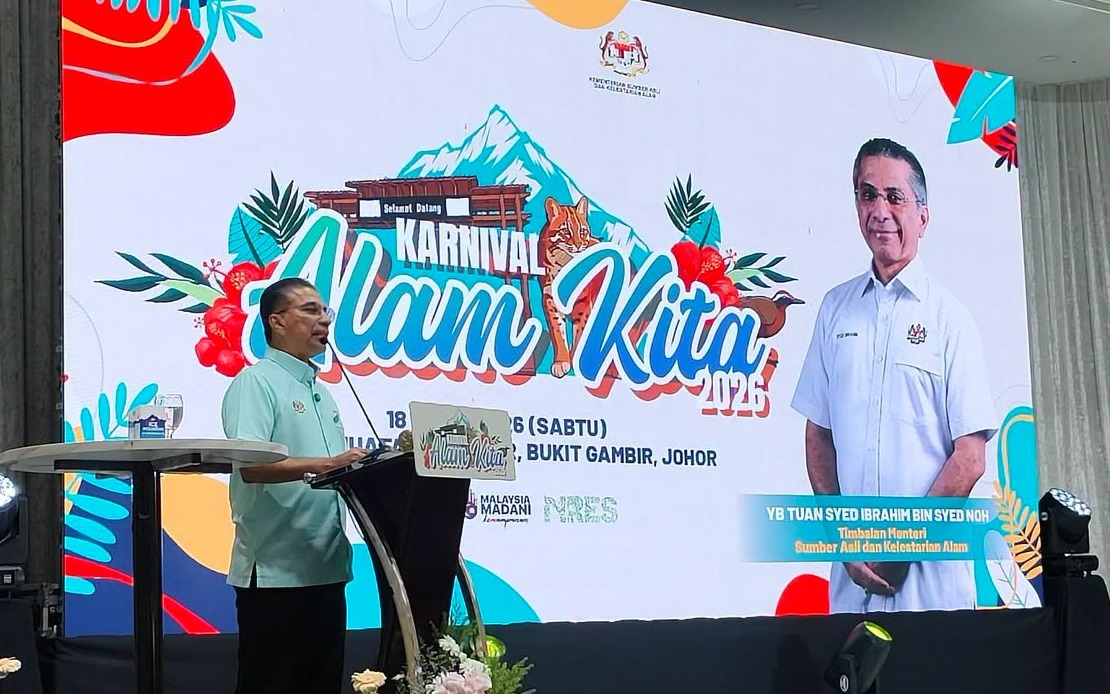
The Natural Resources and Environment Ministry (NRES) is intensifying its environmental outreach across Johor through Karnival Alam Kita 2026, a sweeping initiative designed to embed sustainability thinking into the daily routines of ordinary Malaysians rather than treating conservation as an abstract government priority. The carnival, which launched recently at Dewan Muafakat Bukit Gambir in Tangkak, represents a strategic shift in how the ministry communicates ecological responsibility—moving away from top-down mandates toward grassroots engagement that positions citizens as active participants in the nation's green transition.
Deputy Minister Syed Ibrahim Syed Noh framed the carnival's philosophy as fundamentally inclusive, emphasising that environmental stewardship cannot be delegated solely to government agencies or environmental specialists. Instead, he positioned sustainability as a shared responsibility spanning households, schools, workplaces, and neighbourhoods. This decentralisation of environmental accountability reflects growing international recognition that meaningful climate and resource management outcomes depend not on regulatory compliance alone but on internalized behavioural change across communities. The ministry's approach acknowledges that Malaysians often perceive sustainability through the lens of distant global concerns—rare earth element extraction, electronic waste streams, or net-zero carbon targets—rather than recognising the intimate connection between personal consumption patterns and broader ecological health.
A central challenge the NRES seeks to address involves translating environmental science into vernacular language and everyday contexts that resonate with working families and students. Rather than presenting sustainability as a technical or moral imperative imposed from above, the carnival positions green practices as practical, economically sensible choices accessible to all income levels. This democratisation of sustainability messaging carries particular significance for Malaysia, a middle-income nation experiencing rapid urbanisation and rising consumer expectations. By demonstrating tangible connections between individual actions—waste reduction, recycling, energy conservation—and measurable environmental benefits, the ministry aims to erode the perception that sustainability is either a luxury concern for the wealthy or an impossible burden for ordinary households.
The programme encompasses the launch of the Young Environmental Ambassador scheme, an educational initiative targeting secondary school students as catalysts for household and community behavioural change. This youth-focused strategy recognises that teenagers often function as influential voices within families, capable of challenging established consumption patterns and normalising sustainable practices among their peers. The ambassador programme provides formal environmental training, positioning participating students as credible local experts who can guide their communities through practical sustainability transitions. For Malaysia, developing a generation of young environmental leaders addresses both immediate conservation objectives and longer-term institutional capacity, as these ambassadors may eventually influence policy formation, corporate practices, and community priorities as adults.
Running parallel to educational initiatives is the KUDAH clean-up campaign, executed through collaboration between the NRES Lestari Squad and Bateriku (M) Sdn Bhd, a strategic partner in battery and hazardous waste management. During the Tangkak event, the campaign collected 37 kilogrammes of mixed waste, including 17.3 kilograms of plastic bottles, demonstrating the material scale of community participation. The NRES quantified environmental impact in terms residents understand: the collected materials are projected to prevent 43.2 kilograms of carbon dioxide equivalent emissions—roughly equivalent to the greenhouse gas footprint of driving a petrol vehicle for approximately 100 kilometres. This translation of abstract environmental metrics into tangible automotive analogies helps ordinary citizens grasp how their participation in clean-up activities contributes measurably to Malaysia's net-zero carbon aspiration by 2050.
The net-zero 2050 commitment, made at international climate forums, carries substantial implications for Malaysia's economic structure and energy systems. Achieving this target requires transforming electricity generation from coal and natural gas toward renewable sources, electrifying transport, improving building efficiency, and managing waste streams more comprehensively. Karnival Alam Kita 2026 functions as a public engagement mechanism for this long-term transition, preparing Malaysian households and workers for the regulatory changes, technological shifts, and lifestyle adjustments the net-zero pathway will necessitate. By initiating sustainability conversations now, the ministry mitigates future social friction when policies and investments supporting decarbonisation become mandatory.
The carnival's programming reflects a ecosystem-based approach encompassing electronic waste recycling, used cooking oil collection, biodiversity awareness, and green product marketing. Electronic waste represents a particular concern for Southeast Asian nations, as rapid technological adoption generates growing volumes of discarded electronics containing toxic materials and valuable mineral elements. By incorporating e-waste streams into community awareness programming, Karnival Alam Kita 2026 positions this emerging challenge as a manageable household responsibility rather than an overwhelming industrial problem. Similarly, used cooking oil recycling connects familiar domestic waste streams to circular economy principles and biodiesel production, making abstract sustainability concepts concrete through ubiquitous materials found in every Malaysian kitchen.
The carnival's multi-stakeholder architecture—integrating government agencies, non-governmental organisations, and commercial partners—reflects recognition that environmental transitions require coordination across sectors. Commercial participation through green product vendors signals that sustainability increasingly represents a market opportunity rather than merely a cost burden or regulatory obligation. This market-oriented framing may prove instrumental in sustaining public engagement beyond the carnival period, as businesses respond to demonstrated consumer demand for environmentally responsible products and services. For Malaysian entrepreneurs and consumer goods manufacturers, Karnival Alam Kita 2026 offers visible evidence of expanding market segments willing to prioritise sustainability, potentially catalysing investment in green product development and supply chain modifications.
The deployment of Karnival Alam Kita 2026 specifically to Johor reflects the state's economic significance as Malaysia's industrial heartland and manufacturing hub. Johor's concentration of manufacturing facilities, ports, and worker populations creates substantial environmental pressures but also enormous potential for emissions reductions through operational efficiency improvements and technology adoption. By launching sustainability initiatives in Johor's schools and communities, the NRES connects environmental messaging directly to populations whose daily activities generate measurable ecological impacts. Young environmental ambassadors trained in Johor's schools may influence both household behaviour and workplace practices among their parents and relatives employed in manufacturing, construction, and logistics sectors.
Looking forward, the success of Karnival Alam Kita 2026 will depend on mechanisms for sustaining engagement beyond the carnival period and translating individual commitments into systemic change. Permanent institutional structures supporting young ambassadors, community clean-up networks, and accessible recycling infrastructure require ongoing funding and administrative coordination. The inclusion of representatives including NRES deputy secretary-general Datuk Khalid Mohamed and district education officers in launching ceremonies signals high-level commitment, yet implementation at neighbourhood and school levels depends on resourced, persistent engagement from local officials and volunteers. For Malaysian policymakers and environmental professionals, Karnival Alam Kita 2026 represents a test case for whether community-centered, practically-focused sustainability programming can generate durable behavioural change and political support for the deeper economic transformations Malaysia's net-zero commitment demands.

