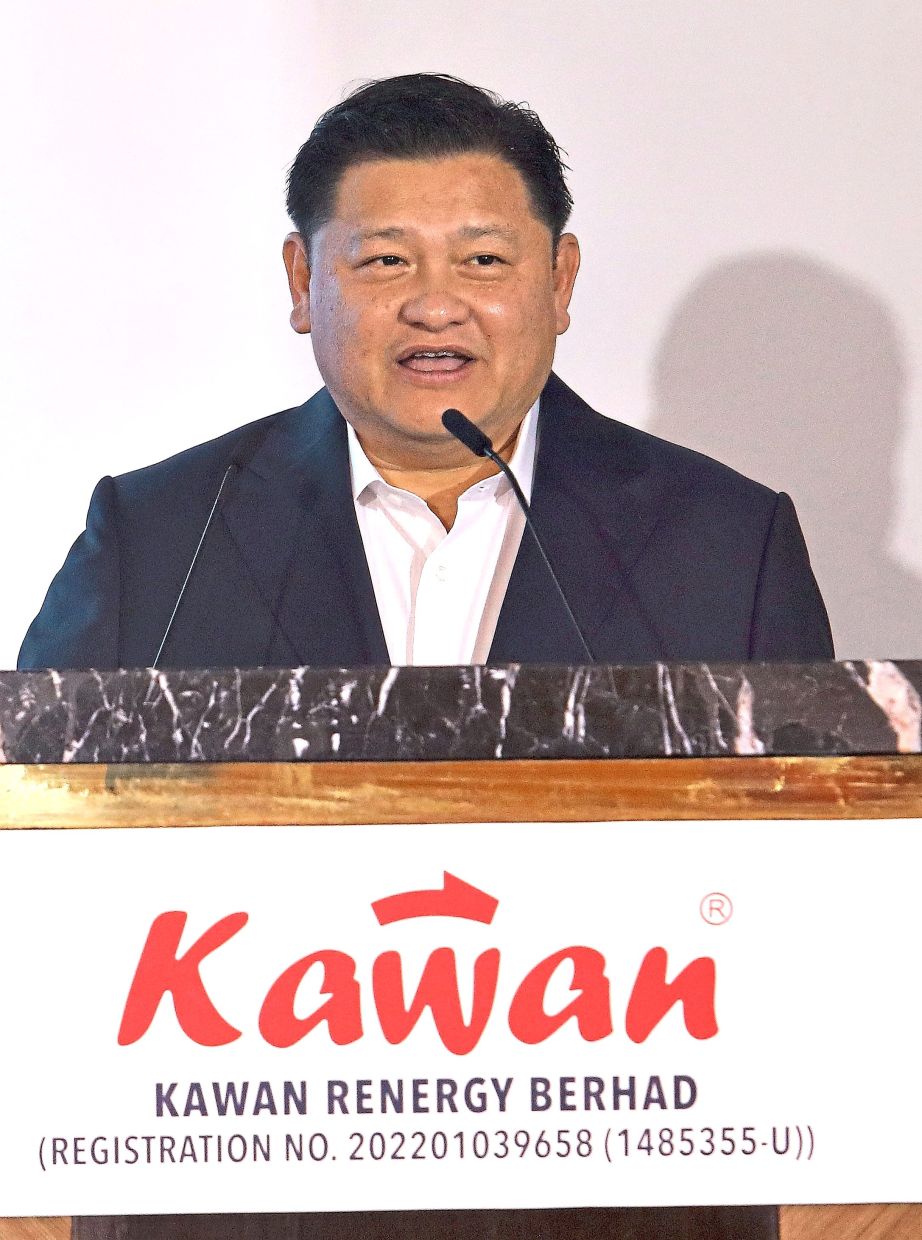
Kawan Renergy's recent financial performance has fallen short of market expectations, but the engineering solutions provider is refusing to let project-specific challenges derail its broader strategic agenda in renewable energy and industrial infrastructure. Managing director Lim Thou Lai acknowledged in recent comments that the company experienced cost overruns during the first half of financial year 2026, yet stressed that management continues actively bidding for fresh contracts across its portfolio of services.
The underlying issue stems from a power plant development project commissioned by a client based in Sabah, where additional scope of work beyond the original contract terms drove up costs significantly. According to analysis from Public Investment Bank, the overrun resulted from expanded labour deployment aimed at mitigating project delays, compounded by work requirements that extended beyond the initial agreement. These factors combined to compress first-half earnings to RM6 million, representing only 34.7 percent of PublicInvest's full-year forecast and 27.8 percent of consensus estimates across the analyst community.
Lim noted that the company has not yet finalised settlement of related claims with the client but expects resolution within six months. While analysts broadly characterise this as a one-off occurrence unlikely to recur in subsequent periods, the episode has prompted research houses to reassess margin assumptions and near-term earning trajectories. PublicInvest Research has trimmed its forecasts for financial years 2026 through 2028, reducing projections by 21 percent, 6 percent, and 6 percent respectively, whilst maintaining a neutral stance on the stock and lowering its price target to 51 sen from 54 sen.
Additional pressure comes from a structural headwind introduced by the expanded sales and service tax regime effective September 2025. Certain existing contracts cannot fully pass through the incremental tax cost to clients at present, creating a margin impact that will persist even after project-specific issues resolve. Historically, Kawan Renergy has achieved net margins exceeding 10 percent on projects, depending on complexity and scale, but this baseline has shifted in light of both the immediate cost challenge and the tax environment shift.
Management maintains an optimistic posture regarding medium-term prospects despite the current operating difficulties. Lim, who controls over 60 percent of the company's shareholding, expressed confidence in the traditional engineering and installation businesses that form the company's foundation. The power segment continues to generate steady work, he indicated, whilst maintenance and replacement contracts provide reliable revenue streams. Equally significant is the emerging opportunity presented by Malaysia's expanding data centre sector, which Lim identifies as a potential growth driver for the company's technical capabilities and fabrication capacity.
However, Lim candidly acknowledged that prevailing market sentiment remains a constraint on near-term expansion. Industries including oleochemicals are enduring prolonged weakness driven by oversupply and anaemic demand conditions, he noted. The competitive landscape for major projects has contracted materially, with fewer large-scale opportunities available for tender. Under these circumstances, Kawan Renergy is calibrating growth expectations downward whilst maintaining operational momentum and project execution quality to preserve market position and client relationships.
Kenanga Research has adopted a more sanguine view of the recovery trajectory, anticipating that earnings should normalise from the third quarter onwards as the bulk of Sabah project cost overruns had been incurred during the period under review. The company's order book currently stands at RM128 million, with RM71 million in recently secured purchase orders expected to generate earnings visibility commencing in the third quarter. This contracted revenue pipeline provides some assurance of near-term cash generation, though it also concentrates the company's revenue exposure within a finite set of commitments.
Yet Kenanga has equally revised margin assumptions downward to incorporate higher energy costs stemming from geopolitical turbulence in the Middle East, alongside elevated subcontractor charges that are eroding project profitability across the industrial services sector. Approximately 51 percent of projected FY27 revenue depends on the existing order book, creating susceptibility to cost escalations that cannot be recovered through variation orders or contract amendments. The research house has reduced gross margin assumptions by approximately 20 percentage points from prior forecasts, a substantial recalibration that underscores the structural profitability headwinds facing the business.
Kenanga also flagged uncertainty surrounding the company's ability to recover costs through variation order claims for work falling outside the original contract scope. Without clarity on the quantum and timing of such recoveries, the brokerage has adopted a conservative stance, assuming no earnings benefit from claims resolution in the near term. Nevertheless, Kenanga maintains an outperform rating whilst reducing its price target to 57 sen from 73 sen, suggesting the research team perceives latent value despite acknowledged near-term challenges.
The company's financial results for the first half of FY26 painted a mixed picture reflecting both operational stress and underlying segment strength. Net profit contracted to RM6.5 million from RM9.8 million in the prior-year period, yet revenue expanded to RM90.2 million from RM60.3 million, indicating top-line growth despite bottom-line compression. The renewable energy and co-generation segment emerged as a bright spot, expanding 278.4 percent year-on-year to RM25.5 million in the second quarter, a growth rate that underscores the relevance of Kawan Renergy's positioning within Malaysia's energy transition narrative.
At the time of analysis, the stock was trading at 35 sen, representing a significant discount to both analyst price targets and its intrinsic value implied by growth prospects. This valuation disconnect reflects prevailing market scepticism toward the earnings recovery thesis and concerns regarding margin sustainability. For Malaysian investors seeking exposure to the industrial engineering and renewable energy sectors, Kawan Renergy presents a contrarian opportunity contingent on successful navigation of immediate operational challenges and the company's ability to execute within the constrained margin environment characterising the current market cycle.
The company's ability to stabilise margins whilst capturing opportunities within Malaysia's data centre expansion and renewable energy rollout will prove determinative for shareholder returns. Management's demonstrated commitment to pursuing new work despite setbacks, combined with the secular tailwinds supporting energy transition infrastructure, suggests that the current valuation discount may prove excessive if operational execution normalises in coming quarters. Investors should monitor third-quarter results and progress on claims resolution as key indicators of whether the Sabah project represents a genuine warning signal or a manageable speed bump within a longer-term growth trajectory.

