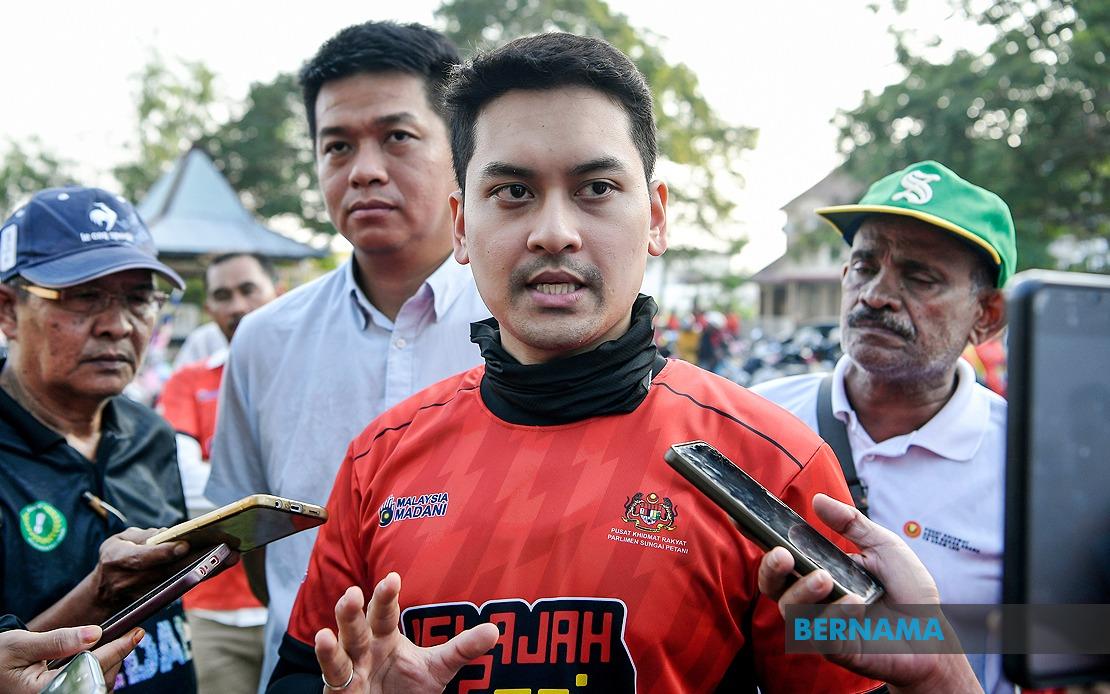
The Ministry of Youth and Sports has embarked on an ambitious nationwide consultation exercise designed to capture the concerns and aspirations of Malaysian youth as the government prepares the 2027 federal budget. Dubbed the MADANI Youth Budget Tour, the initiative divides the country into six regional zones with the aim of conducting town hall sessions and engagement forums throughout August and September, culminating ahead of Budget 2027's tabling in October. Youth and Sports Minister Dr Mohammed Taufiq Johari unveiled the programme at Universiti Teknologi MARA in Penang during the Sahabat MADANI Merdeka Eve event, signalling the government's commitment to direct youth participation in fiscal planning.
The tour commenced in Malaysia's northern zone, encompassing Kedah, Penang, and Perlis before moving progressively through other regions over the coming weeks. Dr Mohammed Taufiq explained that the phased geographical rollout was designed to ensure comprehensive coverage and allow adequate time for meaningful dialogue in each locality. This structured approach reflects recognition that youth perspectives vary significantly across different states and communities, with regional economic challenges and opportunities differing markedly between urban centres like Penang and more rural areas in Kedah and Perlis. By segmenting the country into six distinct zones rather than pursuing a single national event, the ministry aims to foster more intimate and productive conversations where young Malaysians feel genuinely heard rather than merely processed.
The underlying rationale for this youth-focused budgeting consultation reflects a broader shift in Malaysian governance toward stakeholder engagement and participatory policy-making. Dr Mohammed Taufiq emphasised that these town hall sessions serve as platforms enabling young people to articulate their needs, grievances, and policy preferences directly to government representatives. Rather than relying solely on conventional administrative channels or political party structures, the MADANI Youth Budget Tour creates space for unfiltered dialogue. The minister noted that contemporary Malaysian youth demonstrate a willingness to engage critically with government, viewing such forums not as ceremonial exercises but as genuine opportunities to influence decision-making. This generational readiness to speak candidly represents both an opportunity and responsibility for officials tasked with translating youth input into budgetary allocations.
Youth involvement in budget formulation carries particular significance for Malaysia's medium and long-term development trajectory. Young people face distinct economic pressures—from employment precarity and rising housing costs to education expenses and professional development barriers—that differ substantially from concerns of older generations. A budget informed by youth consultation can theoretically address generational inequities more effectively than top-down fiscal planning. For instance, youth may advocate for enhanced funding in skills training, digital economy initiatives, mental health services, or affordable housing schemes that might not receive priority in conventional budgetary processes. By institutionalising youth input into fiscal policy, the government signals that addressing youth-specific challenges constitutes a legitimate policy priority rather than an afterthought.
Prime Minister Datuk Seri Anwar Ibrahim's presence at the Penang launch and his formal inauguration of the national Sahabat MADANI volunteer initiative underscores the political salience attached to this engagement process. The Sahabat MADANI programme, which has reportedly recruited 11,060 volunteers nationwide, functions as a parallel grassroots mobilisation mechanism designed to translate government initiatives into community-level action. This volunteer network serves as both a conduit for information dissemination and a feedback mechanism that feeds community concerns back into government structures. The concurrent launch of both the Youth Budget Tour and the expanded Sahabat MADANI initiative suggests an integrated strategy to deepen government engagement across demographic groups while simultaneously mobilising citizens as partners in the MADANI development agenda.
Dr Mohammed Taufiq articulated a vision of youth serving as bridges across Malaysia's ethnic and religious divides, positioning young people as custodians of national unity rather than merely beneficiaries of government largesse. This framing carries implicit acknowledgment that budget allocations possess symbolic and social dimensions beyond their purely economic content. When government visibly prioritises youth aspirations and demonstrates responsiveness to young people's concerns, this can reinforce perceptions of equitable, inclusive governance. Conversely, if youth feel ignored or marginalised in fiscal decision-making, resentment may accumulate around government legitimacy and representativeness. The minister's emphasis on youth responsibility for maintaining social cohesion also reflects understanding that Malaysia's demographic youth bulge presents both opportunity and risk—young people constitute agents of potential social dynamism and stability or, alternatively, vectors of social fragmentation if alienated from mainstream institutions.
The timing of this consultation cycle preceding Budget 2027 positions youth input at a potentially influential juncture in fiscal planning. October's budget tabling provides a concrete deadline by which consultations must conclude and synthesis occur, yet the intervening period allows sufficient lead time for substantive consideration of feedback collected across the six zones. However, translating consultation input into budgetary action requires sophisticated institutional capacity. The Ministry of Youth and Sports must synthesise potentially diverse or conflicting priorities across different zones, reconcile youth aspirations against fiscal constraints and competing demands, and articulate persuasively how budget 2027 reflects youth input. The credibility of this consultation exercise ultimately depends on demonstrable responsiveness—budget provisions that clearly trace back to themes raised during town halls.
For Southeast Asian observers, Malaysia's approach to institutionalising youth consultation within fiscal processes merits attention as a potential model for other regional economies grappling with youth unemployment, social cohesion challenges, and questions of intergenerational equity. Countries across the region face similar demographic realities and comparable pressures around youth engagement and representation. However, Malaysia's specific institutional architecture—combining ministerial-level coordination, volunteer mobilisation networks, and structured consultation cycles—reflects particular political and administrative contexts. The effectiveness of this model in translating consultation into substantive policy outcomes remains to be demonstrated, yet the willingness to institutionalise youth voice in budget processes represents noteworthy governance innovation within the region.
Penang Chief Minister Chow Kon Yeow's attendance at the UiTM launch demonstrates alignment between federal and state-level political leadership around youth engagement frameworks. This vertical coordination matters considerably for implementation, as state governments control certain budget allocations and service delivery mechanisms that affect youth directly. States can either amplify or obstruct federal youth-focused initiatives depending on political will and resource prioritisation. Chow's participation signals Penang's commitment to facilitating the tour within the state and potentially incorporating youth feedback into state-level budgetary processes. This multi-level governance dimension adds complexity to consultation outcomes but also provides opportunities for more granular, locally-responsive policy formulation.
The Sahabat MADANI volunteer initiative's expansion to 11,060 registered participants nationwide creates infrastructure for ongoing community engagement beyond the specific budget consultation cycle. These volunteers potentially function as permanent channels through which government monitors grassroots concerns and communities access government services and information. The sustainability of volunteer networks depends on meaningful engagement opportunities, adequate support, and demonstrated impact. If Sahabat MADANI volunteers perceive that their efforts produce tangible results—whether through budget provisions, policy adjustments, or improved service delivery—retention and morale will strengthen. Conversely, if volunteer mobilisation appears instrumentally deployed to manufacture consent for predetermined government positions, participation will likely decline.
Looking forward, the success of the MADANI Youth Budget Tour will be measured partly through quantitative metrics—number of participants, zones covered, feedback items collected—but more meaningfully through qualitative assessment of whether youth feel genuinely heard and perceive government responsiveness in subsequent policy outputs. The six-zone structure and month-long timeline suggest serious commitment to comprehensive engagement rather than perfunctory consultation. However, implementation quality will determine whether this initiative represents genuine participatory governance innovation or sophisticated public relations exercise. Malaysian youth, demonstrating the critical perspective that Dr Mohammed Taufiq acknowledged, will likely assess the authenticity of government commitment through whether Budget 2027 and subsequent policy initiatives demonstrably incorporate themes and concerns raised during the tour.

