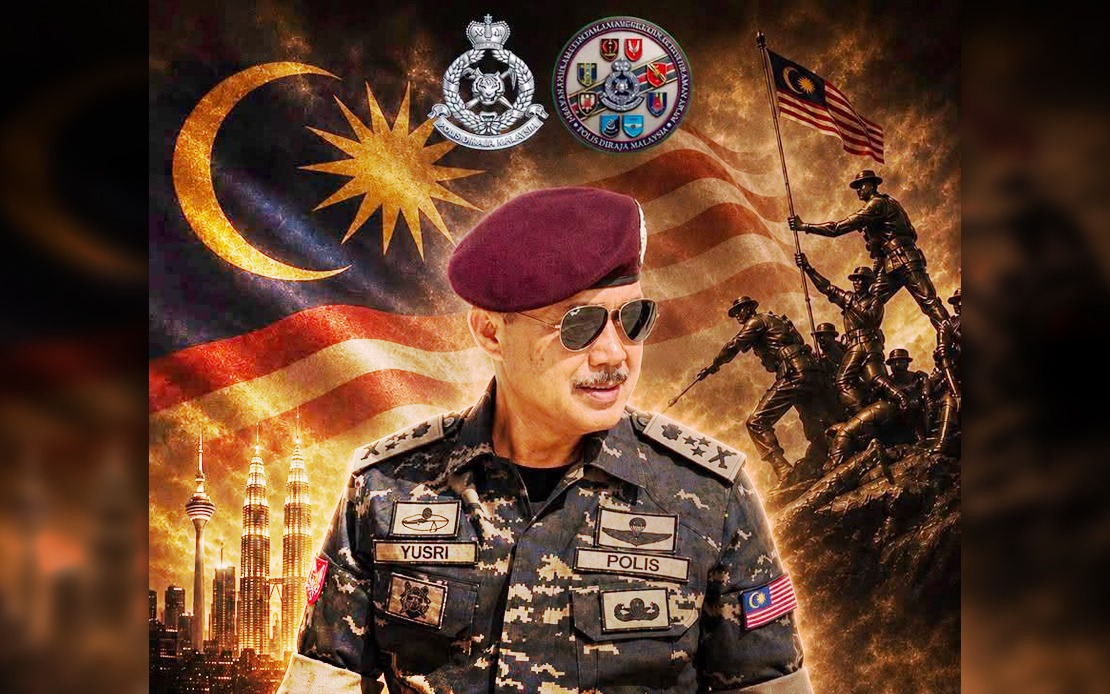
A notable shift in tradition will mark Malaysia's 69th National Day Parade on August 31, when the director of the Department of Internal Security and Public Order (KDNKA), Datuk Seri Mohd Yusri Hassan Basri, exchanges the roar of motorcycle engines for the rhythmic clip-clop of horse hooves. This change represents both a ceremonial evolution and a personal challenge for the senior police officer, who will ride a white horse named Al-Sakb while leading a 595-member PDRM contingent through Dataran Putrajaya.
The contrast with his approach last year illustrates how the annual National Day celebration continually reinvents itself. Previously, Mohd Yusri led the police detachment on a high-powered BMW R 1250 RT motorcycle during his tenure as director of the Traffic Investigation and Enforcement Department (JSPT). That vehicle represented contemporary police operations and operational speed. Now, as KDNKA director overseeing internal security and public order matters across Malaysia, he has embraced a more classical symbol of authority and tradition through the Federal Reserve Unit's Mounted Unit, which comprises 20 officers, personnel, and 20 horses.
The decision to feature mounted police reflects a deliberate strategy to showcase the multifaceted capabilities of the PDRM to the public. By incorporating traditional elements alongside modern technology, the contingent presentation tells a broader story about Malaysian law enforcement's evolution and adaptability. This approach resonates particularly with Malaysian audiences who value both heritage and progress, making the National Day parade an effective platform for demonstrating institutional continuity and innovation simultaneously.
Mohd Yusri's preparation for this assignment underscores the technical demands of parade leadership. He underwent more than a month of intensive training to ensure his horsemanship and coordination with the contingent would achieve the precision expected of such a high-profile public appearance. The training focused on synchronizing the Mounted Unit's movements with the broader contingent, ensuring that the formation maintains discipline and visual impact throughout the parade route. This investment in preparation reflects the PDRM's commitment to presenting a polished image to the Malaysian public and international observers.
Beyond the symbolic role of the mounted police, the KDNKA contingent will demonstrate the breadth of the police force's operational capabilities through several showcase elements. The General Operations Force (GOF) and Air Operations Force will be represented, illustrating how the PDRM operates across different domains and responds to diverse security challenges. This multi-layered presentation helps citizens understand that effective policing requires specialized units and coordinated approaches to internal security.
Among the technological highlights expected to capture public attention are 10 newly acquired All Terrain Tactical Assault E-Bikes (ATEB), which represent the PDRM's investment in modern rapid-response capabilities. These high-performance electric motorcycles have been supplied to the GOF for security and border patrol duties, high-risk special operations, and conflict management. Their inclusion in the parade signals Malaysia's commitment to integrating sustainable technology with security operations—a consideration increasingly important as nations balance operational needs with environmental responsibilities.
An AW139 helicopter operated by the PDRM will conduct a flypast, extending the contingent's presentation from ground to air and demonstrating the force's capacity to coordinate complex multi-dimensional operations. This aerial component emphasizes that modern policing extends far beyond traditional ground-level patrols, reaching into airspace for surveillance, emergency response, and specialized operations. For Malaysian observers, such displays reinforce confidence in the institution's operational sophistication and readiness to handle diverse scenarios.
The K9 Unit will contribute its expertise through a demonstration involving 16 trained dogs, showcasing the role of canine handlers in detection, search and rescue, and crowd management. Coupled with elite force personnel and tactical electric motorcycle technology, these elements combine to present a comprehensive view of PDRM's integrated operational philosophy. Each component—whether a galloping horse, an electronic motorbike, a helicopter, or a police dog—illustrates a specific capability while contributing to the broader narrative of institutional capability and national security commitment.
Mohd Yusri has emphasized that the parade preparations have reached an optimal level, with full rehearsals completed and contingencies planned. His confidence stems from the extensive coordination required to bring together such diverse elements while maintaining the ceremonial dignity appropriate for a national celebration. He has called upon the Malaysian public to attend with their families, inviting citizens to experience firsthand the celebration of independence and to witness the human and technological resources dedicated to maintaining national security.
The transformation from motorcycle to horseback leadership also carries subtle cultural resonance. Horses have historically symbolized authority, nobility, and tradition across many societies, and their appearance at state ceremonies continues this symbolic tradition. In the Malaysian context, where ceremonies blend Islamic and multicultural elements, the white horse carries positive associations and maintains continuity with previous state occasions. This conscious choice to blend tradition with modernity—mounted officers preceding cutting-edge electric motorcycles and aircraft—creates a visual narrative that appeals across generations and reflects Malaysia's positioning as a nation that respects its heritage while embracing progress.
Weather considerations remain a concern for parade organizers, as Mohd Yusri noted, particularly given Malaysia's tropical climate and the challenges of managing both mounted units and technological assets in variable conditions. Nevertheless, the comprehensive preparations suggest confidence that the KDNKA contingent will deliver a memorable and professionally executed presentation. The parade ultimately serves multiple purposes: celebrating national independence, showcasing institutional capabilities, and offering Malaysians an opportunity to reflect on the security apparatus that underpins their daily lives and freedoms.

