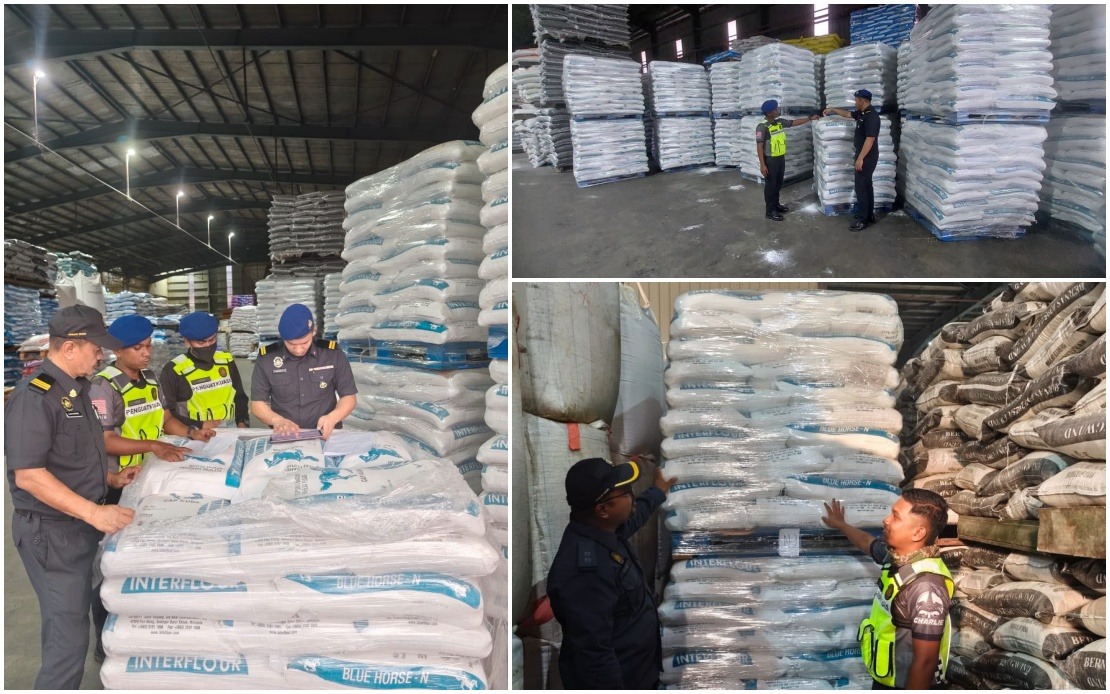
Enforcement officers from the Ministry of Domestic Trade and Cost of Living (KPDN) descended on an animal feed processing facility in the Kuala Ketil Industrial Area yesterday afternoon, uncovering what authorities believe to be an unauthorised cache of wheat flour. The raid, conducted by four personnel from the Baling branch at approximately 4.30 pm, marked the latest in a series of inspections aimed at tightening control over subsidised commodity distribution across Malaysia's food production chain.
The operation yielded the seizure of 53,325 kilogrammes of wheat flour, with an estimated value of RM100,251, according to Kedah KPDN director Muhammad Nizam Jamaludin. The discovery raises fresh concerns about oversight mechanisms governing the movement and storage of essential food materials within downstream manufacturing sectors. The flour, officials say, appeared to have been stockpiled for use in the factory's animal feed production processes, yet the facility operator had neglected to secure the requisite authorisation from the Supply Controller before warehousing the commodity.
The factory manager, identified as a 25-year-old Malaysian national, failed to present any valid permit or approval documentation when questioned by inspectors. This gap in compliance represents a significant breach of regulatory requirements that exist precisely to prevent the diversion of government-controlled commodities away from their intended distribution channels. Such oversight is particularly crucial in Malaysia, where strategic food items remain partially price-controlled to maintain affordability across the population and protect vulnerable consumer groups from price shocks.
The investigation now proceeds under Section 21 of the Control of Supplies Act 1961, legislation designed to manage the circulation of essential goods and prevent unauthorised accumulation or misuse. Muhammad Nizam's statement emphasised that authorities would pursue vigorous enforcement against any entity discovered either misusing or diverting subsidised materials. This hardline messaging reflects broader government efforts to plug leakages within the supply chain that traditionally undermine price control effectiveness and inflate the fiscal burden on state coffers.
For regional business operators, particularly those in food processing and animal feed manufacturing, the raid underscores the escalating intensity of compliance monitoring. The animal feed sector occupies a complex regulatory space—it sits downstream of grain distribution yet remains tangentially linked to the food chain through its impact on poultry and livestock production costs. Unauthorised storage of controlled ingredients can distort pricing across interconnected agricultural supply networks, ultimately affecting end consumers who depend on affordable protein sources. The KPDN's willingness to conduct surprise inspections signals that regulatory authorities are taking seriously their mandate to police commodity movement.
This enforcement action also reflects ongoing structural challenges within Malaysia's subsidy management infrastructure. While price controls on essential items serve social protection objectives, they simultaneously create incentives for operators to circumvent official channels if doing so offers cost advantages. Animal feed manufacturers, caught between regulated input costs and market-driven output prices, sometimes face margin pressures that tempt them toward irregular sourcing arrangements. The large quantity seized—over 53 tonnes—suggests this was not merely a minor administrative oversight but rather a deliberate stockpiling operation that escaped detection until the raid.
The broader implications extend across Southeast Asia's food security landscape. Malaysia, as a net importer of grains, relies heavily on controlled domestic distribution networks to maximise the reach of subsidised inputs and maintain price stability for critical commodities. When unauthorised storage occurs at processing facilities, it effectively removes those materials from the managed supply system, potentially creating artificial scarcity signals elsewhere in the chain. This, in turn, can trigger price volatility that penalises smaller producers and consumers least able to absorb cost increases.
Industry observers note that the raid highlights persistent tensions between regulatory compliance and commercial pragmatism within Malaysia's manufacturing sector. Small and medium-sized enterprises, particularly those in labour-intensive food processing, often operate with tight margins and limited access to affordable financing. When faced with controlled input prices that may not reflect prevailing market costs, some operators rationalise unauthorised sourcing as a survival strategy. However, KPDN's enforcement posture indicates that such justifications carry no weight with authorities committed to maintaining supply chain integrity.
For multinational firms and larger domestic corporations operating within Malaysia's food ecosystem, the incident serves as a cautionary reminder that regulatory vigilance extends throughout the supply chain. Compliance departments must ensure that all subsidiary operations, contract manufacturers, and affiliate facilities maintain meticulous documentation of controlled material purchases and storage. The penalty structures embedded within the Control of Supplies Act create potential criminal liability for management personnel, making negligence an expensive proposition.
Looking ahead, the case will likely proceed through investigation and potential prosecution, with the outcome carrying significance for how enforcement agencies calibrate deterrence within the sector. If charges materialise and result in substantial penalties, the precedent may encourage stricter self-policing within the animal feed industry and downstream food production. Conversely, if enforcement proves lenient, it may signal that authorities view such violations as minor administrative matters rather than serious threats to supply chain stability.
The incident also underscores the importance of robust supply chain transparency mechanisms, particularly as Malaysia continues developing digital trade infrastructure. Real-time tracking of subsidised commodity movements, coupled with automated compliance alerts, could significantly reduce the detection lag that currently allows unauthorised stockpiling to persist undetected until physical inspections occur. Regional governments across Southeast Asia facing similar subsidy management challenges may view Malaysia's enforcement trajectory with considerable interest, seeking insights into effective regulatory approaches.