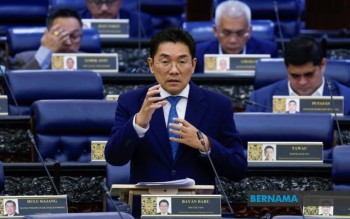
Kedah has successfully attracted RM1.4 billion in approved investments spanning 50 separate projects during the first three months of 2026, according to Deputy Investment, Trade and Industry Minister Sim Tze Tzin. The achievement reflects the northern state's growing appeal to investors and underscores a deliberate government approach to channelling industrial development through strategically positioned economic zones that extend beyond traditional urban concentrations.
The investment haul signals momentum in Malaysia's broader regional development strategy, particularly as the government continues promoting Kedah as a competitive destination for manufacturing and technology enterprises. By anchoring these projects in established industrial corridors such as Kulim Hi-Tech Park, Kedah Rubber City, and the Kerian Integrated Green Industrial Park, policymakers aim to create sustainable economic ecosystems rather than isolated investment pockets. Each facility serves a distinct sectoral focus, allowing for complementary development and supply chain integration that strengthens the state's overall competitiveness.
What distinguishes the current investment push is the explicit commitment to ensure peripheral rural communities participate in resulting economic gains. Districts such as Sik, Baling, and Padang Terap, which have traditionally remained on the margins of industrial development, are positioned to benefit through employment creation and the cultivation of local vendor networks that support anchor industries. This inclusive approach recognises that broad-based prosperity requires linking peripheral agricultural communities to value chains anchored by major manufacturing facilities, preventing the concentration of wealth in industrial heartlands alone.
Sim highlighted the ministry's recognition that Baling, Sik, and Padang Terap possess inherent comparative advantages in agriculture-derived manufacturing, particularly in food processing and agro-industrial production. Rather than attempting to replicate the electronics-heavy focus of established technology parks in these districts, the government is tailoring sectoral priorities to local resource endowments and existing expertise. This differentiated approach respects regional comparative advantage while building industrial capability across diverse sectors, creating a more resilient economic foundation that is less vulnerable to global demand fluctuations affecting any single industry.
Critical to unlocking this potential is infrastructure modernisation, particularly the widening of Federal Route FT004 connecting Kulim Hi-Tech Park to Bukit Karangan. Scheduled for completion by April 2028, this project will substantially reduce transportation costs and logistics time for businesses operating across the northern corridor. Improved connectivity transforms previously peripheral areas into genuinely accessible locations for manufacturing operations, as reduced journey times lower operating expenses and enable businesses to participate more effectively in time-sensitive supply chains. The infrastructure upgrade thus functions as an economic catalyst that makes rural industrial development economically rational rather than subsidy-dependent.
The timing of the New Incentive Framework, which took effect in March 2026, demonstrates coordinated policy implementation designed to maximise local participation in high-technology investment projects. Rather than offering generic incentives applicable uniformly across all investors, the revised framework rewards companies that demonstrably increase localisation by sourcing materials, components, and services from Malaysian suppliers. This incentive structure creates powerful market mechanisms encouraging foreign investors to develop relationships with domestic vendors, effectively mandating supply chain integration that would otherwise require separate negotiation.
Under this framework, companies that achieve higher localisation thresholds become eligible for substantially more attractive government support packages, creating financial incentives aligned with inclusive economic development objectives. For rural suppliers and service providers, this translates to expanded market opportunities and the possibility of rapid capability upgrading by serving sophisticated multinational manufacturers. The approach recognises that sustainable competitive advantage emerges not from handouts but from genuine economic participation where rural enterprises must meet international quality and delivery standards to secure supply contracts.
The cumulative effect of these complementary policies—strategic industrial positioning, rural-focused employment development, infrastructure investment, and localisation-weighted incentives—suggests an administration attempting to move beyond conventional centre-periphery development models. Rather than accepting that rural areas will inevitably lag behind major urban industrial zones, the government is constructing policy architectures designed to distribute industrial opportunity and capability development across diverse regions. This spatial rebalancing matters particularly for Malaysia, where regional inequality has persistently undermined social cohesion and political stability.
For Southeast Asia more broadly, Kedah's experience demonstrates how middle-income states can position themselves in global value chains without surrendering local economic development objectives. The integration of technology parks with agro-industrial development, combined with deliberate policies encouraging foreign investor participation in rural vendor networks, provides a potential model for other regional economies facing similar challenges in ensuring that globalisation benefits reach beyond metropolitan cores. As foreign direct investment increasingly flows toward Southeast Asia as companies diversify supply chains away from China and other concentrated manufacturing hubs, how host states structure investment to maximise inclusive benefits will determine whether growth translates into broadly shared prosperity or reinforces existing spatial inequalities.

