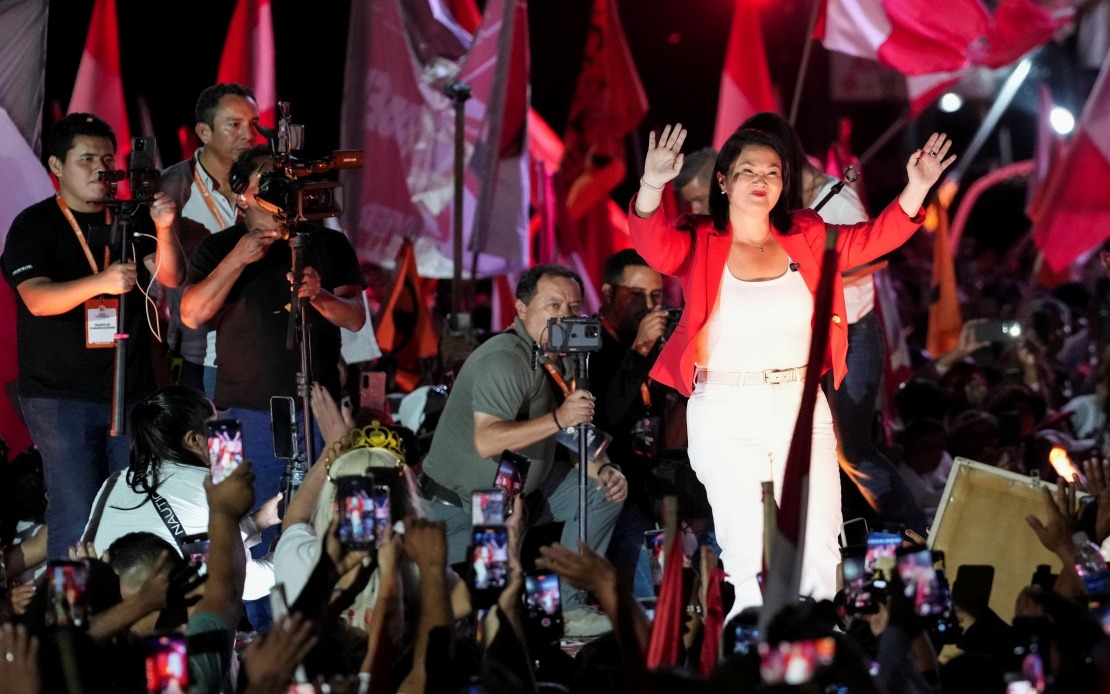
Peru's presidential election has produced one of the hemisphere's closest electoral outcomes, with right-wing Popular Force candidate Keiko Fujimori narrowly prevailing over her left-leaning rival Roberto Sanchez in a race that underscores the nation's sharply polarised political landscape. According to final tallies released by Peru's National Office of Electoral Processes (ONPE), Fujimori secured 50.135 per cent of valid votes cast in the June 7 election, compared to Sanchez's 49.865 per cent—a margin so thin that it represents just 49,641 votes separating the two candidates from dramatically divergent political outcomes. The complete count of all 92,766 tally sheets was finalised on Monday, with the electoral authority expected to formally proclaim the results on Friday, according to Roberto Burneo, president of the National Jury of Elections.
The numerical breakdown underscores the intensity of Peru's electoral battle. Fujimori accumulated 9,223,396 votes while Sanchez garnered 9,173,755, a difference of less than three-tenths of a percentage point in a nation of nearly 35 million people. Such a razor-thin outcome in a presidential contest highlights the fragmentation of Peru's electorate and the inability of either major political bloc to build a commanding coalition. For Southeast Asian observers tracking populist and anti-establishment movements across developing democracies, Peru's result offers a cautionary tale about institutional strain when electoral legitimacy rests on such a narrow foundation.
Fujimori's victory represents a significant personal breakthrough after three previous unsuccessful presidential campaigns, establishing her as a formidable political force despite the controversial legacy of her family. Her father, Alberto Fujimori, governed Peru from 1990 to 2000, implementing policies that combined market-oriented economic reforms with authoritarian governance practices. The elder Fujimori's tenure remains deeply contested in Peruvian memory, associated with both economic stabilisation and alleged human rights abuses. Keiko Fujimori has worked throughout her political career to rehabilitate the family name while maintaining core elements of her father's political platform, though she operates within a more constrained democratic framework than her predecessor.
Her opponent, Roberto Sanchez, represented a contrasting political trajectory, having served as a minister during the presidency of Pedro Castillo from 2021 to 2022. Castillo's administration became synonymous with leftist policies and attempts to redistribute wealth, though his tenure proved tumultuous, culminating in a contested power transition. Sanchez's candidacy positioned him as the continuation of that reformist impulse, appealing to voters seeking expanded social spending and state intervention in the economy. The fact that such a candidate came within striking distance of the presidency in a single percentage point reflects persistent demand across Peru's electorate for progressive change and redistributive policies.
The extreme closeness of this result carries substantial implications beyond Peru's borders. Throughout Latin America and Southeast Asia, where political competition frequently mirrors Peru's pattern of left-right polarisation, this election demonstrates the volatility of modern democratic contests. When victory margins shrink to fractions of a percentage point, the legitimacy of electoral outcomes becomes subject to intense scrutiny, particularly when underlying grievances about inequality and representation remain unresolved. The likelihood of legal challenges and contested proclamations increases substantially, potentially destabilising Peru's institutional framework during a period already marked by economic hardship and social fragmentation.
The distribution of votes also suggests profound geographic and demographic cleavages within Peruvian society. Presidential contests in developing nations often reveal stark divides between urban coastal populations and rural highlands, between wealthy capital cities and impoverished provincial centres. Fujimori's narrow victory implies that her traditional base among Lima's business elite and coastal regions proved just sufficient to overcome Sanchez's stronger performance among Peru's interior populations and working-class constituencies. Understanding these spatial patterns becomes crucial for interpreting Peru's political trajectory and the likelihood of sustained social tension.
Fujimori's path to governance now requires navigating a profoundly divided legislature and public opinion split almost exactly in half. Governing under such circumstances demands exceptional political skill and willingness to build broad consensus, qualities that Peru's recent political history suggests remain in short supply. The presence of an opposition camp representing nearly 50 per cent of the electorate will create persistent pressure on any initiatives Fujimori proposes, likely resulting in legislative gridlock on major policy questions. This governance challenge parallels difficulties faced by narrowly elected leaders elsewhere in the region, where institutional fragmentation prevents decisive action on pressing economic and social concerns.
The economic context surrounding this election cannot be overlooked. Peru, like many Latin American nations, faces inflation pressures, declining purchasing power, and social demands for expanded public services that government revenues struggle to accommodate. Both candidates offered competing visions for addressing these challenges, with Fujimori emphasising private-sector leadership and market mechanisms while Sanchez advocated greater state direction of economic activity. The election's outcome will shape whether Peru pursues orthodox fiscal policies or experiments with expanded state intervention during a period of significant economic strain.
For Malaysia and other Southeast Asian democracies observing Peru's experience, the election provides instructive lessons about maintaining institutional resilience and public confidence during periods of deep political division. Peru's institutional framework, despite its flaws, managed to process votes completely and move toward an official proclamation, demonstrating that even polarised societies can sustain basic electoral functions. However, the extreme closeness of the outcome and the potential for post-election disputes underscore the importance of strong independent electoral commissions, transparent vote-counting procedures, and respect for democratic norms among political competitors. Malaysia's own electoral history, marked by significant ideological divisions, demonstrates both the possibilities and hazards of conducting democratic contests within highly polarised political environments.

