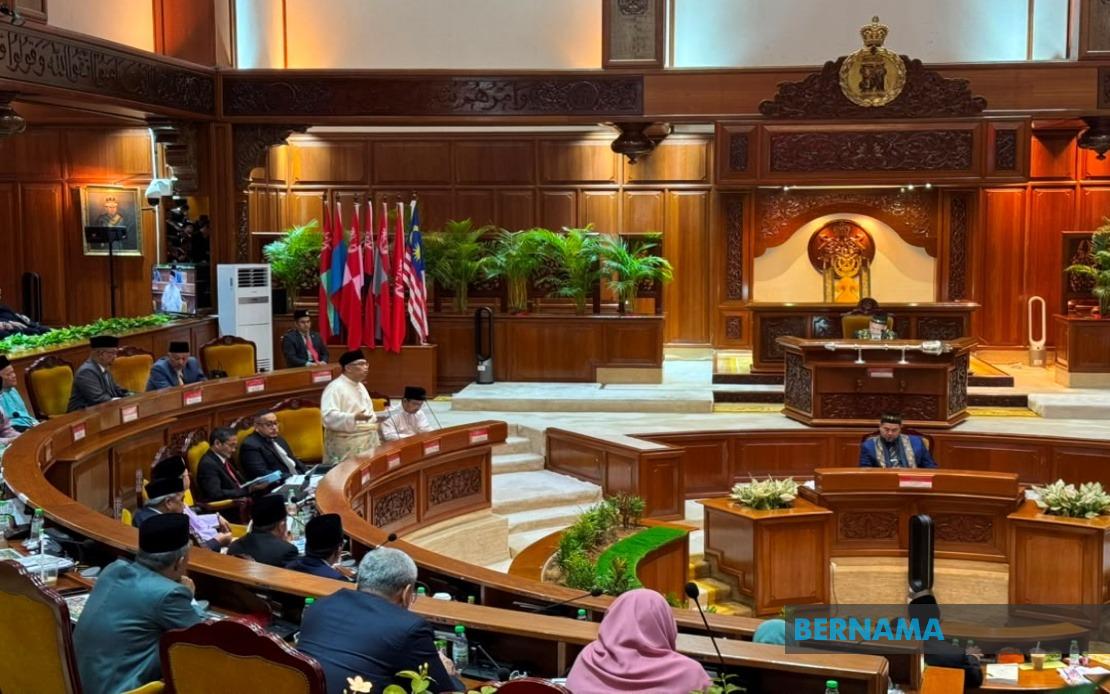
The Kelantan state legislative assembly on August 12 formally endorsed the Syariah Criminal Offences (Kelantan) Bill 2026, marking an attempt to rebuild the state's Islamic criminal law framework after significant legal setbacks. The Bill, introduced by Deputy Menteri Besar Datuk Dr Mohamed Fadzli Hassan, received unanimous approval following a spirited assembly debate and secured backing from Menteri Besar Datuk Mohd Nassuruddin Daud before Speaker Datuk Mohd Amar Nik Abdullah declared it passed.
The new legislation emerges directly from the fallout of a landmark Federal Court decision issued in February 2024 that undermined Kelantan's previous Islamic criminal law. In that ruling, delivered by a decisive 8-1 majority, the court determined that 16 of 18 provisions contained in the Syariah Criminal Code (I) Enactment 2019 exceeded the state assembly's constitutional authority. The court reasoned that certain offences properly fell under federal jurisdiction rather than state power, sparking broader constitutional questions about how Malaysia's federal system divides responsibility for Islamic criminal legislation between the centre and the states.
Mohd Nassuruddin characterised the new Bill as the product of deliberate, multi-stage refinement rather than hasty policy-making. He stressed that the legislative proposal had undergone rigorous enhancement processes and careful vetting at successive levels before reaching the assembly floor for consideration. This measured approach, he suggested, reflects the state government's commitment to crafting durable legislation that can withstand legal scrutiny and respects the boundaries established by federal constitutional interpretation.
The 2026 Bill introduces a substantially restructured framework comprising nine distinct sections, 62 substantive clauses, and an appended schedule. Among its key components are enhanced provisions addressing mandatory prayer obligations, bodily autonomy and physical integrity protections, safeguarding of intellectual capacity, and reformed punishment mechanisms. Notably, the legislation prioritises corporal punishment—specifically whipping—within its sentencing hierarchy and establishes a compound settlement mechanism that permits certain offences to be resolved through financial penalties rather than always proceeding to trial.
Mohd Nassuruddin positioned the Bill's revitalisation strategy within existing jurisprudential traditions rather than representing novel legal territory. He explained that the approach aligns with underlying principles that already characterised Kelantan's previous Syariah Criminal Code framework, suggesting evolutionary rather than revolutionary change. This framing appears intended to demonstrate continuity with Islamic legal heritage and established practice within the state's religious governance structures.
The assembly debate involved substantive contributions from six state representatives representing constituencies across the state, including Pasir Tumboh, Melor, Galas, Jelawat, Kota Lama and Chempaka. These discussions permitted exploration of the Bill's implications from diverse perspectives before the formal legislative process concluded. The unanimous passage suggests either broad political consensus across party lines regarding the desirability of reconstituting the state's Syariah criminal law, or a recognition that the legislation represents Kelantan's best available response to federal court constraints.
The February 2024 Federal Court judgment that precipitated this legislative effort originated from a constitutional petition filed by a Kelantan-based lawyer, demonstrating how individual legal challenges can reshape the boundaries of state and federal power. The case illuminated existing ambiguity concerning which bodies—state assemblies or the federal parliament—possess legitimate authority to define and punish specific categories of Islamic criminal misconduct. This uncertainty has implications extending beyond Kelantan, as other Malaysian states with their own Syariah legal systems potentially face comparable questions about the scope of their legislative reach.
For Malaysian legal observers and federalism scholars, the Kelantan experience highlights ongoing tensions within Malaysia's constitutional architecture. The country's dual legal system—combining civil law administered through federal courts with Islamic law handled through state-level Syariah courts—creates perpetual ambiguity about which sphere of government legitimately regulates specific conduct. The 2024 Federal Court decision suggested a restrictive reading of state powers, constraining Kelantan's ability to define Syariah offences without explicit federal parliamentary concurrence.
Kelantan's legislative response demonstrates how states navigate these constitutional constraints. Rather than challenging the federal court's authority or constitutional interpretation directly, the state has adopted a reconstructed legal framework designed to accommodate the court's reasoning. The new Bill presumably refrains from legislating matters the court identified as falling properly under federal jurisdiction, while reasserting state authority over those areas the court recognised as legitimately within state competence.
The passage of this Bill also reflects broader tensions surrounding Islamic law's role within Malaysia's plural legal system. As Islam-majority nations navigate the relationship between religious and secular legal domains, Kelantan's approach—emphasising systematic codification, clear institutional procedures, and restrained corporal punishment—attempts to advance religious governance while accommodating constitutional federalism principles and contemporary legal expectations regarding due process and proportionality.
The unanimous assembly passage suggests that members recognised the practical necessity of establishing functioning Syariah criminal legislation, even within federally-imposed constraints. The 2019 enactment's invalidation had created legal vacuum and uncertainty about which Islamic offences Kelantan's courts could prosecute. The 2026 Bill addresses this urgently by providing a revised statutory framework that state judicial authorities can apply with greater confidence that higher courts will recognise their constitutional legitimacy.
Going forward, the Bill will likely face scrutiny from federal authorities, legal analysts, and potentially future court challenges seeking to determine whether its provisions remain within constitutionally-permissible bounds. The legislation's fate may ultimately clarify whether Kelantan's revised approach successfully accommodates federal court precedent, or whether deeper constitutional reforms regarding federalism and Islamic law will prove necessary.

