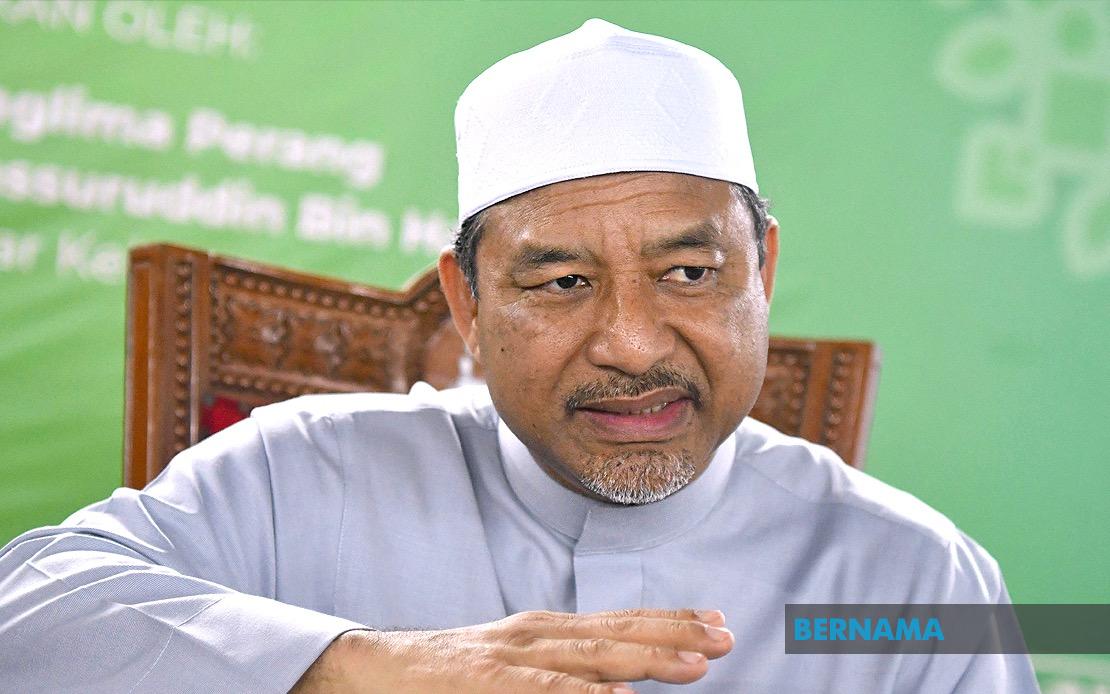
The Kelantan government remains committed to preserving and strengthening the state's distinctive arts and cultural traditions provided they conform to Islamic principles, Menteri Besar Datuk Mohd Nassuruddin Daud declared at the conclusion of the Kelantan Arts Festival (FKRK) 2026 in Pasir Puteh. This careful stewardship of heritage represents a deliberate policy balancing the state's deep-rooted artistic legacy with its commitment to religious values, positioning cultural preservation as integral both to Kelantan's identity and its tourism appeal.
Mohd Nassuruddin emphasised that the state government has consistently supported traditional arts and cultural practices transmitted across generations, rejecting any notion that it pursues a blanket prohibition of heritage activities. Instead, the administration focuses on thoughtful refinement, seeking to elevate traditional forms so they develop harmoniously within frameworks emphasising Islamic values, propriety and ethical conduct. This nuanced approach acknowledges that not all inherited practices automatically warrant continuation in their original form, but rather merit evaluation against contemporary religious and moral standards.
The Menteri Besar articulated a sophisticated philosophical position regarding the intersection of culture and faith. He noted that Islamic principles do not inherently restrict cultural expression but rather guide it along pathways rooted in noble values and moral integrity. This framework has long influenced how the Kelantan state administration evaluates, manages and safeguards cultural heritage. Rather than dismissing traditions simply because they are old, policymakers engage in the delicate work of refining these practices, enabling them to persist and flourish within boundaries established by Islamic teachings.
Acknowledging past restrictions on certain traditional performances, Mohd Nassuruddin revealed that some arts forms previously faced prohibition due to containing elements deemed incompatible with Islamic principles. However, he indicated receptiveness to permitting their revival once problematic elements have been eliminated and refined away. This stance signals flexibility within the state's cultural governance, suggesting that heritage forms need not remain permanently banned if they can be adapted to meet current religious and ethical standards.
The trajectory of Islam's development in Kelantan, according to the Menteri Besar, has long cultivated an intellectual and artistic environment where knowledge, creative expression, language and cultural practice all germinate within soil enriched by Islamic values. This historical interweaving of faith and culture means that Kelantan's artistic legacy cannot be understood as separate from its religious identity. Instead, the two dimensions reinforce and inform each other, creating a distinctly Kelantanese cultural ecosystem.
Kelantan's material and performing heritage encompasses numerous treasure forms reflecting the accumulated wisdom and philosophical insights of the Malay community, Mohd Nassuruddin contended. Traditional performing arts, ancestral games, artisanal craftsmanship, handicraft production and conventional food preparation methods all merit preservation as invaluable inheritances for succeeding generations. This comprehensive inventory recognises that culture extends far beyond elite artistic forms to encompass practical knowledge, recreational practices and quotidian skills embedded in communal memory.
The FKRK 2026 festival, which concluded following a four-day run, transcends its surface function as mere entertainment or tourism marketing, the Menteri Besar suggested. Rather, the event operates as a crucial gathering point where heritage custodians and creative practitioners convene, enabling the systematic exchange of knowledge and experience across artistic disciplines. By assembling these communities, the festival stimulates local economic activity whilst simultaneously introducing Kelantan's distinctive character and attractions to domestic and international visitors.
Particular emphasis fell on reviving traditional games including gasing uri, congkak, dam aji and tating—pastimes that contemporary authorities view as valuable antidotes to the pervasive technological influence shaping younger Malaysians' daily lives. By reintroducing these games within festival contexts and broader community settings, cultural advocates hope to restore balance, encouraging youth engagement with heritage practices that develop strategic thinking, hand-eye coordination and social bonding absent from digital entertainment.
The FKRK 2026 represents an annual initiative jointly orchestrated by the Ministry of Tourism, Arts and Culture alongside the National Culture and Arts Department's Kelantan division. This institutional arrangement ensures that heritage preservation efforts benefit from both national policy frameworks and state-level implementation capacity, creating integrated support structures for cultural sustainability. The festival framework demonstrates how governmental bodies at multiple levels can collaborate effectively on cultural programming that serves simultaneously as tourist attraction, community gathering and heritage conservation mechanism.
For Malaysia broadly, Kelantan's deliberate approach to cultural stewardship offers a case study in negotiating pluralistic values. The state demonstrates that heritage preservation and religious adherence need not operate in opposition; instead, thoughtful curation can harmonise traditional expression with contemporary ethical standards. This model holds particular relevance for other Malaysian states managing similar tensions between cultural continuity and evolving social expectations. As Malaysia increasingly positions itself as a regional cultural destination, Kelantan's philosophy of refined, values-aligned heritage promotion may influence how other communities approach their own artistic legacies.

