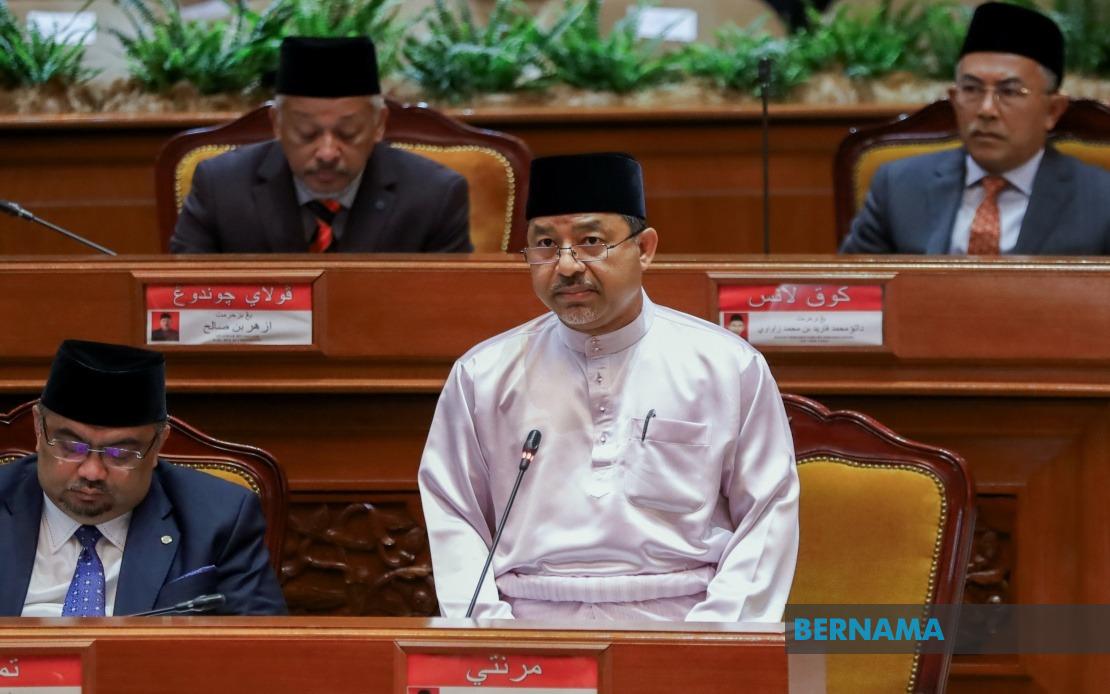
Kelantan remains Malaysia's leading state in terms of Malay reserve land holdings, according to figures disclosed by Menteri Besar Datuk Mohd Nassuruddin Daud in the State Legislative Assembly. As of June this year, the northeastern state's Malay reserve land spans 526,083 hectares, encompassing 816,020 separate land titles. This represents a substantial 91.5 per cent of Kelantan's total land area, underscoring the predominantly Bumiputera character of land ownership in the state.
The remaining land outside the Malay reserve classification comprises 48,344 hectares, or 8.4 per cent of the state's total land holdings, distributed across 43,255 titles. Combined, these figures establish Kelantan's total recorded land ownership at 574,427 hectares involving 859,275 titles. The substantial proportion of Malay reserve land reflects long-standing policy frameworks designed to preserve land ownership patterns favourable to indigenous Malay communities, a cornerstone of Malaysia's constitutional arrangements since independence.
Geographic variation in reserve land distribution across Kelantan's 11 districts reveals important patterns in land tenure. Gua Musang, the state's largest district, dominates with 122,735 hectares of Malay reserve land, a figure reflecting its expansive territorial expanse and predominantly rural character. The mountainous Gua Musang district historically has seen lower non-Bumiputera land acquisition, partly due to accessibility and development challenges. Pasir Mas and Tanah Merah follow with 56,656 and 56,246 hectares respectively, while Kuala Krai contains 53,473 hectares of designated reserve land.
When measured by percentage coverage rather than absolute area, the distribution exhibits different concentrations. Tanah Merah district achieves the highest saturation of Malay reserve land at 99.9 per cent, effectively total coverage. Tumpat, Pasir Puteh, Bachok, Pasir Mas, Kota Bharu and Jeli follow with consistently high percentages, all exceeding 95 per cent. This pattern indicates that most Kelantan districts maintain near-universal Malay reserve status, with non-reserve land appearing primarily in urban commercial centres rather than distributed throughout districts.
Kelantan's sustained preservation of Malay reserve land stands in contrast to experiences in other Malaysian states, where conversion and de-reservation of such land has occurred over decades of economic development. The Menteri Besar emphasized that no reduction in reserve land has occurred in Kelantan, suggesting effective administrative management and political commitment to maintaining existing designations. This achievement occurs despite pressure from development interests and economic transitions that typically accompany modernization.
The regulatory framework governing these designations derives from Section 13A of the Kelantan Malay Reservations Enactment, which establishes the legal foundation for reserve land management. Significantly, this provision permits controlled non-Malay ownership within designated Malay reserve areas, introducing flexibility into an otherwise restrictive regime. This measured approach balances preserving the reserve system's core purpose with accommodating economic and commercial necessities that might otherwise require wholesale de-reservation.
Equally important are the enforcement powers embedded within the same legislative provision. State authorities retain discretionary capacity to regulate land transactions within Malay reserve zones, including authority to prohibit transactions deemed prejudicial to reserve integrity. These regulatory powers function as a safeguard against erosion through incremental transfers, allowing administrators to prevent situations where cumulative non-Malay acquisitions could gradually undermine reserve status. The provision thus combines permissiveness with protective mechanisms.
Kelantan's land tenure structure carries implications extending beyond state boundaries. As Malaysia's most extensive Malay reserve jurisdiction, Kelantan serves as a reference point in national discourse surrounding indigenous land rights and constitutional protections. The state's success in maintaining reserve designations contrasts with situations elsewhere, where urbanization and commercial pressures have necessitated significant conversions. This distinction raises questions about development models and the political sustainability of reserve systems under varying economic circumstances.
For Southeast Asian observers, Kelantan's approach exemplifies one model for managing indigenous or privileged land ownership within diverse societies. The region features multiple approaches to protecting particular groups' land interests, from Indonesia's adat systems to Thailand's agricultural landholding restrictions. Kelantan's experience suggests that explicit, enforceable legal frameworks combined with administrative commitment can sustain such protections across extended periods, though success may depend partly on Kelantan's particular economic trajectory and political consensus.
The significance of maintaining accurate records, as evidenced by the detailed statistics provided, cannot be overlooked. Land administration systems tracking 859,275 individual titles across diverse terrains and competing claims demands substantial bureaucratic capacity. Kelantan's maintenance of precise figures through June 2026 indicates institutional competence in land registry management, a prerequisite for effective reserve preservation. Inaccurate records could facilitate unauthorized conversions or title disputes that gradually compromise designations.
Looking forward, Kelantan faces ongoing challenges in balancing reserve preservation with development imperatives. Economic pressures, demographic changes, and infrastructure projects will continue testing the state's commitment to maintaining current reserve percentages. The availability of flexibility mechanisms within the enactment suggests recognition that absolute rigidity could become counterproductive, potentially pushing landowners toward converting entire holdings to non-reserve status rather than accepting partial transaction restrictions. The continuing dialogue between preservation and pragmatism will shape Kelantan's land policy trajectory.

