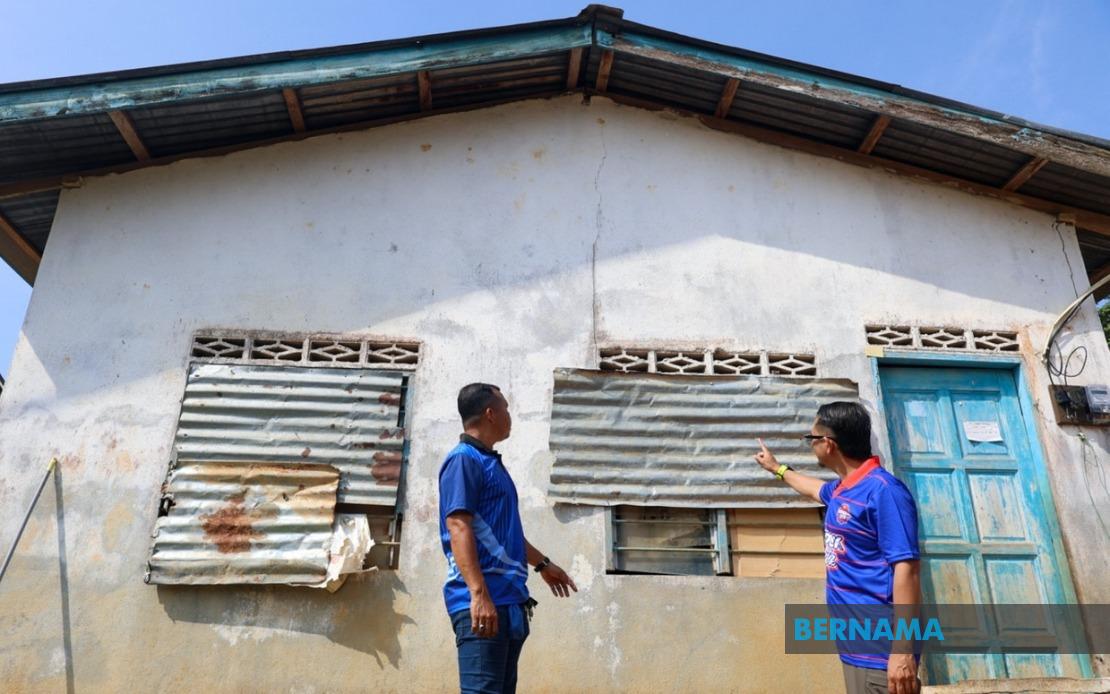
The Kelantan state government has mapped out a comprehensive intervention strategy targeting five critical areas of concern affecting 1,524 Orang Asli residents scattered across the Pasik Resettlement Scheme (RPS) and Kampung Kuala Wok. Following field visits to these remote communities on August 3 and 4, Nenggiri Assemblyman Mohd Azmawi Fikri Abdul Ghani detailed the government's findings, emphasising that addressing these interconnected challenges will require coordinated action across multiple state agencies and federal bodies.
The most pressing issue centres on the deteriorating condition of residential dwellings throughout both settlements. Many homes require urgent structural intervention, with residents grappling with damaged roofs, compromised building integrity, and dangerously outdated electrical installations that pose genuine fire hazards. Beyond repair work, the settlements face a housing shortage exacerbated by demographic change, as younger residents establishing new families lack adequate accommodation. Mohd Azmawi Fikri indicated that discussions with the Department of Orang Asli Development (JAKOA) would explore possibilities for constructing additional residential units to accommodate this growing population pressure.
Wildlife disturbance represents an ongoing existential threat that has profoundly affected daily life since 2022. The regular incursions by wild elephants have created a climate of sustained anxiety, disrupting agricultural activities, restricting children's outdoor movements, and forcing residents to exercise constant vigilance. This human-wildlife conflict reflects the broader challenge facing indigenous communities positioned at the margins of Malaysia's development frontier, where conservation priorities and livelihood needs frequently collide.
Electricity supply remains an unresolved infrastructure deficit that perpetuates the isolation of these communities. Reliable power access is foundational to education quality, healthcare delivery, and economic opportunity, yet the remoteness of both settlements has made grid expansion economically challenging for utilities operators. The government's engagement with this issue signals recognition that energy poverty directly constrains developmental prospects for vulnerable populations.
The Essential Goods Distribution Programme emerged as another focal point, with residents requesting the inclusion of RON95 petrol in the subsidy scheme. The nearest functional petrol station lies approximately 50 kilometres distant, creating a significant accessibility and cost burden for residents dependent on fuel for transport and livelihood activities. By incorporating fuel into the programme's basket of subsidised items, the government could substantially reduce the effective cost of accessing distant markets and services.
Geographic isolation fundamentally shapes the constraints facing both settlements. Reaching RPS Pasik and Kampung Kuala Wok from Gua Musang requires specialist four-wheel-drive vehicles and entails a gruelling round-trip journey spanning roughly 200 kilometres through challenging terrain. This extreme inaccessibility functions as a multiplier effect amplifying every other challenge residents face, whether procuring groceries, accessing emergency medical care, or collecting government assistance. The infrastructure deficit reflects historical patterns of marginalisation wherein indigenous territories receive proportionally lower investment in transport connectivity.
The Jualan Rahmah programme, Malaysia's retail price control initiative, was identified as requiring strengthened implementation within these remote areas. Ensuring that price-controlled essential goods actually reach isolated communities at regulated rates demands robust logistics and enforcement mechanisms that have often proven inadequate in practice. Without deliberate intervention, remote populations can effectively pay premium prices despite official subsidy schemes, creating a gap between policy intention and lived experience.
Mohd Azmawi Fikri's identification of these five priority areas reflects a welcome analytical clarity about what indigenous communities actually require from government action. Rather than generic development platitudes, the Nenggiri assemblyman's assessment demonstrates attention to concrete material conditions: the physical safety of homes, protection from environmental threats, access to energy, affordable goods, and transportation feasibility. This specificity suggests potential for more targeted, effective interventions than broad-brush development initiatives.
The coordination challenge ahead remains substantial. Addressing these priorities requires seamless cooperation between the Kelantan state government, JAKOA, utility providers, relevant federal agencies overseeing conservation policy, and logistics operators managing supply chains. The communities themselves must be full partners in designing solutions, rather than passive recipients of top-down programmes that frequently misalign with local realities and preferences.
For wider Malaysia, the situation in RPS Pasik and Kampung Kuala Wok exemplifies enduring patterns of vulnerability affecting indigenous communities throughout the peninsula. Despite constitutional recognition and statutory protections, many Orang Asli settlements remain trapped in cycles of infrastructure deprivation and economic marginalisation. The government's current engagement with these specific communities offers an opportunity to demonstrate whether targeted, evidence-based policy can meaningfully improve conditions or whether the structural barriers to inclusive development remain too entrenched for incremental reform.
The remoteness that defines these settlements simultaneously obscures them from mainstream political attention and media scrutiny, enabling systemic neglect to persist. Bringing these communities' needs into public discourse, as Mohd Azmawi Fikri has done, constitutes an essential prerequisite for sustained policy action. Whether the identified priorities translate into actual resource allocation and implemented programmes will ultimately determine the government's commitment to genuine indigenous welfare.

