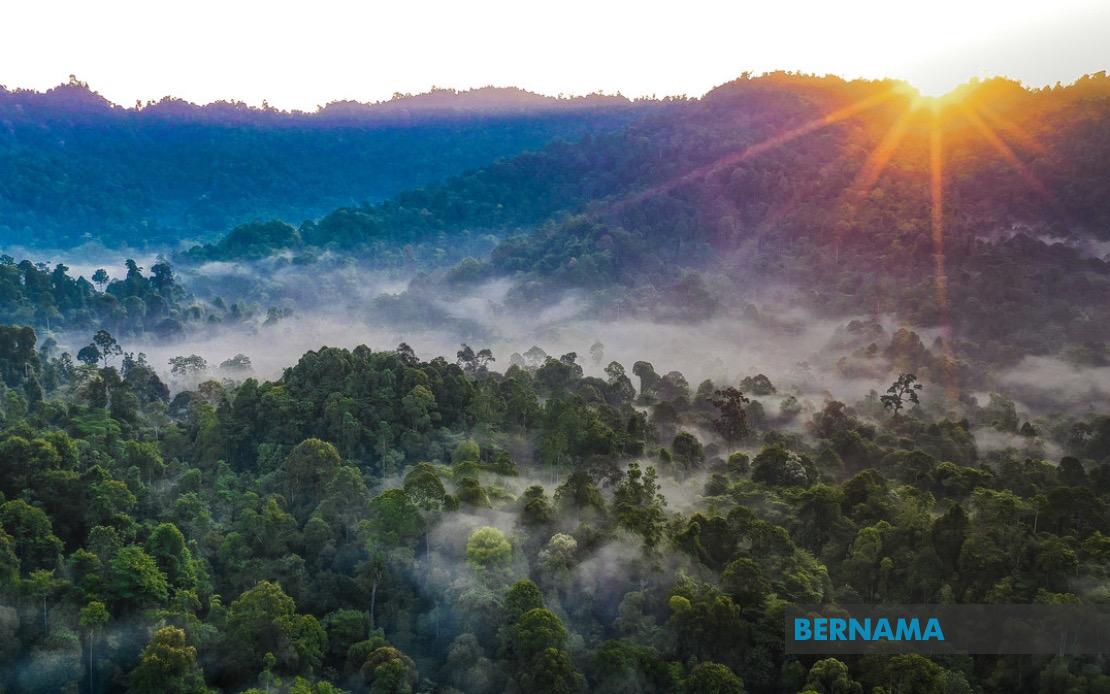
The Kelantan state government has committed to a forest replacement policy that would preserve the state's total forest reserve area despite ongoing degazetting for development and resource extraction. Deputy Menteri Besar Datuk Dr Mohamed Fadzli Hassan made this assurance during a state government executive meeting at the Kota Darulnaim Complex in Kota Bharu on July 15, stating that any forestland removed from protected status would be systematically replaced with equivalent acreage elsewhere in the state.
The announcement comes amid growing scrutiny over the Temangan Forest Reserve in Machang, which was recently degazetted to facilitate granite mining operations. The area has become a focal point for environmental discussions in Kelantan, with questions raised about the balance between economic development and forest conservation in a state where forestry remains economically significant. The Deputy Menteri Besar's reassurance suggests the state administration is seeking to address these concerns while maintaining its development agenda.
According to Mohamed Fadzli, the Temangan situation originated over a decade ago when the state issued approval to a company for granite extraction within the forest reserve boundaries in 2009. For more than thirteen years, this approval remained dormant, creating a unusual situation where mining rights existed on paper but could not legally be exercised within protected forest status. The recent degazetting essentially formalised an arrangement that had been technically pending for years, allowing the company to finally proceed with operations.
The Deputy Menteri Besar clarified that the decision to remove the Temangan Forest Reserve from protected status was not arbitrary but rather a culmination of long-standing approvals that required implementation. This explanation reflects an ongoing tension in Malaysian state governance between honouring previous commercial commitments and maintaining environmental protections. The move signals that economic interests dating back over a decade continue to influence contemporary land-use decisions in Kelantan.
To substantiate the replacement commitment, Mohamed Fadzli indicated he had engaged directly with the Kelantan State Forestry Department to establish clear procedures and timelines for locating alternative forest areas. The forestry department has apparently provided formal assurance that replacement forest reserves will be identified and gazetted to offset any degazetted areas, establishing a net-zero policy on forest loss. However, specific details about which areas would be converted to forest reserve status and when this conversion would occur remain unclear from the available statements.
This forest replacement approach, sometimes called biodiversity offsetting or forest banking, has become increasingly common in Southeast Asia as states attempt to reconcile development imperatives with conservation goals. The theory posits that ecosystem services can be maintained if degraded or converted forestland is offset by protecting equivalent areas elsewhere. However, environmental specialists often question whether new forest reserves can adequately replace biodiverse primary or mature secondary forests that may take decades to regenerate.
For Kelantan specifically, the replacement policy carries particular significance given the state's geographical characteristics and existing forest coverage. The state contains portions of the Taman Negara national park and other important forest ecosystems that form part of Malaysia's broader biodiversity network. Any net loss in forest cover, even with replacement protocols, could affect wildlife corridors and watershed protection that extend beyond state boundaries to benefit the broader Peninsula.
The granite mining approval itself reflects the ongoing tension in Malaysian resource management between extractive industries and environmental stewardship. Granite quarrying generates local employment and contributes to state revenue, yet removes significant volumes of earth and rock, fundamentally altering landscapes and ecosystems. The delayed implementation suggests the state may have grappled with the environmental implications for years before concluding that economic factors warranted proceeding.
Regional observers will likely monitor how the Kelantan government executes this replacement commitment. The success or failure of this initiative could establish a precedent for forest management policies across other Malaysian states facing similar pressures to open protected areas for development. If the replacement forest reserves are promptly and rigorously established, the model might gain credibility; if implementation falters or replacement areas prove inadequate, the policy could face criticism as a means to legitimise degazetting without genuine conservation benefit.
The announcement also occurs within Malaysia's broader commitment to international environmental pledges, including targets for forest cover and biodiversity protection under various global frameworks. Kelantan's forest replacement policy, if consistently implemented, would contribute to demonstrating that Malaysia can balance economic development with environmental stewardship. However, the policy remains dependent on rigorous oversight and genuine commitment from multiple state departments to identify, gazette, and manage replacement forest areas according to rigorous conservation standards.

