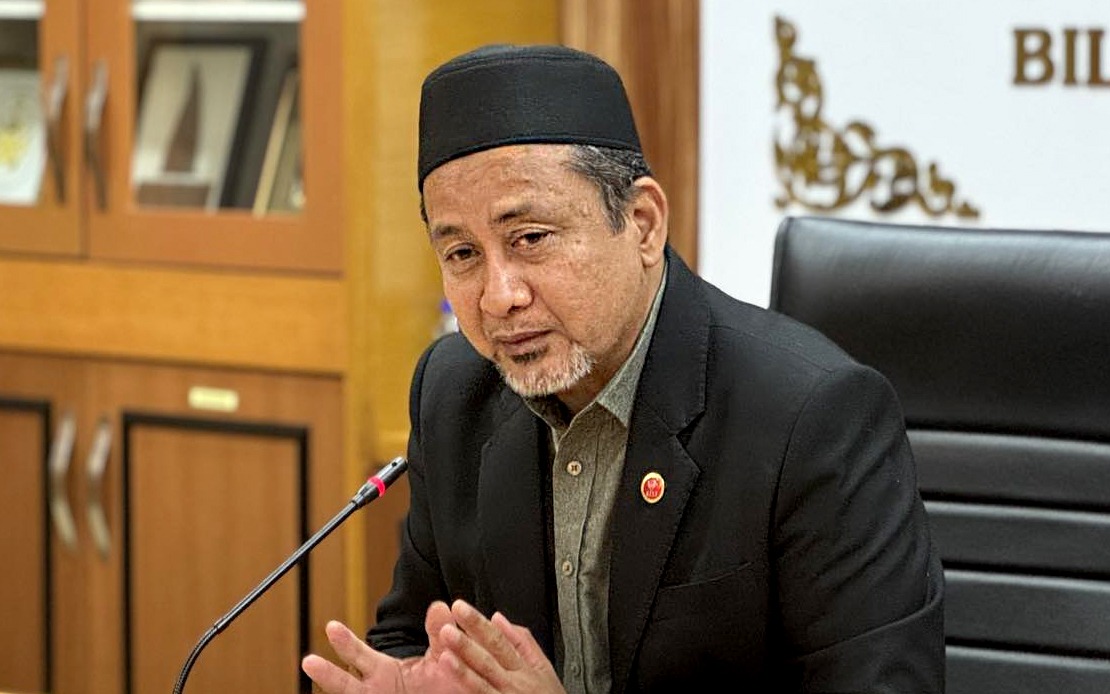
The Kelantan State Sports Council has undertaken a significant restructuring of its support infrastructure for state-level athletes, moving beyond traditional competitive funding to establish a more comprehensive safety net addressing multiple dimensions of athlete welfare. The expanded initiative represents a strategic shift in how regional sports bodies approach athlete development, recognising that sustainable excellence requires protection across education, training, competition participation, and personal emergencies.
According to Zamakhshari Muhamad, chairman of the Kelantan State Youth, Sports, NGOs and Community Unity Committee, this holistic framework aims to secure the long-term wellbeing of Kelantan's sporting representatives while simultaneously creating pathways for academic achievement. The underlying philosophy acknowledges that athletes juggling sporting ambitions with educational pursuits require institutional support across multiple fronts to prevent either dimension from suffering.
The programme's structure incorporates several distinct support mechanisms tailored to different athlete categories and circumstances. Designated Imtiyaz athletes receive monthly stipends, providing a stable income foundation that allows concentration on training without financial distraction. Separately, athletes enrolled in the Special Programme gain access to equipment provision and nutritional supplementation—recognising that professional-level performance depends on resources beyond individual family capacity, particularly for athletes from modest socioeconomic backgrounds.
Competition participation funding addresses a persistent challenge in Malaysian regional sports development: the cost burden that prevents talented athletes from competing beyond their home state. By subsidising domestic and international competition entries, the council removes a structural barrier that often limits exposure and ranking advancement. This proves particularly significant for athletes pursuing individual sports or those whose disciplines require international rankings for scholarship eligibility.
The welfare assistance component extends into territory rarely addressed by Malaysian state sports councils. Coverage for natural disasters, accidents, marriages, and death benefits establishes the sports body as a mutual aid organisation rather than merely a performance-funding agency. This signals recognition that athletes face the same life contingencies as other citizens, and that unexpected hardship can derail careers even for those performing at elite levels.
Educational integration forms perhaps the most strategically important pillar. By coordinating with Yayasan Kelantan Darulnaim to facilitate loan facilities and scholarships at public institutions, the council creates direct pathways from sporting achievement to tertiary qualification. Zamakhshari emphasised that this approach prioritises Malaysia Games (SUKMA) medallists, effectively converting sporting success into educational opportunity. The programme further incentivises academic excellence among athletes through one-off contributions ranging from RM300 to RM500 for those achieving outstanding results in SPM and STPM examinations.
The scope of educational support reflects a pragmatic understanding of athlete career longevity. Most sporting careers have defined endpoints, whether through age, injury, or competitive obsolescence. Without alternative credentials and qualifications, athletes face employment precarity post-retirement. By embedding educational advancement into the sports council's remit, Kelantan addresses this structural vulnerability directly, enabling athletes to build professional futures extending beyond their athletic prime.
The programme's reach has already demonstrated measurable uptake, with more than 100 athletes having received examination achievement contributions during the 2025-2026 cycle alone. This volume suggests genuine demand for such assistance among Kelantan's athlete population, validating the council's decision to expand offerings beyond traditional competition sponsorship.
Implementation has required substantial coordination across government and non-government sectors. Support from the National Sports Council, Kelantan Education Department, Kelantan Youth and Sports Department, Yayasan Islam Kelantan, and various tertiary institutions indicates that the expanded programme operates within a broader ecosystem of support rather than in isolation. Such inter-institutional collaboration enhances programme sustainability and reduces dependency on single funding sources.
The timing of this expansion carries significance within Malaysia's broader sports development context. As state-level competitions like SUKMA become increasingly competitive and require year-round professional preparation, athletes need corresponding support infrastructure extending beyond competition periods. Kelantan's initiative acknowledges that sustained excellence demands attention to athlete retention, education, and long-term security rather than solely short-term performance maximisation.
For athletes from less affluent family backgrounds—a reality for many Kelantan-based performers—the removal of financial barriers to education and competition participation creates social mobility pathways that would otherwise remain inaccessible. This addresses equity dimensions within Malaysian sports that merit attention as the nation pursues regional and international competitive success.
The stated aspiration to motivate athletes toward "excellence in sports, academics and personal character development" reflects values-oriented governance that transcends pure medal-counting objectives. Whether the programme achieves these outcomes will depend significantly on effective implementation and sustained resource commitment over multiple years. Nonetheless, the framework itself represents meaningful institutional recognition that athlete welfare encompasses far more than competition sponsorship, setting a potential model for other Malaysian state sports councils considering similar expansions.

