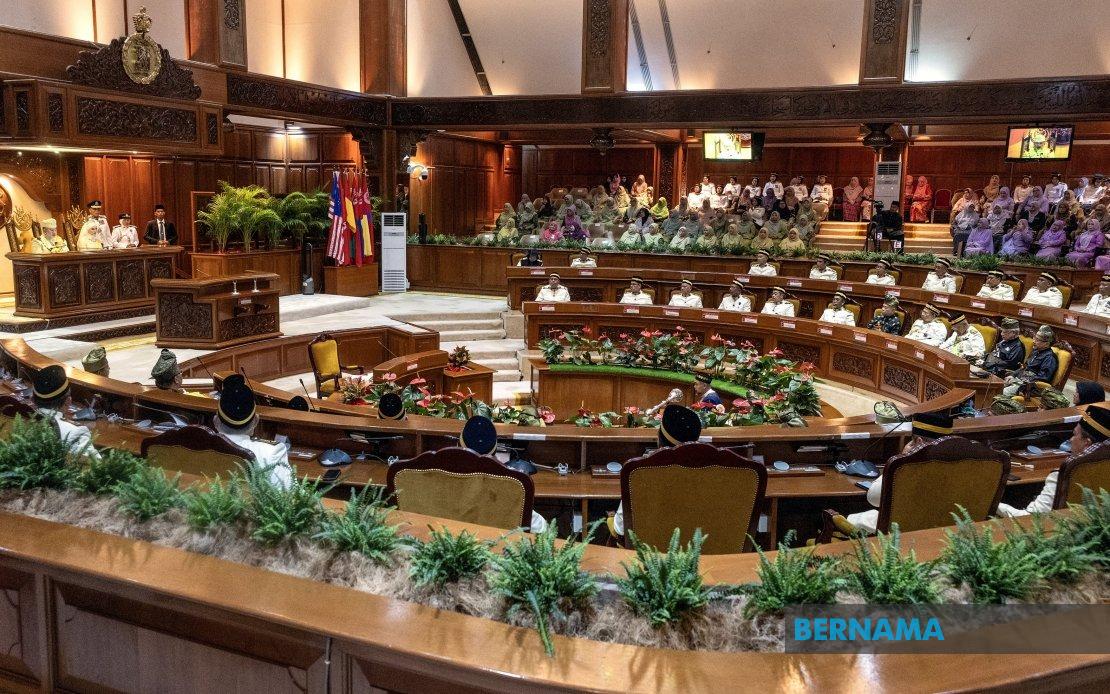
The Kelantan state government is moving forward with legislative reform in the realm of Syariah criminal law by tabling the Syariah Offences (Kelantan) Bill 2026 at the State Legislative Assembly sitting scheduled for next Tuesday. Deputy Menteri Besar Datuk Dr Mohamed Fadzli Hassan announced the development, framing the proposed legislation as a necessary response to a transformative Federal Court judgment that reshaped the constitutional boundaries governing state and federal authority over Islamic criminal matters.
The immediate catalyst for this legislative rewrite stems from the Federal Court's watershed decision on 9 February 2024, when an 8-1 majority of judges determined that Kelantan had transgressed its constitutional powers by enacting 16 of 18 challenged provisions in the Kelantan Syariah Criminal Code (I) Enactment 2019. The constitutional challenge originated from Kelantan lawyer Nik Elin Zurina Nik Abdul Rashid, whose case became a focal point for nationwide scrutiny of how legislative authority ought to be distributed between Parliament and state assemblies when addressing offences within the Islamic legal framework.
This judicial pronouncement carries significant ramifications across Malaysia's federal structure. The court's ruling clarified that certain matters touching on Syariah criminal liability fall squarely within Parliament's constitutional remit rather than state legislatures. By invalidating nearly 90 percent of the challenged provisions, the judgment essentially required Kelantan to reconstruct its legal framework with heightened constitutional precision, ensuring that any state-level offences provisions operate strictly within permissible boundaries and do not encroach upon federally reserved domains.
Kelantan's response demonstrates measured deliberation rather than rushed reaction. According to Mohamed Fadzli, drafting work commenced in mid-2024, allowing state authorities to absorb the Federal Court's reasoning and translate it into coherent legislation. The preparation process involved a multidisciplinary committee comprising civil law practitioners, Syariah legal experts, academics specialising in constitutional matters, and serving Syariah judicial officers. This composition reflects an effort to balance constitutional compliance with substantive Islamic jurisprudence and administrative practicality.
The committee's work was not undertaken in isolation. The draft Bill underwent separate review by the Kelantan Council of Ulama operating under the Kelantan Islamic Religious and Malay Customs Council (MAIK). This additional consultative layer suggests that state authorities sought to ground the legislation not only in constitutional law but also in theological legitimacy and scholarly consensus within Malaysia's Islamic establishment. Such dual-track validation helps contextualise the reform within both legal and religious frameworks.
The emerging legislation comprises nine distinct sections spanning 62 operative clauses plus supplementary schedules. Mohamed Fadzli highlighted that drafting proceeded on the foundational principle of "pith and substance," a constitutional doctrine requiring that legislation's essential character determines its validity rather than its incidental features or ancillary provisions. This doctrinal anchor proves crucial: by anchoring the Bill to this principle, Kelantan appears to have attempted architecting provisions that withstand scrutiny regarding whether they genuinely address matters within state jurisdiction or whether they covertly regulate federally protected terrain.
A noteworthy emphasis in the new framework concerns religious obligations. Rather than purely criminalising conduct, the Bill reportedly integrates substantive theological content, suggesting that offences are framed with reference to Islamic doctrinal requirements. This orientation potentially distinguishes the reformed approach from prior legislative attempts that may have prioritised criminal sanctions without sufficiently anchoring them in foundational religious principles that legitimise state intervention in these domains.
The Bill also incorporates "several new and reformative provisions," according to Mohamed Fadzli's characterisation. Precisely which provisions represent innovations remains to be seen when the legislation receives public scrutiny during assembly debate. However, this language suggests that Kelantan has not merely trimmed the 2019 enactment but undertaken substantive rethinking about how state-level Syariah criminal law should function within a federal system where powers are distributed and some domains are federally reserved.
The tabling of this legislation arrives at an inflection point in Malaysian constitutional jurisprudence. The Nik Elin case generated considerable public discussion about federalism, religious law, and state autonomy. Some stakeholders questioned whether the Federal Court's judgment unduly constrained state governments' capacity to implement Islamic governance in their jurisdictions, whilst others contended that clear constitutional boundaries prevent state overreach that could create legal fragmentation or infringe fundamental liberties.
Kelantan's Deputy Menteri Besar expressed hope that all assemblymen would extend support to the Bill, implicitly acknowledging that unanimous backing remains uncertain despite the Bill's constitutionally-grounded foundation. In Malaysian state politics, even government-backed legislation occasionally encounters resistance from backbenchers raising diverse concerns or registering dissent on principle. The stated optimism may reflect confidence in cross-party cooperation on Islamic governance matters, though outcomes depend on how individual legislators evaluate the Bill's content once detailed examination begins.
For Malaysian readers and the broader Southeast Asian context, this legislative development illustrates ongoing tensions in managing plural legal systems within federal democracies. Malaysia's unique constitutional arrangement permits state governments to legislate on Islam-related matters while preserving federal jurisdiction over certain domains. Kelantan's reform effort—transparently undertaken in response to court guidance—demonstrates one state attempting to navigate these boundaries responsibly. How other states with constitutional powers to legislate on Syariah criminal matters respond to the Federal Court's guidance remains an open question that will likely influence Islamic governance frameworks across the federation in coming years.

