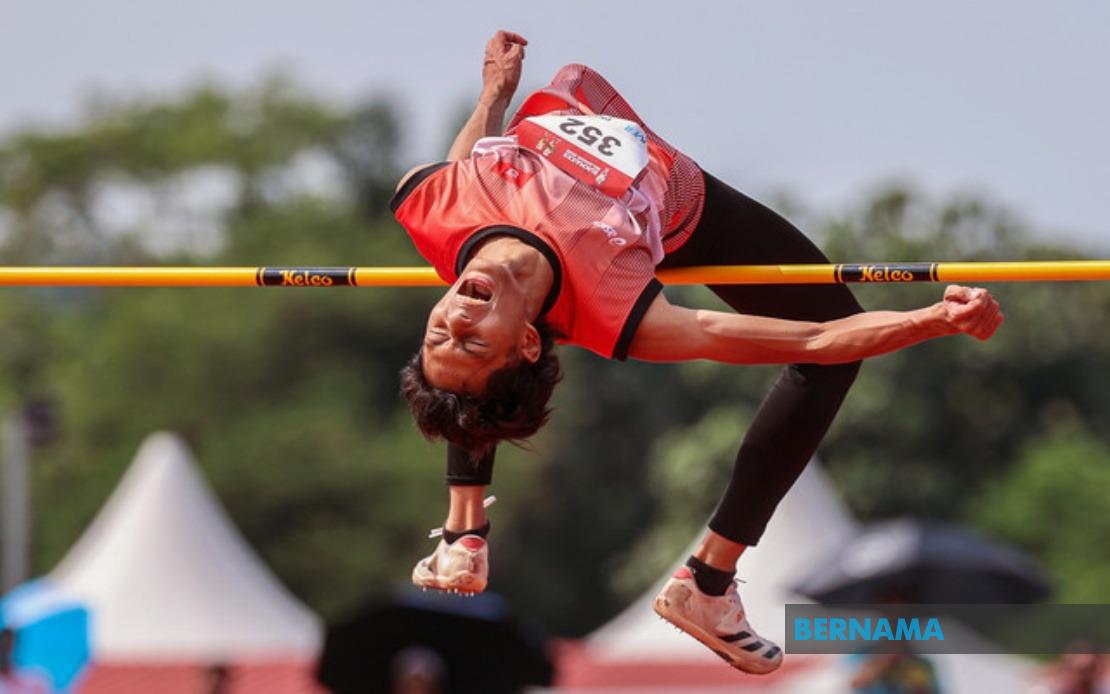
Kelantan's Dzul Darwisy Adam Khairulaswari has completed a remarkable personal turnaround at the Selangor 2026 edition of the Malaysia Games, winning the men's high jump gold medal at Universiti Putra Malaysia's sports centre. The 18-year-old athlete cleared 2.09 metres to claim his first victory at Malaysia's premier biennial sports championship, representing a dramatic leap from his 11th-place finish when Sarawak hosted SUKMA two years earlier.
The victory marks far more than a single medal for the young Kelantanese athlete. In securing Kelantan's second athletics gold at these games, Darwisy achieved a personal milestone that had eluded him throughout his competitive career at the secondary and national levels. His triumph drew notable spectators, including former national high jump champion Lee Hup Wei, who now serves as national reserve coach, signalling the significance of the performance within Malaysia's athletics establishment.
Darwisy's silver and bronze medallists came from neighbouring Kedah, with Muhamad Nawawi Mohamad taking the runner-up position after clearing 2.07 metres, whilst Muhammad Naufal Zulkifli secured bronze with a 2.04-metre effort. The competitive nature of the field reflects the growing depth within Malaysia's high jump talent pool, particularly among younger athletes still finding their footing at national level.
The athlete himself described his unexpected gold as something bordering on miraculous. In an emotional statement after the competition, he attributed his success to the collective prayers of family and friends, acknowledging the psychological weight he had carried from previous disappointments. His prior best finish came at the 2023 Malaysian School Sports Council championship when competing in Form Three, where he secured bronze but could not progress further despite showing promise at that junior stage.
What makes Darwisy's achievement particularly striking is the stagnation he experienced between his school victory and this SUKMA breakthrough. He candidly admitted that improvement had been minimal until this year, when he suddenly began demonstrating the kind of explosive development that attracts attention from national coaches. The psychological barriers that often prevent young athletes from translating potential into results appear to have been overcome through either improved technique, conditioning, or mental fortitude.
The Kelantan jumper accomplished his gold medal despite carrying a back injury throughout the competition, a physical constraint that makes his performance even more impressive. He nevertheless surpassed his personal best, improving from 2.03 metres to 2.09 metres, though he acknowledged falling short of his original aspirational target of 2.13 to 2.15 metres. This gap between achievement and ambition reveals an athlete still tapping into untapped potential, with significant room for further development.
Darwisy's immediate focus now extends beyond SUKMA glory. He has set his sights on the 2027 Southeast Asian Games, for which he aims to clear 2.16 metres to secure competitive qualification. Such an improvement within twelve months would require sustained training and freedom from injury, making his current trajectory both promising and fragile. The SEA Games represent a crucial stepping stone in developing athletes' careers, offering international exposure and competitive benchmarking against the wider Southeast Asian region.
Beyond the SEA Games horizon, Darwisy harbours ambitions to break the SUKMA record currently held by A. Kavee Alagan of Negeri Sembilan, who set the standard at 2.21 metres during the 2012 edition in Pahang. That record has stood for fourteen years, reflecting both the difficulty of the mark and the inconsistency of high-level high jump performance in Malaysia. Breaking this barrier would require not just incremental improvement but a fundamental step forward in his athletic capabilities.
For Malaysian athletics, Darwisy's emergence at SUKMA 2026 signals encouraging signs of talent development within the system. His progression from 11th place to championship gold within two years, despite the setbacks and injuries, demonstrates both individual determination and potentially improved coaching structures at state level. Kelantan's performance in athletics, historically a weaker discipline for the state, appears to be strengthening with athletes like Darwisy beginning to challenge established powerhouses.
The broader context of this young athlete's rise also highlights the challenges facing Malaysian sport development. Back injuries at such a formative stage in an athlete's career can derail promising prospects, yet Darwisy has managed to compete effectively whilst managing this chronic issue. His story underscores the importance of proper medical support, sports science infrastructure, and psychological resilience in elite athlete development programmes across Malaysian states.
Darwisy's journey from SUKMA disappointment to national champion carries significance for Malaysian athletics recruitment and talent identification. His relatively late emergence as a top performer, combined with his age advantage at just eighteen, suggests there remain untapped reserves of athletic talent within the country that may not be reaching optimal development pathways. Coaches and sports administrators will be studying his progress closely as a case study in how young athletes overcome initial setbacks to achieve breakthrough performances.

