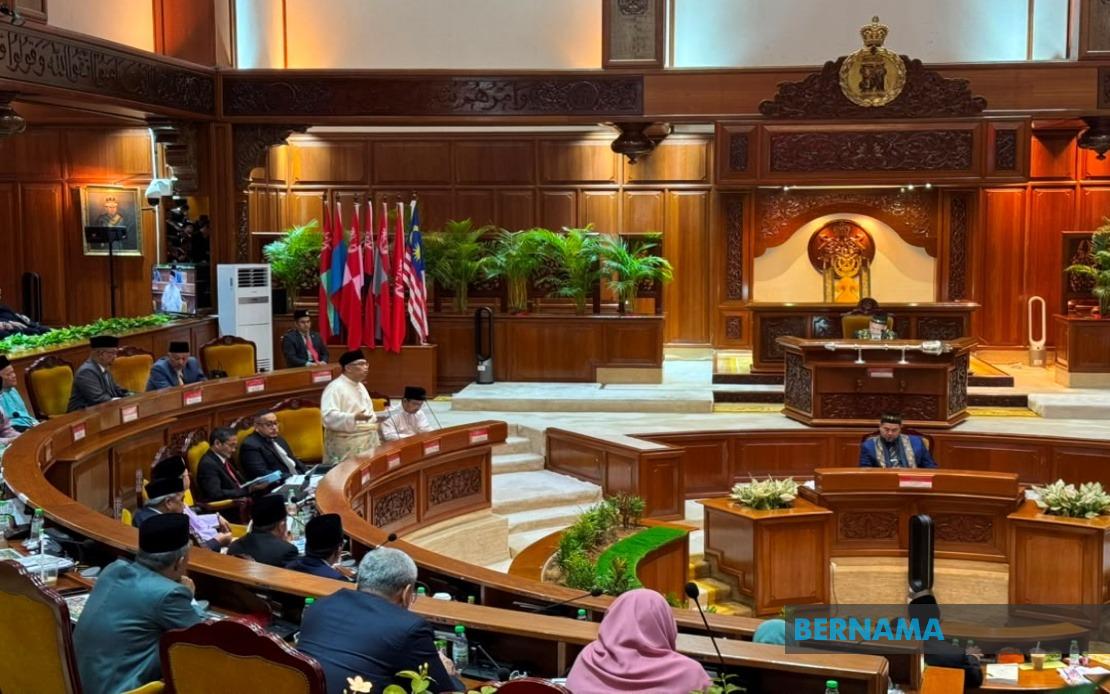
Kelantan has taken a significant step in modernising its Islamic criminal justice framework with the unanimous passage of the Syariah Criminal Offences (Kelantan) Bill 2026 in the state legislative assembly. The comprehensive overhaul introduces three cornerstone reforms—restorative sentencing, compoundable offences, and escalated penalty structures—designed to create a more cohesive and systematic approach to Syariah law enforcement across the state. Deputy Menteri Besar Datuk Dr Mohamed Fadzli Hassan explained that these reforms represent a careful balance between maintaining strict adherence to religious principles whilst incorporating contemporary justice methodologies that emphasise rehabilitation and community participation.
The restorative sentencing framework represents a notable departure from purely punitive approaches. Under this reform, offenders participating in community service will now have clearly defined timelines, with all prescribed service hours requiring completion within a twelve-month window. This structured approach aims to facilitate the integration of offenders back into their communities whilst ensuring they contribute meaningfully to society through supervised labour. The mechanism reflects growing acceptance across Southeast Asian Islamic courts that restoration and reformation can coexist with accountability, allowing individuals to make tangible restitution for their transgressions whilst maintaining employment and family ties.
Compoundable offences provisions grant the Sultan of Kelantan authority to designate specific violations that may be resolved through financial settlement or negotiated outcomes rather than court proceedings. This administrative mechanism, codified through gazettement, provides flexibility for minor infractions whilst preserving judicial capacity for more serious cases. The structured discretion embedded in this approach—requiring formal procedures and published guidelines—prevents arbitrary application and ensures consistent treatment across similar cases. For Malaysian observers, this represents a significant procedural refinement, as it mirrors mechanisms found in civil law systems whilst remaining anchored within Islamic jurisprudential traditions.
Perhaps most notably, the Bill significantly elevates punishment scales for severe offences, with caning becoming the prioritised sanction for the most serious violations. These heightened penalties apply to attempted apostasy, negligent guardianship of a child's religious education, failures in maintaining modest dress and bodily propriety, consumption of intoxicating substances, gambling participation, unlawful sexual conduct, and extramarital pregnancy cases. The explicit emphasis on physical punishment for these categories reflects Kelantan's interpretation of Quranic prescriptions and reflects the state's positioning as a jurisdiction maintaining stringent religious standards within Malaysia's diverse legal landscape.
The legislative package introduces six entirely new offence categories addressing contemporary religious concerns and previous legislative gaps. Clause 10 specifically criminalises the abandonment or neglect of obligatory daily prayers, establishing religious observance as an enforceable legal obligation rather than a matter of personal conscience alone. This represents a significant extension of state authority into spiritual practice, distinguishing Kelantan's approach from other Malaysian states where prayer attendance remains a matter of Islamic education and family responsibility. The provision acknowledges rising anxieties within conservative Muslim communities about generational decline in religious practice, though it also raises questions about enforcement mechanisms and the practical challenges of monitoring private religious behaviour.
Clause 15 and Clause 16 establish new categories around bodily propriety, distinguishing between offences involving private parts specifically and broader bodily modesty violations. These provisions supersede previous legislation addressing sodomy, reframing the legal discourse around sexual conduct through a lens emphasising bodily guardianship rather than specific acts. This linguistic and conceptual shift carries implications for how prosecutions proceed and evidence is presented, moving beyond act-based definitions toward status-based or conduct-based frameworks. The distinction between Clause 15 and Clause 16 suggests a graduated approach, potentially enabling differential sentencing based on the severity of privacy violations involved.
Clause 33 introduces protections for intellectual integrity, criminalising conduct or substances that damage cognitive functioning. This provision represents an expansion beyond traditional intoxicant prohibitions to encompass any substance or practice impairing mental clarity—potentially encompassing certain pharmaceuticals, extreme dieting practices, or sleep deprivation regimes. The breadth of this formulation raises interpretation questions about which specific behaviours fall within its scope and how authorities will distinguish between prohibited conduct and acceptable lifestyle choices. For Malaysian healthcare providers and educators operating in Kelantan, the clause's implications warrant careful legal review.
The architectural restructuring of Kelantan's Syariah criminal framework—organised into nine distinct parts containing sixty-two substantive clauses plus supplementary schedules—aims to improve legal clarity and systematic application. This reorganisation reflects dissatisfaction with the previous 2019 Enactment's structure, suggesting that experience has identified areas where inconsistent interpretation or administrative confusion arose. The new arrangement promises to create a more navigable legal code for Islamic judges, enforcement officers, and citizens seeking to understand their obligations and potential liabilities. For other Malaysian states considering Syariah law modernisation, Kelantan's structural approach provides a template for legislative reorganisation.
Specific clauses addressing places of worship receive enhanced protections under Clause 12, which revises earlier provisions concerning desecration or destruction. The updated language emphasises disturbance specifically affecting Muslim prayer spaces, narrowing the scope to Islamic venues rather than maintaining protection for all religious structures. This reorientation reflects Kelantan's prioritisation of Muslim communal spaces whilst potentially reducing protections for non-Muslim religious sites—a distinction with implications for interfaith relations and minority religious practice within the state. The revision suggests that previous protections were deemed inadequate for protecting Muslim prayer venues from disruption.
The Bill's unanimous passage through the Kelantan State Legislative Assembly signals remarkable political consensus around these reforms, with no opposing votes recorded. This unanimity contrasts with occasional parliamentary debates in other Malaysian states where secular and religious interests clash over Syariah law amendments. The absence of recorded dissent may reflect either genuine consensus around the proposed reforms, limited opportunities for alternative viewpoints in the legislative process, or political dynamics where opposition parties avoid appearing unsupportive of Islamic law strengthening. Understanding the mechanisms producing this unanimity requires examining Kelantan's political composition and legislative procedures.
For Malaysia's broader Islamic legal landscape, Kelantan's legislative initiative carries implications extending beyond state boundaries. Kelantan maintains substantial influence within Islamic legal discourse across Malaysia, with its legislative innovations frequently informing discussions in other states. The Bill's emphasis on restorative justice combined with elevated punishment severity presents a hybrid approach—modern procedural mechanisms operating within fundamentally stringent substantive frameworks. This combination may appeal to jurisdictions seeking to appear contemporaneous and reform-minded whilst maintaining traditionally conservative religious standards. However, human rights organisations and legal scholars emphasising individual liberty may scrutinise whether restorative mechanisms genuinely serve offenders' interests or primarily serve state efficiency and cost reduction.
The practical implementation of these reforms will determine their actual impact on Kelantan's Islamic legal system. Restorative sentencing effectiveness depends on whether community service placements truly facilitate rehabilitation, whether supervisory resources prove adequate, and whether completion rates justify the twelve-month timelines prescribed. Compoundable offence mechanisms require clear administrative guidelines preventing discriminatory application and ensuring that settlement options reflect proportionate compensation rather than encouraging settlement through financial pressure. Enforcement of new offences, particularly prayer attendance and intellectual protection provisions, necessitates training for Islamic enforcement officers and judicial interpretation establishing reasonable prosecution standards. The coming months will reveal whether these structural reforms translate into meaningful improvements in justice delivery or primarily serve symbolic purposes. For Malaysian legal observers, Kelantan's experience will offer valuable lessons about Islamic law modernisation's challenges and possibilities within federal Malaysia's diverse constitutional framework.

