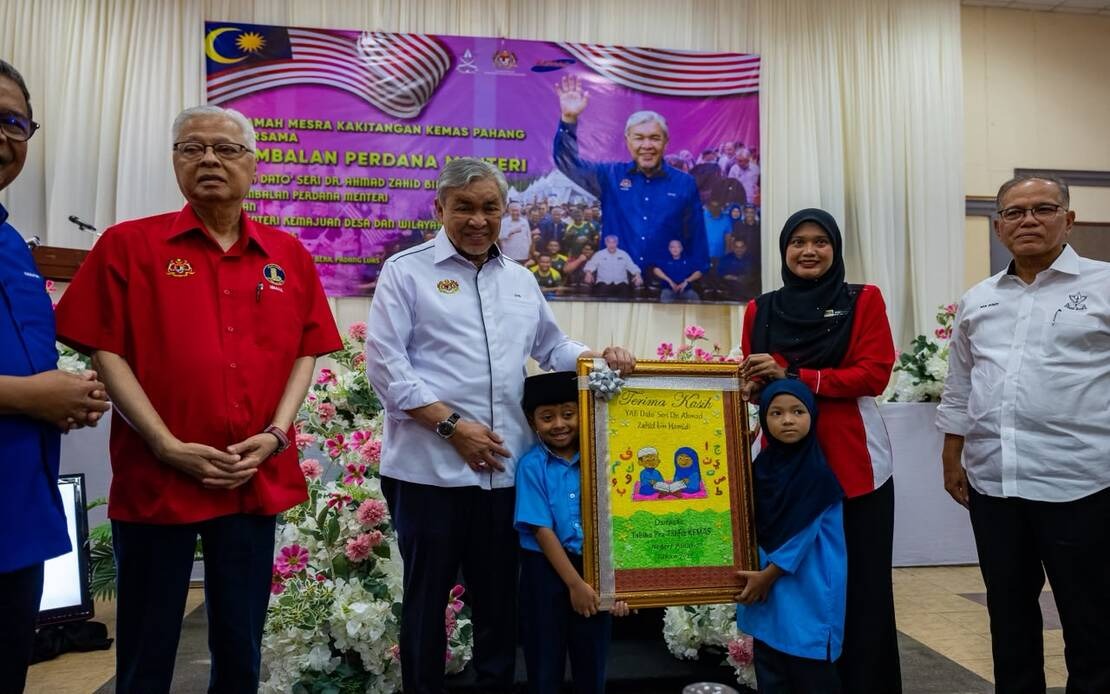
The Community Development Department (KEMAS) is entering a critical modernisation phase that balances technological innovation with traditional religious values, according to Deputy Prime Minister Datuk Seri Dr Ahmad Zahid Hamidi, who outlined the initiative at a community engagement programme in Bera, Pahang on August 16. The transformation reflects Malaysia's broader pivot toward preparing young learners for a digitally driven future while maintaining cultural and spiritual moorings that have defined the nation's approach to childhood development.
This strategic recalibration comes as the government grapples with the practical consequences of lowering the school starting age from seven to six—a policy shift that has elevated KEMAS kindergartens (Tabika) and childcare centres (Taska) from supplementary services to central pillars of the national education infrastructure. KEMAS has already nurtured approximately 8.4 million children since its establishment, giving the department significant leverage in shaping foundational educational outcomes across the country. The proposed upgrades signal recognition that remaining static is untenable when the competitive landscape for learning has fundamentally shifted.
The technological component of KEMAS's evolution centres on accelerating the adoption of Smart Class systems and smartboard technology in kindergarten settings nationwide. Ahmad Zahid emphasised that federal authorities, state governments, lawmakers and state representatives must coordinate more effectively to ensure equitable access to these digital facilities, particularly in rural and underserved communities where KEMAS traditionally operates. This collaborative imperative is crucial given that the Rural and Regional Development Ministry oversees a network spanning diverse geographical and socioeconomic contexts where resource constraints often inhibit technological deployment.
Simultaneously, KEMAS intends to deepen religious education by expanding its Quranic memorisation programme beginning next academic year. The initiative extends beyond the current focus on memorising Juzuk 30—the final section of the Quran typically introduced to young children—to encompass four additional surahs: Yasin, Al-Waqiah, Al-Mulk and As-Sajdah. This expansion reflects deliberate pedagogical choices; these particular chapters are frequently recited in Islamic practice and carry significant spiritual significance. However, Ahmad Zahid stressed that implementing such a programme demands prior upskilling of KEMAS educators themselves, insisting that teachers must first achieve fluency and understanding before transmitting these materials to pupils in a structured, effective manner.
The dual emphasis on technology and religious instruction reveals a particular Malaysian approach to early childhood development—one that rejects a false dichotomy between secular modernity and spiritual tradition. Rather than positioning these elements as competing priorities, KEMAS frames them as complementary dimensions of holistic human formation. This philosophy acknowledges that Malaysia's multicultural society requires educational institutions capable of fostering both technological competence and values-based citizenship, with religious instruction serving as an anchor for identity and moral formation among Muslim-majority cohorts.
Ahmad Zahid's statement that "KEMAS must enter a new phase and continue to evolve with the times without losing sight of the fundamentals of human development" encapsulates this balancing act. The observation that six decades of community service now necessitates evolution rather than mere consolidation underscores a broader recognition within government that institutional stagnation poses greater risks than thoughtful reform. Educational systems operating in 2024 face pressures—from artificial intelligence integration to transnational labour mobility to shifting family structures—that were inconceivable when KEMAS first launched in the 1960s.
The Pahang state government's support, particularly through initiatives securing land titles, providing grants for premises and funding renovation works, illustrates how early childhood education has become a shared responsibility across federal and state tiers of governance. This collaborative architecture is noteworthy in the Malaysian context, where education typically falls within federal purview; the fact that state governments are investing directly in KEMAS infrastructure suggests recognition of the programme's critical role in community development and social cohesion.
Ahmad Zahid's emphasis on political stability and cross-government cooperation as prerequisites for advancing early childhood education more systematically carries particular resonance in contemporary Malaysia. The statement implies that educational progress cannot be insulated from the broader political environment; rather, sustained commitment across electoral cycles and between competing political formations is essential for programmes requiring long-term capital investment and curriculum consistency. This observation may subtly reference the volatility that has characterised Malaysian politics in recent years and the challenge of maintaining policy continuity amid shifting coalitions.
The memorisation programme expansion also reflects Islamic education philosophies deeply embedded in Malaysian pedagogy. Memorisation (hafiz) traditions occupy an elevated position in Islamic scholarship, and introducing children to foundational surahs early in their educational journey aligns with centuries-long Islamic pedagogical practice. By institutionalising this within KEMAS, the government acknowledges that religious education constitutes a core rather than peripheral component of national identity formation, particularly for Muslim children.
For Malaysian educators and policymakers, KEMAS's modernisation agenda offers lessons about institutional renewal. The programme demonstrates how government services can simultaneously honour historical contributions while embracing substantive change. The integration of smartboards alongside Quranic memorisation, though ostensibly incongruous, reflects realistic assessment of what contemporary childhood development demands: technical fluency, cultural rootedness, and spiritual awareness operating together.
The success of these initiatives will partly depend on implementation capacity at the grassroots level. KEMAS operates through thousands of centres nationwide, many in remote areas where recruiting and retaining qualified educators remains challenging. The insistence that teachers master memorisation techniques before transmitting them to pupils establishes quality benchmarks but also implies need for substantial professional development investment. Similarly, Smart Class implementation requires not merely hardware provision but ongoing technical support and teacher training—resources that demand sustained budgetary commitment.
Looking forward, the KEMAS transformation signals Malaysia's intent to position early childhood education as strategically significant rather than residual. By investing in technological infrastructure and religious curricula simultaneously, the government articulates a vision of child development that prepares Malaysian children for both global competition and local cultural continuity. Whether this dual emphasis can be realised equitably across the diverse communities that KEMAS serves will determine whether the initiative represents genuine systemic advancement or symbolic modernisation.

