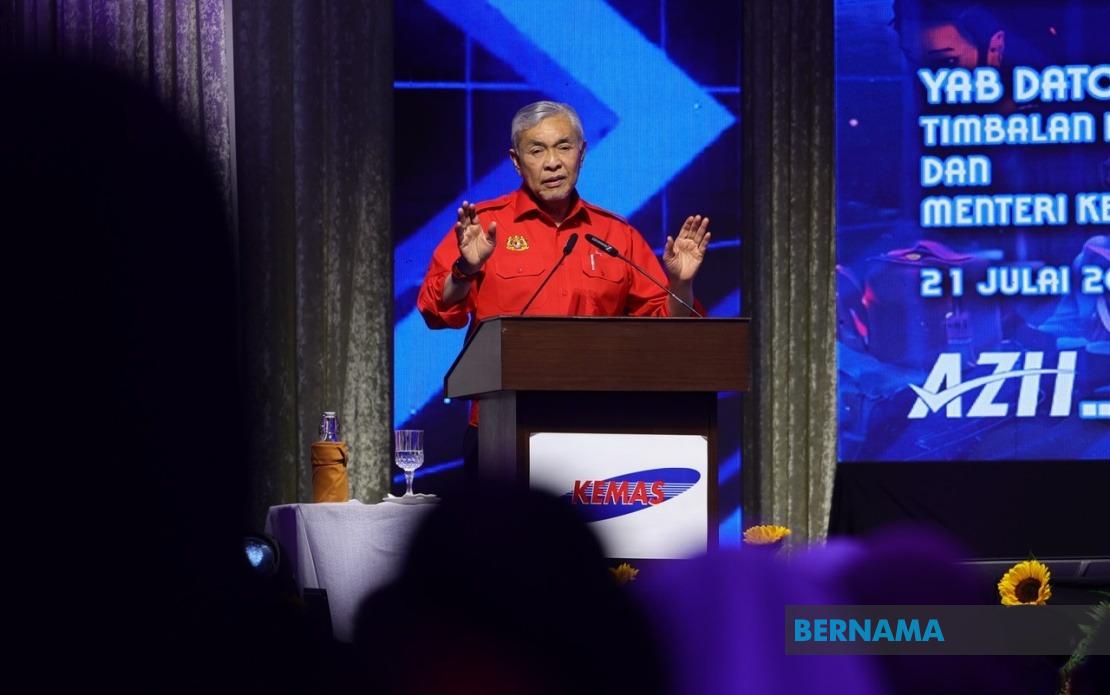
Malaysia's early childhood education system is set for a significant technology upgrade, with Deputy Prime Minister Datuk Seri Dr Ahmad Zahid Hamidi announcing plans to install smartboards across all KEMAS Tabika kindergarten classes by the end of 2025. The initiative represents a substantial commitment to transforming how young learners engage with educational content, positioning interactive digital tools as central to the nation's approach to early development during the crucial ages between two and six years old.
Addressing KEMAS personnel in Mantin, Selangor, Ahmad Zahid outlined a phased implementation strategy that prioritises equipping one smartboard per district initially, before expanding to comprehensive coverage across the entire network. This measured approach reflects practical considerations around budget allocation and infrastructure readiness, allowing KEMAS—a programme operating under the Ministry of Rural and Regional Development—to manage the rollout systematically while ensuring proper staff training and technical support. The deliberate timeline provides institutions with adequate preparation periods to adapt their teaching spaces and methodologies.
The smartboard initiative forms a cornerstone of KEMAS's broader digital transformation agenda, which extends beyond classroom hardware to encompass fundamental shifts in pedagogical philosophy. By introducing artificial intelligence-powered learning tools to children from age two onwards, KEMAS aims to normalise technological interaction from the earliest educational stages, equipping the next generation with digital literacy as a foundational competency. This approach aligns with global trends in early childhood education, where exposure to technology is increasingly viewed as essential rather than supplementary.
Ahmad Zahid emphasised that incorporating interactive digital platforms into early education serves multiple pedagogical objectives simultaneously. Smartboards enable multi-sensory learning experiences that can enhance retention, engagement, and conceptual understanding among very young learners whose attention spans and cognitive development require dynamic, visually stimulating instruction. The technology allows teachers to customise content in real-time, respond to individual learning needs, and create collaborative learning environments where multiple children interact with shared digital content.
Beyond technological infrastructure, KEMAS is simultaneously advancing religious and values education through a complementary initiative now in its fourth year. The programme introduces Quranic learning and memorisation to children as young as two, with particular emphasis on mastering Juz 30 of the Quran. This dual-track approach—combining cutting-edge digital tools with traditional Islamic knowledge—reflects Malaysia's distinctive educational philosophy that integrates modern pedagogical methods with cultural and religious foundations.
The Quranic learning initiative has demonstrated substantial traction among Malaysian families, particularly those who struggle to provide religious instruction due to time constraints or limited personal knowledge. By institutionalising Quranic education within KEMAS's standard curriculum, the programme democratises access to religious learning, ensuring that socioeconomic circumstances do not prevent children from developing Islamic knowledge during formative years. This addresses a genuine gap in Malaysia's educational landscape where many families desire religious instruction but lack practical means.
To maximise pedagogical effectiveness, KEMAS has established strategic partnerships with established educational institutions and foundations. Universiti Pendidikan Sultan Idris, Yayasan Pahang, and Yayasan Pintar collaborate to develop evidence-based teaching methodologies that ensure Quranic learning is age-appropriate, engaging, and developmentally sound. These partnerships elevate the initiative beyond mere recitation, embedding deeper comprehension and spiritual understanding within age-sensitive frameworks.
The parallel investments in digital learning infrastructure and religious education reflect broader recognition that early childhood development encompasses multiple dimensions simultaneously. Cognitive, emotional, social, and spiritual growth all unfold during ages two to six, making this period uniquely formative. KEMAS's twin-focus strategy acknowledges this complexity, deploying smartboards to enhance intellectual stimulation while strengthening values and faith formation through structured Quranic engagement.
For Malaysian policymakers and educators, the KEMAS expansion carries significant implications for national competitiveness and social cohesion. Early exposure to technology establishes foundations for later STEM engagement at a time when gender stereotypes and performance anxiety remain malleable. Simultaneously, strengthening religious and moral education through institutional channels supports community values and social stability. These complementary objectives demonstrate sophisticated understanding that educational advancement cannot privilege technological or spiritual dimensions exclusively.
The initiative also reflects pragmatic political messaging around rural and regional development, Ahmad Zahid's portfolio area. KEMAS operates extensively in semi-rural and underserved communities where private kindergarten alternatives offering advanced technology remain limited. By channelling investment toward public kindergarten modernisation, the government signals commitment to educational equity across geographic and socioeconomic divides, ensuring that children in less urbanised areas access comparable technological resources to their urban counterparts.
Implementation challenges will inevitably emerge as KEMAS rolls out smartboards across diverse settings characterised by varying electricity infrastructure, internet connectivity, and staff technological proficiency. Successful execution requires not merely procuring hardware but investing substantially in teacher professional development, technical maintenance networks, and curriculum redesign to fully leverage interactive capabilities. The stated timeline of end-2025 provides approximately 18 months for addressing these complexities, a compressed but theoretically achievable window.
Regional observers will monitor this initiative closely as a potential model for other Southeast Asian nations considering technology integration in early childhood education. Malaysia's approach—combining hardware provision with curriculum development and institutional partnerships—offers a comprehensive blueprint that transcends simple digitalisation to address underlying pedagogical transformation. The emphasis on maintaining cultural continuity through simultaneous religious education investment also provides an alternative template to purely Western-influenced technology-first models.

