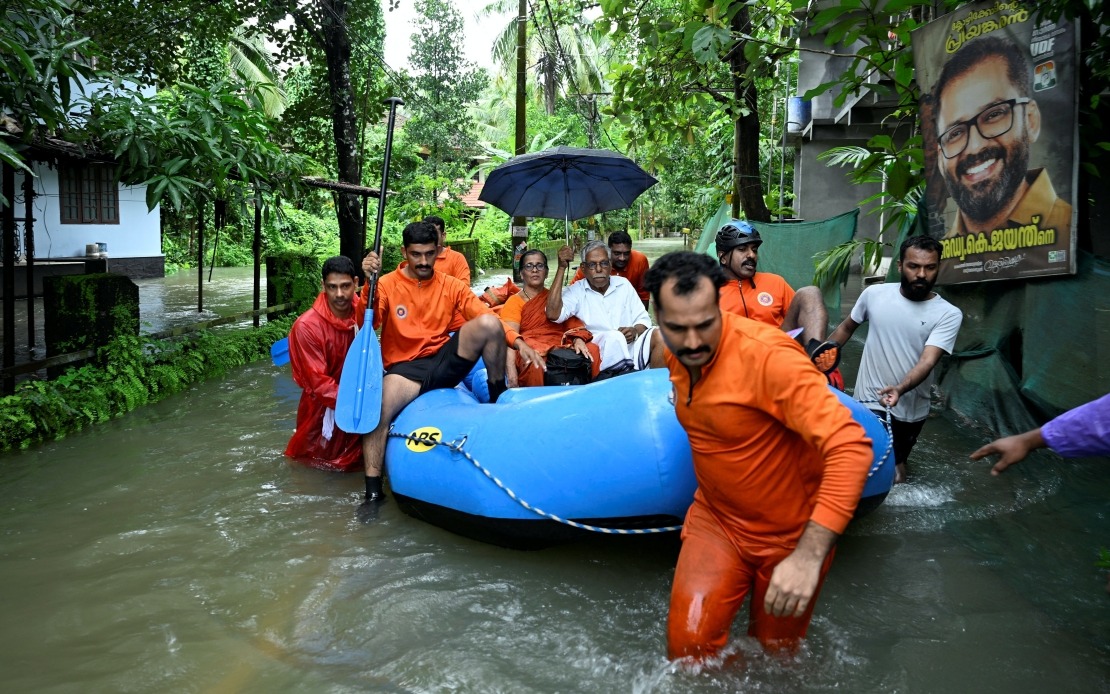
Kerala's monsoon season has transformed into a humanitarian emergency, with the death toll from rain-related incidents now reaching 26, according to state officials who briefed the media on Wednesday. The calamity unfolding across India's southwestern coastal state represents one of the season's most severe weather events, compounding the vulnerability of a population already accustomed to annual monsoon challenges but facing intensifying meteorological extremes.
Chief Minister V D Satheesan disclosed the mounting human cost of the disaster while simultaneously outlining the scale of displacement and material damage. Beyond the confirmed fatalities, eleven additional people sustained injuries during the rain-triggered incidents, whilst four remain unaccounted for—figures that underscore the ongoing uncertainty even as search operations continue. The Chief Minister's statement emphasised that 27,048 residents have been forced to abandon their homes, creating an unprecedented shelter crisis across Kerala's districts.
The humanitarian response has mobilised extensively, with 462 relief camps now operating throughout the state to provide temporary accommodation for the displaced population. These camps represent a critical lifeline for families who have lost access to their homes due to flooding and structural damage. The provision of shelter alone, however, masks deeper challenges: displaced families face disrupted livelihoods, contaminated water supplies, and the psychological trauma of losing their homes and possessions to nature's unpredictable force.
Kerala's agricultural sector has absorbed devastating losses, with crop damage spreading across 1,882 hectares of farmland. The destruction directly affects the livelihoods of 23,537 farming families who depend upon these lands for income and sustenance. For smallholder farmers already operating on narrow profit margins, such losses can trigger debt spirals and force them to abandon agriculture entirely—consequences that ripple through rural communities dependent upon agricultural employment.
Chief Minister Satheesan announced a package of relief measures designed to provide financial assistance to affected families. The enhanced compensation scheme encompasses payments to families of the deceased, whilst also addressing losses of residential property and agricultural assets. Such measures, whilst essential, cannot fully compensate for loss of life or restore destroyed homes and harvested crops. The adequacy of compensation levels will prove crucial in determining whether affected families can rebuild their lives or face prolonged economic hardship.
The meteorological outlook offers little respite for Kerala's besieged population. The India Meteorological Department released an orange alert on Wednesday, indicating the potential for heavy rainfall to persist through 11 August across Kerala, along with the coastal regions of Karnataka and Telangana. This extended warning suggests that the current emergency could intensify further, potentially triggering additional casualties and displacement before monsoon conditions stabilise.
The epicentre of destruction has concentrated in northern Kerala's high-altitude regions, particularly in Kozhikode and Kannur districts, where rainfall since 1 August has triggered cascading floods and landslides. Floodwaters continue to inundate low-lying areas, with water levels yet to recede to safe levels in many locations. Submerged houses remain trapped beneath standing water, complicating rescue operations and extending the period during which families must remain displaced from their homes.
For Malaysian observers, Kerala's crisis illustrates the intensifying climate-related vulnerabilities confronting South Asian countries. The monsoon system that delivers essential moisture to agriculture also generates catastrophic flooding when rainfall exceeds absorption capacity. Climate scientists point to warming ocean temperatures and shifting atmospheric patterns as contributors to increasingly extreme precipitation events, suggesting that such disasters may become more frequent and severe across the Indian subcontinent in coming decades.
The implications extend beyond India's borders. Regional cooperation on disaster preparedness, early warning systems, and cross-border humanitarian coordination will become increasingly essential as climate-driven extreme weather events affect multiple nations simultaneously. Southeast Asian countries including Malaysia, with their own monsoon seasons and susceptibility to flooding, can observe Kerala's response mechanisms to identify gaps in disaster management, evacuation planning, and rehabilitation frameworks.
The Kerala disaster also underscores the necessity of sustained investment in infrastructure resilient to monsoon extremes. Drainage systems, flood barriers, and early warning networks require continuous upgrade to accommodate increasingly intense rainfall events. For governments across South Asia and Southeast Asia, the Kerala situation demonstrates that disaster preparedness cannot rely solely on historical rainfall patterns but must anticipate future intensification.
As relief operations continue and meteorological warnings remain in effect, Kerala's administration faces the dual challenge of providing immediate humanitarian assistance whilst preparing for potential additional rainfall. The coming week will prove critical in determining whether the death toll stabilises or climbs further, and whether displaced families can return home or face extended displacement. The monsoon season, traditionally a period of agricultural bounty across the subcontinent, has instead revealed the catastrophic potential of extreme weather events in an era of climate change.

