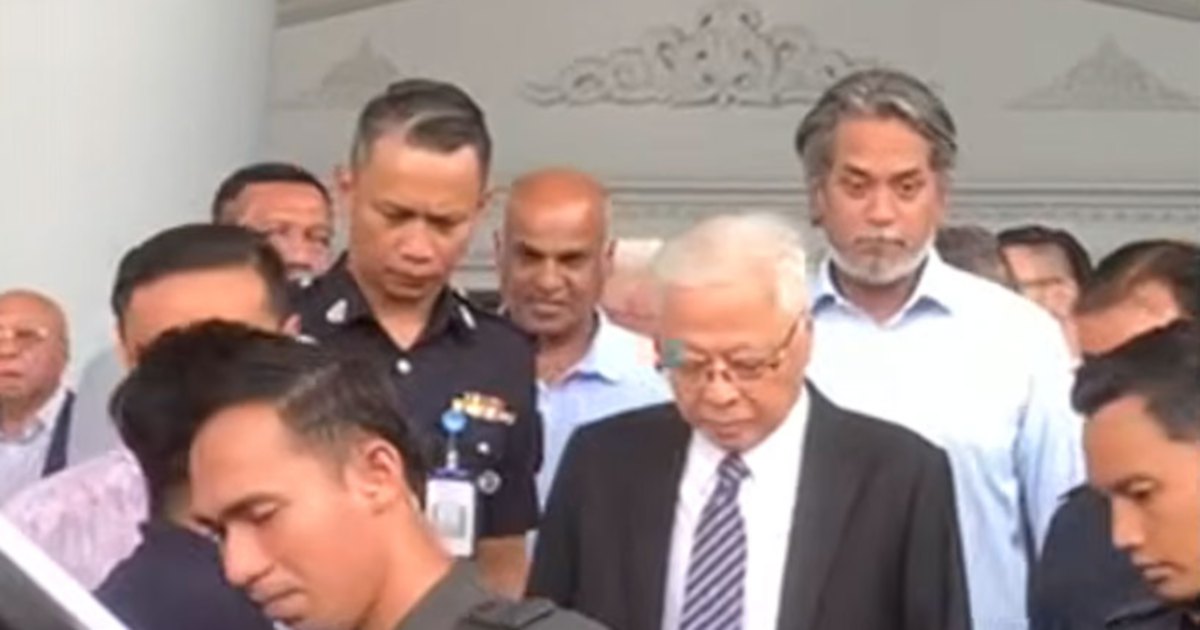
Former Umno Youth chief Khairy Jamaluddin attended charge proceedings involving ex-Prime Minister Datuk Seri Ismail Sabri Yaakob at the Kuala Lumpur Court Complex today, a visible show of solidarity that observers say underscores the continuing factional dynamics within Malaysia's largest Malay-Muslim political party.
Khairy's attendance at the court session marked a noteworthy moment, as the presence of high-profile party figures at such proceedings often carries symbolic weight beyond the legal proceedings themselves. The former youth wing leader's decision to be present sends a message within Umno about positioning and allegiances at a time when the party faces internal pressures and competing leadership interests.
Ismail Sabri, who served as Prime Minister from August 2021 to September 2023, has been navigating legal challenges following his tenure in office. His period as premier came after the collapse of the Perikatan Nasional government and represented a return to Umno leadership after the tumultuous political period that followed the party's electoral defeat in 2018. The court proceedings represent part of the ongoing legal reckoning that has affected multiple former senior political figures across Malaysia.
Khairy's public backing is particularly significant given the complex relationship he has maintained with various Umno factions. As former Youth chief, he commanded considerable influence among younger party members and was seen as a moderniser within traditional party structures. His appearance at Ismail Sabri's proceedings suggests either a strengthening of ties between the two politicians or a deliberate gesture toward party unity during a period of internal challenge.
Umno has faced significant organisational and political pressures in recent years, with the party rebuilding after the 2018 election loss that swept out the regime that had governed since independence. The party's recovery under successive leadership has involved complex negotiations between different power blocs, and high-profile gestures like Khairy's court appearance carry implications for how these internal dynamics are evolving.
The legal challenges confronting former top officials have become a recurring feature of Malaysian politics in this era. Multiple former prime ministers and senior ministers have faced court proceedings on various charges, creating an atmosphere where legal cases carry substantial political dimensions. For party members, decisions about attending or supporting figures facing legal proceedings become statements about party loyalty and political positioning.
For Ismail Sabri specifically, having prominent party members appear at his court sessions serves as a demonstration of continued political standing within Umno, even as he faces legal scrutiny. The attendance of figures like Khairy can influence how the public and other party members perceive his status and whether he retains meaningful influence within party structures going forward.
The Kuala Lumpur Court Complex has become a focal point for high-profile political cases in recent years, and proceedings there regularly attract attention from media, political observers, and party insiders. The gathering of party figures at such venues has become its own form of political communication, where alliances and divisions are played out in plain view.
These court proceedings will likely continue to draw political observers' attention as they develop, with each appearance by notable figures potentially carrying implications for broader party dynamics. For Malaysian politics, the interplay between legal processes and political positioning remains a crucial element in understanding how power relationships are configured within parties and across the broader political system.
Khairy's presence today contributes to the ongoing narrative about Umno's internal state and the relationships between key figures within the party. As Malaysia's political landscape continues to evolve, gestures of support or solidarity at high-profile court proceedings serve as indicators of shifting alliances and the current strength of various political networks. The visibility of such displays means that even the simple act of attending a court session can carry weight beyond the immediate legal context, influencing perceptions of political standing and party unity during a complex period for Umno and Malaysian politics more broadly.

