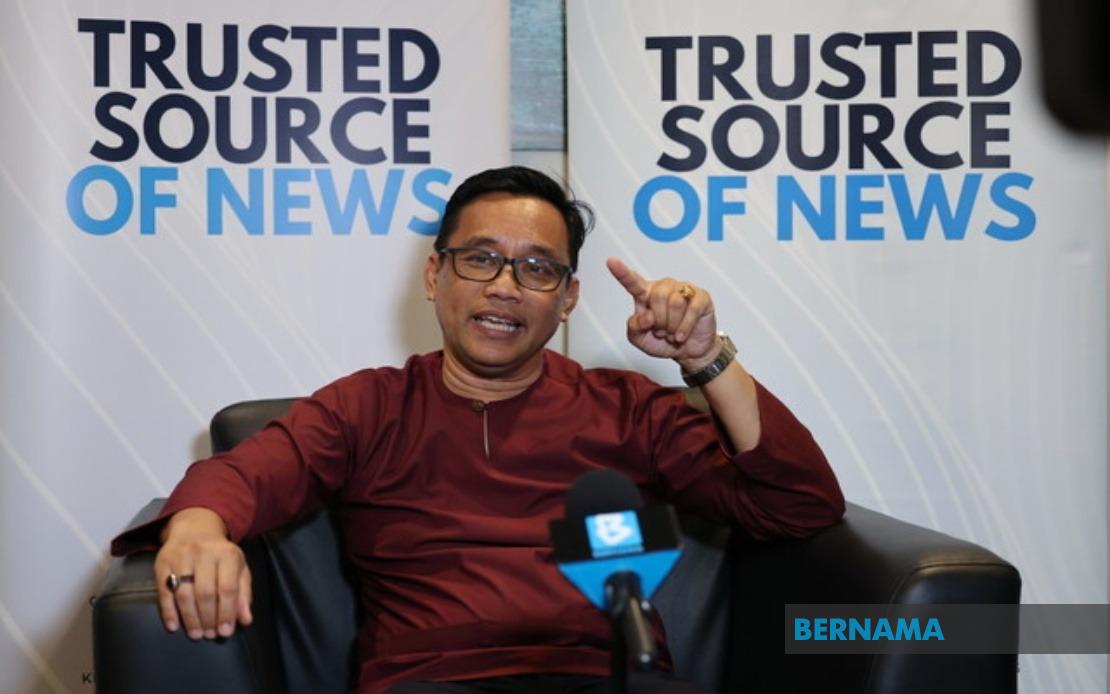
Mohd Khuzzan Abu Bakar, the Pakatan Harapan candidate for Semerah in the 16th Johor state election, is framing his return to the constituency not as an attempt to reverse a previous electoral loss, but rather as an opportunity to resurrect community programmes interrupted when the coalition exited state government in 2020. The 58-year-old, who previously served as chairman of the Johor Youth, Sports, Culture and Heritage Committee, is banking on voter frustration over incomplete development work and promises to restart initiatives that stalled during the change in administration.
The Semerah seat represents contested political ground in Johor, a state that has experienced significant shifts in governance over recent election cycles. Khuzzan's decision to return signals confidence within PH ranks that momentum may be shifting in their favour, particularly in constituencies where incumbent performance has faced criticism. His campaign strategy deliberately moves away from framing the contest as redemption for a defeat, instead positioning it as an obligation to fulfil commitments made to constituents—a narrative that may resonate with voters who view unfinished projects as broken promises rather than mere political setbacks.
Critical infrastructure forms the centrepiece of Khuzzan's platform. The restoration of the Taman Sri Sulong Youth Mini Complex features prominently in his agenda, reflecting the recognition that community facilities represent tangible evidence of governmental effectiveness. Beyond this flagship project, he has identified water supply challenges and recurring flash flood issues affecting parts of Batu Pahat and Tanjung Laboh as priority concerns requiring immediate attention. These are practical grievances that affect daily life and household budgets, making them potent electoral issues that transcend partisan debate.
Youth employment initiatives occupy substantial space in Khuzzan's policy blueprint, acknowledging Johor's transformation into an economy increasingly driven by investment, technology, and digital sectors rather than traditional manufacturing alone. This strategic focus reflects broader regional trends across Southeast Asia, where younger voters and jobseekers demand evidence that political leadership understands modern economic realities. By emphasising pathways for young people into emerging sectors, Khuzzan positions himself as attuned to demographic changes reshaping the labour market.
Personal ties to the constituency form another pillar of his candidacy. Born in Jalan Mesjid, Batu Pahat, and married to a Semerah resident, Khuzzan invokes familial and geographical roots as evidence of genuine commitment to the community. This localisation strategy is particularly effective in Malaysian politics, where voters frequently evaluate candidates based on perceived connection to their communities. Such bonds of kinship and origin often outweigh purely ideological considerations, especially in rural and semi-urban constituencies where social cohesion remains centred on family networks and shared heritage.
Khuzzan's campaign methodology reveals how electoral competition in Malaysia is rapidly evolving. He acknowledges the shift toward digital platforms such as TikTok, Instagram, and Threads, representing a fundamental departure from traditional grassroots campaigning. The candidate expressed surprise at the breadth of his social media following among senior citizens, underscoring how generational divides in technology adoption are narrowing. This digital-first approach allows campaigns to reach geographically dispersed voters more efficiently, particularly important for constituencies with residents working across state or international borders.
Youth-targeted engagement extends beyond social media into community activities. Khuzzan's campaign incorporates e-sports tournaments, sepak takraw matches, and carrom competitions alongside educational programmes focused on artificial intelligence and digital literacy. These initiatives serve dual purposes: they attract younger voters through entertainment and recreation while simultaneously positioning the candidate as invested in equipping young people with skills demanded by future employers. The emphasis on AI exposure is particularly noteworthy, signalling recognition that technological capability will determine employment prospects across Southeast Asia over the coming decade.
Small and medium enterprise development represents Khuzzan's economic policy anchor. Drawing on his background as a former banking officer, he proposes strengthening community enterprise through improved access to government financing schemes such as TEKUN Nasional and Amanah Ikhtiar Malaysia. However, his innovation lies in recognising that access to capital alone proves insufficient; entrepreneurs require structured financial management guidance to utilise funds effectively and scale operations successfully. This nuanced approach acknowledges that many Malaysian SMEs fail not from lack of initial funding but from poor financial discipline and business planning—problems that cannot be solved through capital injection alone.
The electoral environment for Semerah carries particular significance given recent political volatility in Johor. The 2022 state election took place amid post-pandemic economic recovery, a period characterised by heightened voter focus on bread-and-butter issues and rapid political realignment. Khuzzan anticipates a different dynamic in 2024, expecting stronger voter participation including Johoreans employed in Singapore who hold voting rights. This cross-border voter segment represents a meaningful constituency in Johor's demographic makeup, and mobilising them requires specific outreach acknowledging their distinct concerns regarding economic stability and cross-border livelihood security.
Statistical profiles of the Semerah electorate provide context for campaign strategy. With 47,431 registered voters and approximately 37.4 percent aged between 18 and 39, the constituency contains a substantial youth contingent whose participation could prove decisive. Young voters in Malaysia exhibit notably different voting patterns compared to older cohorts, often prioritising economic opportunity, governance integrity, and policy substance over party affiliation. Khuzzan's emphasis on youth employment and digital-age skills speaks directly to these preferences.
The broader Johor election context involves 56 constituencies and 172 candidates competing on July 11, with early voting scheduled for July 7. This represents a comprehensive electoral exercise that will shape governance of Malaysia's third-largest state by population. The result carries implications extending beyond Johor itself, influencing national political momentum and coalition strategies heading toward federal elections anticipated within the coming year. Regional observers view Johor's direction as a bellwether for voter sentiment across southern Malaysia and Peninsular electoral patterns more broadly.
Khuzzan's path to victory faces obstacles: the incumbent, Mohd Fared Mohd Khalid representing Barisan Nasional-UMNO, won the previous contest with a majority of 4,041 votes—a margin substantial but not insurmountable given the youth demographic's volatility. PH's ability to mobilise younger voters and frame the contest around unfinished development work while simultaneously convincing centrist voters that coalition governance offers stability remains the strategic challenge. Khuzzan's candidacy will test whether Malaysian voters reward candidates who acknowledge previous electoral setbacks by doubling down on service commitments, or whether they punish parties for prior loss of power regardless of circumstances.

