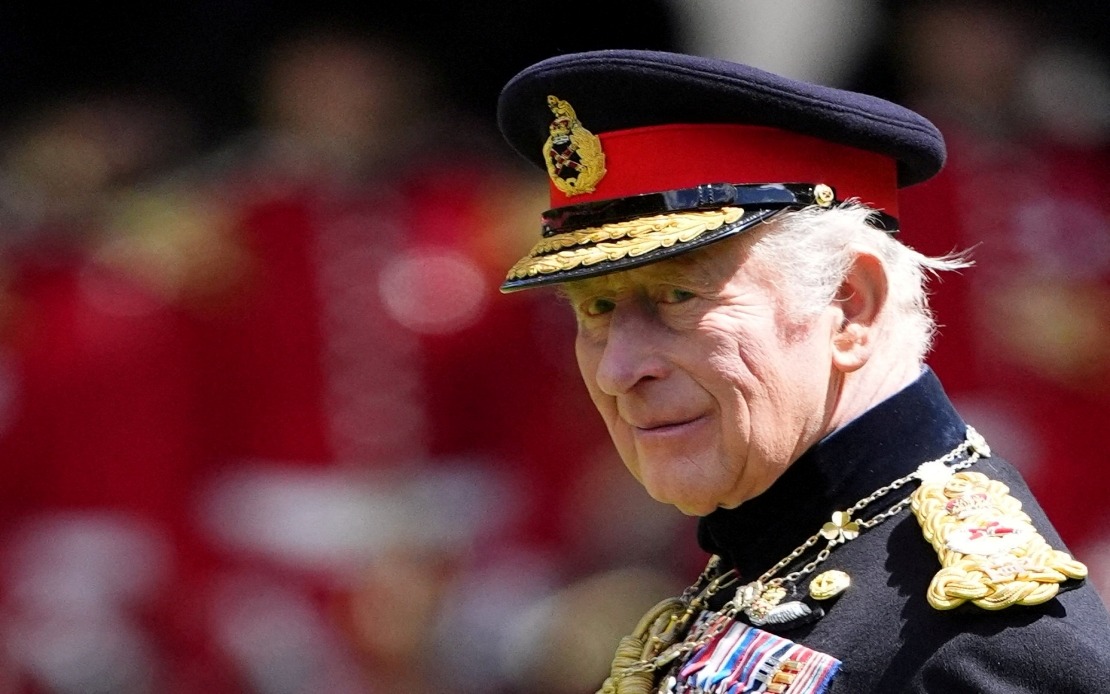
King Charles III has made history as the first British sovereign to publicly disclose his personal income tax payment, underscoring a significant shift towards transparency in royal finances. The disclosure, announced by Buckingham Palace on Thursday, revealed that the monarch paid £12.9 million (approximately US$17 million) in personal taxes during the 2024-2025 tax year, representing a marked increase from the £11.7 million paid in the previous financial year. This unprecedented move signals the modern monarchy's commitment to financial accountability in an era where public institutions face mounting scrutiny over their fiscal practices and governance standards.
The announcement accompanied the release of a detailed Royal Household statement outlining the various revenue streams that support the British crown. Since King Charles III acceded to the throne in September 2022, his aggregate tax contributions have surpassed £30 million, demonstrating substantial financial obligations assumed voluntarily by the reigning sovereign. The palace framed these disclosures as part of a broader institutional effort to demystify royal finances, which historically have been shrouded in opacity and confusion among the general public. By presenting clear, auditable figures, the Royal Household aims to reinforce public confidence in how the monarchy manages its resources and fulfils its financial responsibilities to the state.
It is crucial to understand that British monarchs possess a unique legal position regarding taxation. Unlike ordinary citizens and corporations, reigning sovereigns are not technically liable to pay income tax, capital gains tax, or inheritance tax under existing British law. This constitutional exemption traces its roots to centuries-old principles distinguishing the Crown's legal status from private individuals and commercial entities. However, beginning in the 1990s, successive monarchs adopted a voluntary arrangement to pay income tax and capital gains tax on their personal incomes, effectively placing themselves within the ordinary tax system despite their legal exemption. This self-imposed obligation represents a pragmatic decision to maintain public legitimacy during periods when royal finances have occasionally attracted critical commentary.
The king's personal income derives from multiple sources, including returns from private investment portfolios and revenues generated by two privately owned estates: Balmoral in Scotland and Sandringham in Norfolk, England. These estates function as both residences and commercial enterprises, generating substantial rental and agricultural income that contributes to the crown's financial position. The distinction between public funding allocated through the sovereign grant and the monarch's private income is fundamental to understanding royal finances. Whereas public money supports the official functions and institutional operations of the monarchy, private income is earmarked exclusively for the sovereign's personal expenses, creating a clear separation between state resources and individual wealth management.
King Charles III's commitment to financial transparency extends back to his previous role as Prince of Wales, when he pioneered the publication of personal tax information within royal circles. However, publishing such figures as a reigning monarch carries substantially greater constitutional weight and public significance. The transition from disclosing taxes as a senior royal to doing so as the sovereign represents an evolutionary step in institutional openness. This progression reflects broader societal expectations that institutions occupying privileged positions within the state should operate with heightened transparency and demonstrate active compliance with principles that apply to the general population, thereby affirming the rule of law applies to all parties regardless of rank or constitutional status.
James Chalmers, serving as the keeper of the Privy Purse, articulated the philosophical foundation underlying these disclosures. He emphasized that while royal financial arrangements might initially appear intricate to outside observers, the underlying structure operates according to clear legal principles refined through decades of evolution. Chalmers stressed that the system is designed to facilitate the monarch's capacity to serve the nation with both independence and accountability, ensuring that the crown maintains sufficient resources to fulfill constitutional and ceremonial functions without undue reliance on political institutions or fluctuating parliamentary appropriations. This framing positions royal finances as integral to the sovereignty and effective governance of the British state, not merely as personal wealth management detached from public interest considerations.
For Malaysian readers and Southeast Asian observers, the significance of this development extends beyond curiosity about British constitutional arrangements. Many Commonwealth nations, including Malaysia, maintain various connections to British legal traditions and constitutional frameworks that evolved from historical relationships with the United Kingdom. The question of institutional transparency and financial accountability transcends borders, resonating with contemporary discussions in the region about governance standards, anti-corruption measures, and public trust in institutions. As democratic societies worldwide grapple with balancing institutional privilege with public accountability, the British monarchy's decision to voluntarily disclose personal tax payments offers a cautionary and instructive example of how traditional institutions can adapt to modern expectations without sacrificing constitutional function or independence.
The disclosure also merits examination within the context of broader debates surrounding royal finances and public funding of monarchical institutions. While the voluntary tax arrangement demonstrates the crown's willingness to operate within a self-imposed accountability framework, questions persist about whether such voluntary mechanisms constitute sufficient transparency or whether statutory obligations might prove more robust. The complexity of royal financial structures, encompassing sovereign grants, private estates, charitable foundations, and personal investments, creates interpretation challenges for external observers attempting to comprehend the complete financial picture. By publishing aggregate tax figures, the palace makes progress toward simplifying understanding, yet the underlying architecture remains sufficiently intricate that detailed comprehension requires specialized knowledge of British constitutional law and royal administrative structures.
The timing of these disclosures coincides with a period of moderate scrutiny regarding institutional finances across numerous public and semi-public bodies globally. In the United Kingdom specifically, questions about executive compensation, charitable governance, and institutional spending have occasionally extended to royal finances. The preemptive disclosure strategy adopted by Buckingham Palace appears designed to maintain public confidence by demonstrating the crown's commitment to financial propriety before external critics can raise concerns. This approach reflects sophisticated public relations strategy, simultaneously affirming the monarchy's legitimacy while acknowledging modern expectations for institutional transparency that fundamentally differ from historical norms when royal finances remained entirely private matters beyond public discussion or scrutiny.
Looking forward, the precedent established by King Charles III's tax disclosures may influence how other Commonwealth institutions and royal families approach financial transparency. The decision to publish specific numerical figures rather than vague general statements sets a measurable standard that invites comparison and analysis. Observers can now track year-on-year changes in the monarch's tax contributions, analyse the relationship between total income and tax payments, and evaluate whether the voluntary arrangement produces outcomes consistent with ordinary citizens' tax obligations. This transparency, while representing genuine progress, simultaneously establishes benchmarks against which the crown's future financial conduct will be evaluated, creating ongoing accountability mechanisms that extend well beyond the initial announcement.

