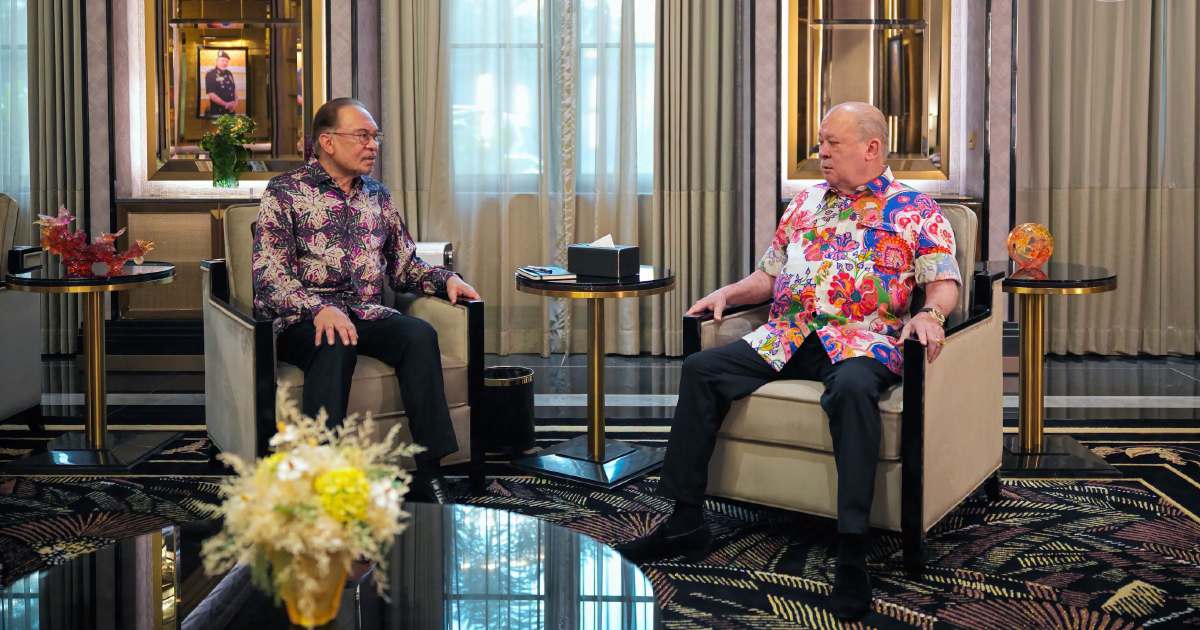
His Majesty Sultan Ibrahim, King of Malaysia, received Prime Minister Datuk Seri Anwar Ibrahim in formal audience at Istana Bukit Tunku in Kuala Lumpur ahead of the country's 69th National Day celebrations scheduled for the following day. The meeting underscored the constitutional and ceremonial protocols that govern the relationship between Malaysia's reigning monarch and the head of government as the nation approaches a significant patriotic milestone.
National Day represents one of the most important commemorative occasions in Malaysia's calendar, marking the federation's independence and the constitutional framework upon which the modern state was established. Each year, the occasion brings together the government, constitutional bodies, and citizens in celebration of national sovereignty and achievements. The timing of the royal audience suggested formal preparations were well underway for the celebrations, with customary consultations taking place between the Palace and the Prime Minister's office.
The meeting at the official royal residence reflected the established channels of communication between the nation's political leadership and the constitutional monarchy. Istana Bukit Tunku serves as one of the primary venues for state functions and formal engagements, and the choice of location underscored the official nature of the pre-National Day consultation. Such audiences typically provide occasions for the monarchy to receive briefings on national matters and allow the Prime Minister to present plans for upcoming state ceremonies and celebrations.
The 69th National Day holds particular significance as Malaysia continues to navigate complex domestic and regional challenges. The occasion provides an opportunity for national reflection on the country's progress since independence, as well as consideration of future aspirations. For government officials and the monarchy alike, National Day serves as a focal point for reaffirming constitutional values and national unity across Malaysia's diverse population.
Prime Minister Anwar Ibrahim has placed considerable emphasis on national cohesion and inclusive governance since taking office. The pre-celebration audience with the King provided a platform to align on the messaging and themes that would characterise the national observance. Royal endorsement of government initiatives during such formal meetings carries symbolic weight in Malaysia's constitutional system, where the monarchy occupies a position of significant ceremonial and constitutional importance.
The formal protocol surrounding the King's receipt of the Prime Minister reflects the structured nature of Malaysia's constitutional monarchy. Regular audiences between these two offices are standard practice, particularly around significant national occasions. These interactions maintain the continuity of constitutional governance and ensure that the nation's highest political and ceremonial offices function in coordinated harmony during important events.
National Day celebrations in Malaysia typically feature parades, flag-raising ceremonies, speeches emphasising national values, and various cultural and sporting events across the country. The involvement of the monarchy in overseeing these occasions reinforces the constitutional legitimacy of the festivities and connects them to the foundational principles upon which the Federation was established in 1957. The King's role extends beyond ceremonial participation to include symbolic representation of national continuity and constitutional governance.
For Malaysian readers, such meetings between the Palace and government leadership demonstrate the functioning of constitutional mechanisms that have anchored the nation's stability since independence. The relationship between the monarchy and the executive branch, while sometimes subject to political scrutiny, represents a cornerstone of Malaysia's system of government. Public awareness of these formal engagements helps citizens understand how state functions operate and how different branches of government interact during significant national moments.
The coming together of the King and Prime Minister ahead of National Day also sends an implicit message of institutional unity to the nation and to international observers. In an era when questions about governance and institutional relationships occasionally generate public discourse, visible coordination between constitutional offices reinforces confidence in the stability of Malaysia's political framework. Such displays of formal protocol are not merely ceremonial; they carry substantive meaning regarding the health and functionality of the nation's governance structures.
Regionally, Malaysia's National Day celebration also reflects the country's standing within Southeast Asia. The observance serves as an occasion for diplomatic recognition and international participation, with neighbouring countries and global partners acknowledging Malaysia's sovereignty and role in the region. The formal involvement of the monarchy in these proceedings signals to the international community that Malaysia's constitutional institutions are robust and functioning according to established norms.
As the nation moved closer to its 69th National Day observance, the audience between the King and Prime Minister represented the culmination of months of planning and coordination between government agencies responsible for organising celebrations. The ceremonial and logistical aspects of such a significant national occasion require extensive consultation at the highest levels of government and the Palace. This particular meeting allowed for final alignments on key aspects of the celebration, from ceremonial protocols to broader messaging about national direction and achievements.

