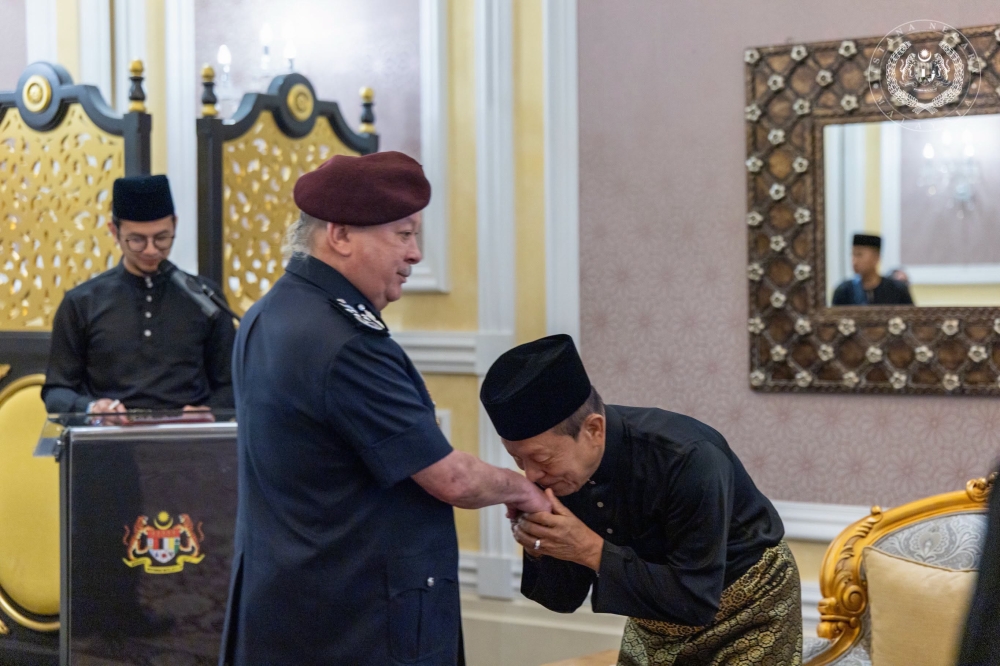
His Majesty Sultan Ibrahim, King of Malaysia, met with Malaysian Anti-Corruption Commission chief Abdul Halim today in Kuala Lumpur, marking an important formal engagement between the country's highest constitutional authority and the leadership of one of the nation's most critical law enforcement bodies. The audience, which provided an opportunity for direct dialogue on matters affecting Malaysia's anti-corruption landscape, underscores the institutional attention being given to the MACC's evolving role in combating graft and promoting accountability across the public sector.
The briefing covered multiple facets of the commission's recent operational activities and strategic initiatives. Abdul Halim, in his capacity as chief, presented an overview of investigations currently underway, enforcement outcomes, and the commission's approach to priority cases that have occupied significant public attention. Such formal presentations to the Istana serve as important checkpoints in Malaysia's governance framework, enabling the monarchy to remain informed about the workings of key accountability institutions and the state of institutional integrity across government.
The timing of this audience reflects broader developments in Malaysia's anti-corruption agenda. Over recent months, the MACC has intensified scrutiny of high-profile figures and complex financial schemes across multiple sectors, drawing considerable media coverage and public interest. The commission has navigated a complex operational environment whilst managing political sensitivities and maintaining investigative independence. A direct briefing to the King demonstrates the importance stakeholders place on ensuring the anti-corruption apparatus operates with full institutional support and legitimacy.
For Malaysian readers and observers of the political landscape, such royal audiences carry symbolic weight beyond the immediate briefing content. They signal the monarchy's active interest in governance standards and provide a public affirmation of the MACC's institutional status. In Malaysia's constitutional framework, the King plays a custodial role in safeguarding national institutions and the rule of law, making regular engagement with agencies responsible for integrity and accountability a natural part of royal functions. This meeting illustrates how these formal mechanisms of accountability remain embedded within the country's institutional architecture.
The MACC's operating environment has become increasingly complex in recent years. The commission faces the dual challenge of pursuing investigations with rigorous legal standards whilst managing public expectations shaped by high-profile cases receiving extensive media attention. Staff morale, resource allocation, and maintaining investigative momentum across multiple cases all represent ongoing operational considerations. A briefing to the King allows the commission's leadership to communicate both successes and challenges within a formal institutional setting, potentially securing continued support for the organisation's mandate and independence.
Abdul Halim's appointment as MACC chief came at a significant juncture for the institution, following leadership transitions and renewed public focus on anti-corruption efforts. His tenure has seen the commission engage with contemporary challenges including digital-age corruption schemes, cross-border financial misconduct, and the complexity of investigating matters involving government officials at various levels. The ability to present the commission's work directly to the King creates a channel for the chief to frame the institution's priorities and demonstrate operational competence to Malaysia's highest constitutional authority.
The briefing also occurs against the backdrop of Malaysia's international standing on corruption metrics and governance rankings. International organisations regularly assess countries based on transparency indices and anti-corruption indicators, with Malaysia's performance in these assessments connected to both the effectiveness of institutions like the MACC and the perceived independence with which they operate. A visible relationship between the monarchy and the anti-corruption apparatus sends important signals to international observers about institutional priorities and the constitutional framework within which integrity mechanisms function.
For Malaysia's regional standing in Southeast Asia, maintaining robust anti-corruption institutions remains important for investment climate and governance reputation. Neighbouring countries and international partners view the strength and independence of anti-corruption bodies as indicators of a nation's commitment to transparency and accountability. The MACC's performance and institutional health therefore extend beyond purely domestic considerations, affecting how Malaysia positions itself within regional and global governance frameworks that increasingly emphasise standards around integrity and financial transparency.
The specific developments discussed during the audience remain confidential, consistent with standard protocols governing royal audiences and sensitive matters relating to ongoing investigations. However, the fact that such a briefing took place publicly affirms the commitment to maintaining regular communication channels between constitutional institutions and those responsible for enforcement of anti-corruption laws. This transparency about the briefing itself, if not its contents, reinforces the principle that accountability mechanisms operate within recognised institutional frameworks rather than in isolated or opaque fashion.
Moving forward, such audiences may become more frequent as stakeholders emphasise the importance of institutional coordination in addressing complex governance challenges. The relationship between the MACC and the monarchy represents one dimension of a broader ecosystem involving Parliament, the judiciary, and civil society organisations that collectively contribute to Malaysia's anti-corruption landscape. Strengthening these institutional relationships, as demonstrated through formal briefings and regular engagement, forms part of the broader effort to embed integrity and accountability at the centre of Malaysia's governance model.

