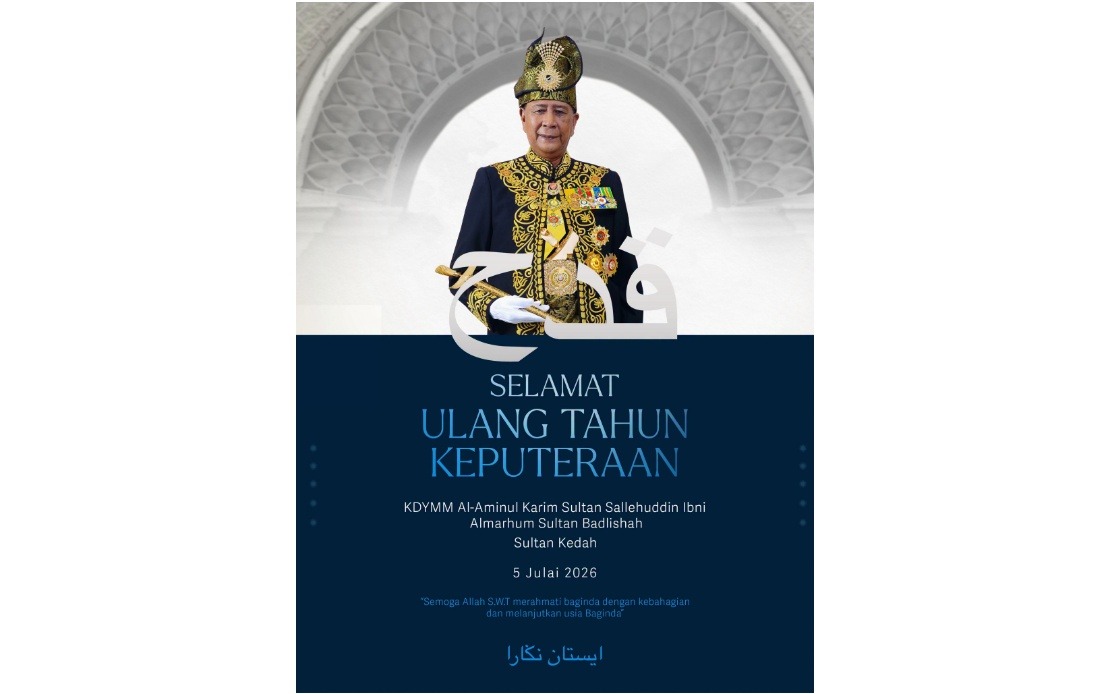
His Majesty Sultan Ibrahim, King of Malaysia, marked the occasion of the Sultan of Kedah's 84th birthday by extending formal greetings and well-wishes to Al-Aminul Karim Sultan Sallehuddin Sultan Badlishah. The gesture, announced through the official social media channels of the Malaysian monarchy, represents the customary acknowledgement of royal milestones within Malaysia's constitutional framework, where state rulers hold significant ceremonial and constitutional positions.
The King's message, conveyed through a post on the official Facebook page of Sultan Ibrahim Sultan Iskandar, centred on invocations of divine blessing for the Kedah ruler. His Majesty articulated hopes that Sultan Sallehuddin would continue to enjoy Allah SWT's favour, expressed through wishes for sustained happiness, robust health, and longevity. Such formal pronouncements serve not merely as personal courtesies but as symbolic affirmations of the bonds that unite Malaysia's federal structure, where the Yang di-Pertuan Agong maintains cordial relations with the rulers of the thirteen states.
Prime Minister Datuk Seri Anwar Ibrahim similarly conveyed heartfelt greetings to Sultan Sallehuddin, framing his message within the broader context of the Kedah royal household. The Prime Minister's salutation extended beyond the birthday celebrant to encompass the Sultanah of Kedah, Sultanah Maliha Tengku Ariff, and the entire royal family. This inclusive approach reflects the Malaysian convention of honouring not merely individuals but the institutions they represent and the families that embody them, underscoring the interconnected nature of Malaysia's constitutional monarchy and its state-level governance structures.
Anwar Ibrahim's public remarks, articulated in Malay as "Daulat Tuanku. Dirgahayu Tuanku" alongside his English-language well-wishes, demonstrate the bilingual and culturally nuanced character of official communications at Malaysia's highest echelons. The Prime Minister specifically invoked divine mercy and guidance upon Sultan Sallehuddin and his family, while praying for the continued blessing of good health, well-being, and enduring sovereignty. This language carries particular weight in the Malaysian context, where royal sovereignty remains a constitutionally protected and culturally revered concept.
Sultan Sallehuddin's tenure as ruler of Kedah represents a significant chapter in the state's modern history. Kedah, one of Malaysia's oldest sultanates with a heritage extending back centuries, maintains a distinctive position within the federation. The Sultan of Kedah serves not only as the ceremonial head of state for his jurisdiction but also participates in the deliberations of the Conference of Rulers, an institution that exercises constitutional authority in matters affecting the monarchy and certain aspects of national governance. Reaching his 84th birthday underscores the advancing age of several members of Malaysia's royal establishment, a demographic reality with potential implications for succession planning and the continuity of institutional leadership.
The exchange of birthday greetings between the King and state rulers, alongside the Prime Minister's participation in such protocols, illustrates the multifaceted nature of Malaysia's constitutional arrangements. Unlike Westminster systems where the monarch and head of government maintain formal separation, Malaysia's system involves the Yang di-Pertuan Agong as both a symbol of national unity and a participant in governance. The Prime Minister's engagement in royal observances reflects this institutional entanglement, where executive leadership extends beyond bureaucratic administration to encompassing symbolic functions.
From a regional perspective, Malaysia's institutional approach to celebrating royal milestones differs markedly from the practices in neighbouring Southeast Asian monarchies. While Thailand, Cambodia, and Brunei place extraordinary emphasis on royal commemoration through national holidays and elaborate ceremonies, Malaysia's approach remains more subdued, channelled primarily through official statements and social media platforms. This reflects both constitutional constraints placed upon the federal monarchy and the deliberate restraint Malaysia's founders built into the system to prevent excessive centralisation of power in royal institutions.
The public acknowledgement of Sultan Sallehuddin's birthday also carries implications for Kedah's place within Malaysia's federal hierarchy. As one of the states that historically resisted complete integration into the Malayan Union, Kedah has maintained a particular vigilance regarding its autonomy and the protection of its ruler's prerogatives. Birthday observances, seemingly ceremonial in nature, serve as subtle reminders of the state's continuing relevance and the respect commanded by its monarchical institution. The participation of both the King and Prime Minister in marking this occasion reinforces the legitimacy of state-level authority within Malaysia's federal framework.
Looking forward, Sultan Sallehuddin's advancing age raises questions about succession planning for the Kedah throne. As the sultanate approaches potential transitions in its leadership, the continued observance of royal protocols and public expressions of respect for incumbent rulers become increasingly significant in ensuring smooth institutional continuity. Malaysia's experience with royal successions has generally been orderly, a contrast to turbulence observed in some neighbouring states, reflecting the maturity of its constitutional arrangements and the broad acceptance of established protocols governing the monarchy.
The exchange of greetings between the King, Prime Minister, and state rulers, occurring against the backdrop of Malaysia's complex constitutional arrangements, ultimately demonstrates the resilience of institutions that have guided the nation since independence. While the specific birthday wishes extended to Sultan Sallehuddin may appear routine on the surface, they embody deeper commitments to federalism, respect for state authorities, and the constitutional role of the monarchy in binding together Malaysia's diverse communities under a framework of shared governance.

