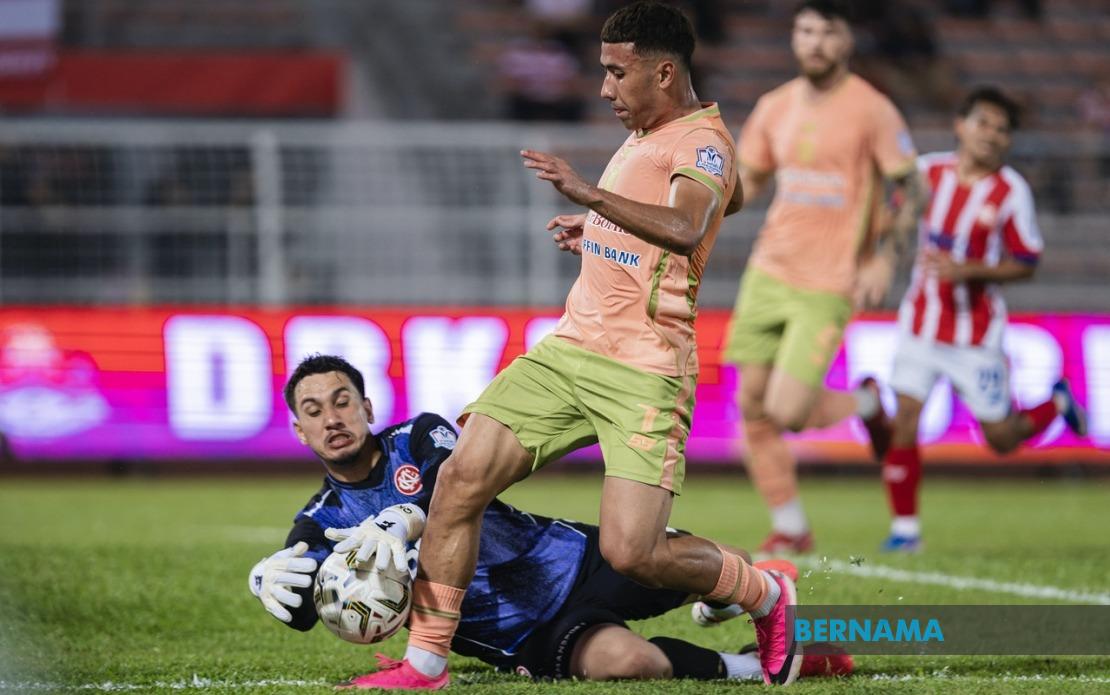
In a remarkable turn of events that left veteran coach Datuk Dollah Salleh visibly shaken, Kuala Lumpur City FC took the field for their 2026-2027 Super League opener against Kuching City FC with only 10 outfield players and a single substitute available. The Kuala Lumpur Football Stadium in Cheras bore witness to what can only be described as a calamitous start to the new campaign, ending in a devastating 6-0 loss that reflected the severity of the circumstances surrounding the club rather than the true quality of the squad.
The crisis enveloping KL City has exposed deep structural problems within Malaysian football's administrative machinery. The primary culprit was a player registration backlog that prevented the club from fielding a full complement of athletes, compounded by an influenza outbreak that rendered 13 players and two coaching staff members unable to participate. This perfect storm of mismanagement and circumstance created a situation so dire that even a coach with Dollah's extensive experience found himself emotionally unsettled. Speaking candidly after the match, the former national team coach revealed that the weight of the situation had been consuming his thoughts, visible to those around him through his visible distress over the preceding days.
Dollah's 23-year track record in football management provided no template for navigating such extraordinary adversity. The coach emphasised that his extensive pedigree could not have possibly prepared him for fielding a team so undermanned that basic tactical formations became impossible to maintain. The reality of taking to the pitch with fewer than half a squad's depth forced Dollah into purely defensive posturing throughout the match, an approach born not from strategic choice but from desperate necessity. His team managed to hold the line through the opening 45 minutes despite their numerical disadvantage, but the second half exposed the physical toll of their earlier exertion.
The match dynamics shifted meaningfully when Kuching City captain James Okwuosa received a straight red card in the 44th minute, briefly creating a 10-versus-10 scenario that offered a fleeting glimmer of hope for KL City. However, this silver lining proved ephemeral. Having already expended considerable energy defending their position during the first half, KL City's players simply lacked the reserves to capitalise on their temporary numerical parity. Fatigue became the invisible opponent, one that no amount of coaching acumen could overcome when the bench contained virtually no viable alternatives to rotate in fresh legs.
The decision to proceed with the match despite these crippling circumstances was not merely about honouring a fixture. Dollah acknowledged that withdrawing from the competition entirely could have triggered far more severe consequences for the club's standing within the Super League framework. The Malaysian Football League's regulations, it appears, favour teams that field depleted squads over those that fail to appear altogether, a perverse incentive structure that forced KL City's hand. The coach's pragmatic acceptance of this reality, while maintaining dignity throughout the ordeal, underscores the political complexities embedded within Malaysian football governance.
KL City's predicament forms part of a broader pattern troubling the Super League this season. The previous Saturday, the club's scheduled opener against Negeri Sembilan FC at Stadium Tuanku Abdul Rahman in Paroi had to be abandoned entirely when the visiting team could not assemble enough registered players. The Malaysian Football League subsequently awarded Negeri Sembilan a 3-0 victory and three competition points while simultaneously fining KL City RM50,000, a decision that compounds the frustration over circumstances largely beyond the club's direct control. This regulatory approach incentivises fixture evasion rather than encouraging resolution of underlying administrative failures.
The registration paralysis affecting multiple clubs points to systemic weaknesses in Malaysian football's bureaucratic infrastructure. The frequency with which registration problems have disrupted the new season suggests that club management, league administration, and regulatory bodies have failed to establish streamlined processes capable of handling basic compliance requirements before competition commences. For a professional sports league aspiring to regional credibility, such chaotic starts undermine its competitive integrity and public credibility. The problems should have been resolved during pre-season preparations, not discovered mid-match.
Recent positive news for KL City emerged when club president announced that FIFA's transfer embargo, which had previously restricted the team's ability to register new players, had finally been lifted. This development followed a separate dispute resolution process and theoretically positions the club to address immediate squad shortages before their next fixture. Dollah viewed the clearance as essential to moving beyond the legitimate excuses that have plagued his team's opening fixtures, though the damage to both morale and the competition record remains substantial.
The coach's emotional resilience and measured response throughout this crisis speaks to his professional character, yet also highlights the impossible position that clubs and managers occupy when administrative systems malfunction. Rather than venting frustration at individual players for their unavoidable absence through illness or registration delays, Dollah focused on extracting maximum effort from those available. He shielded his squad from excessive criticism by acknowledging their physical and tactical limitations, recognising that blame for catastrophic defeats rests with institutional failure rather than individual performance.
Looking ahead to this Saturday's fixture against DPMM FC, KL City faces a critical opportunity to demonstrate that their disastrous campaign opening reflected temporary crisis rather than underlying competitive weakness. With the FIFA transfer ban lifted and the influenza situation presumably resolved, the team should approach near full strength for the first time this season. This match represents more than three competition points—it represents a chance to restore confidence and prove that the talented squad exists despite the circumstances that rendered it invisible during their opening matches.
Broader implications for Malaysian football emerge from KL City's experience. The Super League's administrative apparatus requires urgent modernisation to prevent recurring registration chaos that embarrasses the domestic competition. Clubs investing significant resources to compete deserve a regulatory environment that doesn't sabotage their efforts through preventable bureaucratic failures. Southeast Asian football observers watch closely as Malaysia grapples with professionalising its premier competition, and scenes of teams taking the field understaffed by half don't project an image of a league moving toward regional prominence. Dollah's veteran presence provides some stability through this turbulent period, but systemic reforms must accompany managerial excellence to transform crisis into opportunity.

