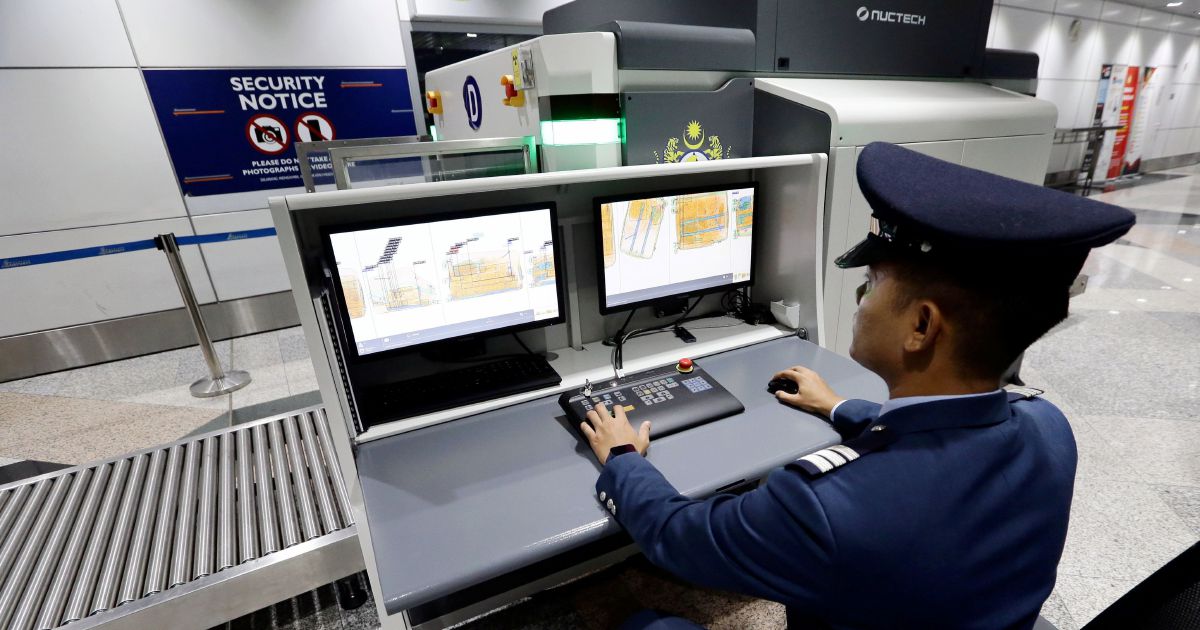
The sophisticated scanning technology deployed at Kuala Lumpur International Airport possesses the full technical capability to identify illicit drugs passing through the facility, according to Home Minister Datuk Seri Saifuddin Nasution Ismail. Yet despite these capable systems, the airport's drug interdiction efforts have been hampered not by equipment limitations but by the way screening protocols have been structured and implemented across the terminal.
Saifuddin's assertion addresses a significant gap in Malaysia's border security infrastructure that has drawn scrutiny in recent months. Rather than pointing to ageing or inadequate machinery—a common refrain when security breaches occur—the minister's statement highlights a more fundamental operational challenge: the prioritisation of weapons and explosive detection over narcotics interdiction in screening procedures. This distinction carries important implications for how authorities approach drug trafficking through the nation's primary international gateway.
The revelation underscores a complex reality facing modern airports worldwide. Screening technology at major hubs typically operates within a hierarchy of threat assessment. Weapons and explosives command top priority due to their immediate, catastrophic potential for mass casualty events. Drug detection, while critical for public health and law enforcement, often receives secondary emphasis in standard operating procedures. At KLIA, this institutional prioritisation appears to have created a practical vulnerability that traffickers exploit.
Malaysia's position as a regional transhipment hub for narcotics makes this operational gap particularly acute. The country sits at a crossroads for trafficking routes connecting the Golden Triangle, synthetic drug manufacturing regions, and distribution networks extending toward Australia and beyond. KLIA's throughput—processing millions of passengers and tonnes of cargo annually—provides multiple opportunities for organised criminal networks to move contraband. When screening protocols are calibrated primarily for weapon detection, those criminal operations benefit from comparatively reduced scrutiny of drug smuggling methods.
The distinction between equipment capability and operational procedure carries practical consequences for border enforcement. A scanner might be technically capable of detecting drug residue or concealed narcotics, but if security officers are trained and directed to focus their attention elsewhere, that capability remains underutilised. Current SOPs effectively create a secondary tier of oversight where drug detection becomes opportunistic rather than systematic—something officers might accomplish while primarily watching for weapons rather than as a dedicated function.
This operational structure may explain recurring drug seizures at KLIA that investigators have characterised as catches made almost incidentally. When attention is centred on weapons, detection of drugs often occurs because they happen to be adjacent to other material being scrutinised, rather than because of targeted protocols designed specifically to intercept narcotics. The efficiency gap between what the equipment can achieve and what the procedures actually accomplish represents lost interdiction capacity.
Addressing this discrepancy requires recalibrating how KLIA's screening apparatus functions in practice. Saifuddin's comments suggest recognition within the Home Ministry that equipment is not the constraint. Instead, attention must turn to revising SOPs to allocate screening resources more equitably between weapons and drug detection. This might involve retraining security personnel, adjusting the threshold sensitivity of scanners for narcotic materials, or restructuring the priority sequence through which screeners evaluate passengers and cargo.
The implications extend beyond KLIA itself. Other Malaysian border crossings—from the Port of Port Klang to smaller regional airports—may operate under similarly weapons-focused protocols. If KLIA represents standard practice, then across the country's entire border security apparatus, drug detection may be consistently secondary to weapon interdication. A comprehensive review of SOPs across all entry points could reveal systematic vulnerability to narcotics trafficking nationwide.
International precedent offers guidance for rebalancing screening priorities. Airports in Australia, Singapore, and European nations have implemented dual-track security approaches where narcotic detection receives equal operational emphasis to weapon detection. This typically involves dedicated narcotics detection dogs, chemical analysis capabilities, and personnel specifically trained in drug interdiction methods. Singapore's approach, particularly relevant given the city-state's comparable geographic position and trafficking exposure, demonstrates that comprehensive drug detection is achievable without compromising weapon security.
For Malaysia, implementing more aggressive drug detection at KLIA would align with national counternarcotics strategy. The country has positioned itself as committed to combating the drug trade through enforcement, eradication, and rehabilitation. Yet if the primary international gateway operates under protocols that inherently disadvantage drug interdiction, that commitment faces structural limitations. Saifuddin's clarification that equipment is adequate suggests the ministry recognises the path forward does not require massive capital investment in new scanners, but rather operational reimagining of how existing infrastructure should be deployed.
The timing of this acknowledgment may indicate pressure from enforcement agencies or from upstream intelligence revealing systematic gaps in drug interdiction. KLIA's role in the regional trafficking network means that improvements here would disrupt criminal logistics across Southeast Asia. Traffickers who currently move product through KLIA with relative confidence—knowing screening protocols prioritise other concerns—would face materially increased risk, pushing criminal enterprises toward other routes that might prove less convenient or more closely monitored.
Moving forward, the technical capability exists. What remains is the political and administrative will to restructure screening operations so that this capability translates into actual drug seizures and disrupted trafficking networks. Saifuddin's candid assessment provides a foundation for this recalibration, placing responsibility squarely on the operational and procedural frameworks rather than on the technology itself.

