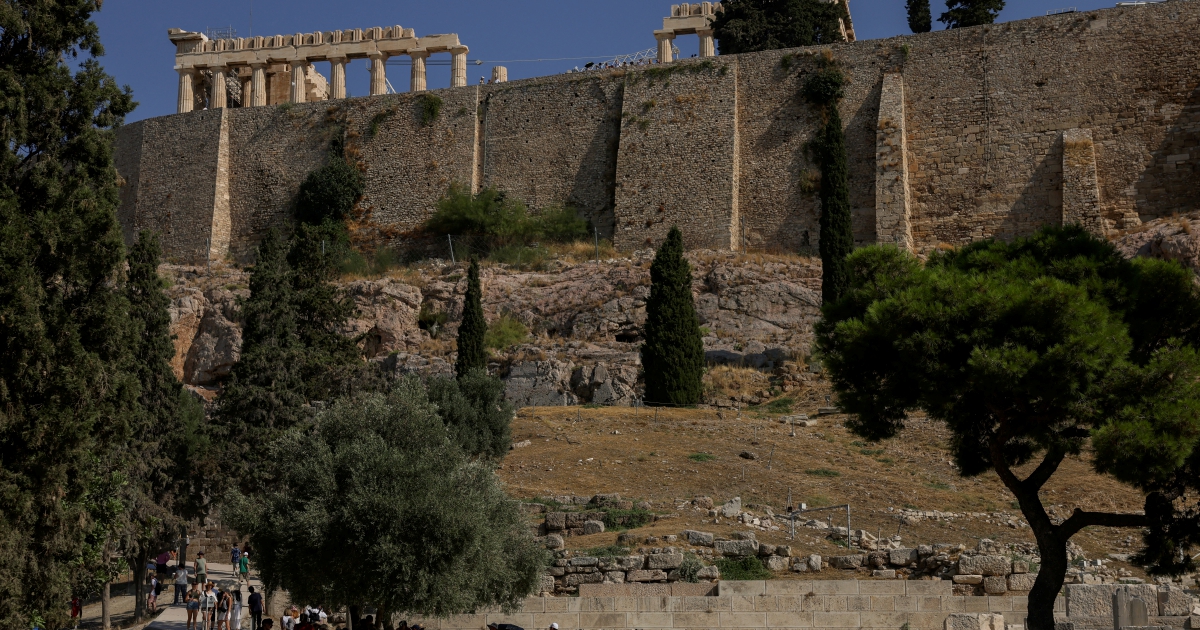
A violent incident at one of Europe's most iconic heritage sites has renewed questions about safety and security management at major tourist attractions. On Tuesday, a 60-year-old man launched a knife attack against two Greek-American visitors near Athens' Acropolis, the ancient citadel that crowns the Greek capital and draws millions of visitors annually. Police arrived at the scene and took the attacker into custody, with authorities now investigating the circumstances surrounding the assault.
The Acropolis and its surrounding precinct represent humanity's most significant repositories of classical civilization. The site encompasses the Parthenon, the Erechtheion, the Propylaea, and the Temple of Athena Nike—monuments that have defined Western architectural and philosophical traditions for nearly two and a half millennia. The archaeological landscape attracts approximately three to four million international visitors each year, making it essential infrastructure for Greece's tourism economy, which accounts for roughly 20 percent of the nation's GDP and employs hundreds of thousands of Greeks directly and indirectly.
The attack on Greek-American tourists carries particular symbolic weight, given the historical and cultural ties binding the diaspora communities to their ancestral homeland. Greek-Americans represent among the most consistent international visitors to such heritage sites, often traveling with family groups to reconnect with ancestral origins. An incident of this nature threatens not merely individual visitors' sense of security but also broader international confidence in Greece as a safe destination, particularly for heritage tourism, which targets precisely the demographic seeking cultural immersion and historical understanding.
Tuesday's assault underscores persistent challenges facing heritage site management across the Mediterranean and wider European region. While the Acropolis remains under substantial police presence and is surrounded by barriers, the surrounding urban precinct of Plaka and adjacent neighborhoods comprises a complex maze of narrow streets, informal marketplaces, and accessibility points that complicate security implementation. Balancing unrestricted public access to cultural monuments with comprehensive visitor protection represents an enduring institutional tension in heritage management.
The attacker's profile and motivation remain under investigation by Athens police. Preliminary reporting offers limited detail regarding whether the incident was random, targeted, or motivated by underlying criminal activity or mental health crisis. Understanding such contextual factors proves crucial for assessing whether this represents an isolated event or symptom of broader security vulnerabilities at the site. Greek authorities have not yet released comprehensive statements regarding the assailant's background, any prior criminal history, or preliminary determinations regarding mental state or intent.
Greece's tourism sector has recovered substantially following the economic crisis that devastated the industry during the 2010-2015 period. International visitor numbers have rebounded to pre-pandemic levels and beyond, with heritage sites like the Acropolis functioning as primary draw mechanisms for tourists planning Greek itineraries. Any sustained negative publicity regarding visitor safety inevitably affects booking patterns and travel decisions, particularly among demographics from developed economies accustomed to comprehensive security frameworks.
The incident occurs amid broader European conversations regarding urban security in high-density tourist zones. Cities from Barcelona to Venice to Rome have grappled with similar challenges of protecting both local residents and visitors within historic urban environments. The concentration of cultural attractions, informal street commerce, and pedestrian traffic creates complex security calculus that transcends simple surveillance or barrier solutions. Professional heritage site management increasingly incorporates community policing approaches, predictive threat assessment, and emergency response protocols developed through international cooperation.
Greece's police forces have substantially expanded security measures at national heritage sites following previous security incidents and heightened international concerns regarding urban safety. The Acropolis benefits from perimeter barriers, restricted access points, and regular patrols by both national police and specialized heritage protection units. Nevertheless, Tuesday's attack demonstrates that even fortified sites cannot eliminate all risk, particularly when assailants act with immediate spontaneity rather than premeditated planning requiring extended preparation.
For Malaysian travelers and those from Southeast Asia planning European heritage tourism, the incident provides practical reminder regarding situational awareness and basic personal security protocols at major public venues. While violent crime remains statistically uncommon at major archaeological sites, experienced international travelers typically maintain heightened alertness in crowded tourist zones, avoid isolated areas, and utilize established tour operators providing professional security oversight. Heritage sites inherently attract diverse crowds including vulnerable populations, transient individuals, and those experiencing mental health challenges, creating environment where incidents occasionally occur regardless of management sophistication.
Greek authorities have not yet disclosed whether the two injured tourists sustained serious wounds requiring hospitalization or received treatment for minor injuries. The investigation ongoing by Athens police will likely examine whether the attacker possessed prior documented mental health issues, criminal background, or targeting rationale. Such determinations typically emerge over coming weeks as investigators interview the perpetrator and gather witness statements from visitors present at the site during the incident.
The Acropolis episode contributes to ongoing international dialogue regarding heritage site security in an era of increased global mobility and complex urban dynamics. Greece's tourism ministry has not yet released official statement regarding any potential security protocol modifications in response to Tuesday's event. Historically, Greek authorities balance security imperatives against preserving the open, accessible character that defines Mediterranean heritage tourism and enhances visitor experience at culturally significant locations.
For the international tourism industry and heritage site operators, the incident reinforces importance of continuous security assessment and emergency preparedness refinement. Major attractions cannot eliminate violence entirely, but professional management protocols—including staff training, emergency communications, visitor guidance, and coordination with local emergency services—substantially reduce incident impact and protect public confidence in destination safety during the immediate aftermath and subsequent recovery period.

