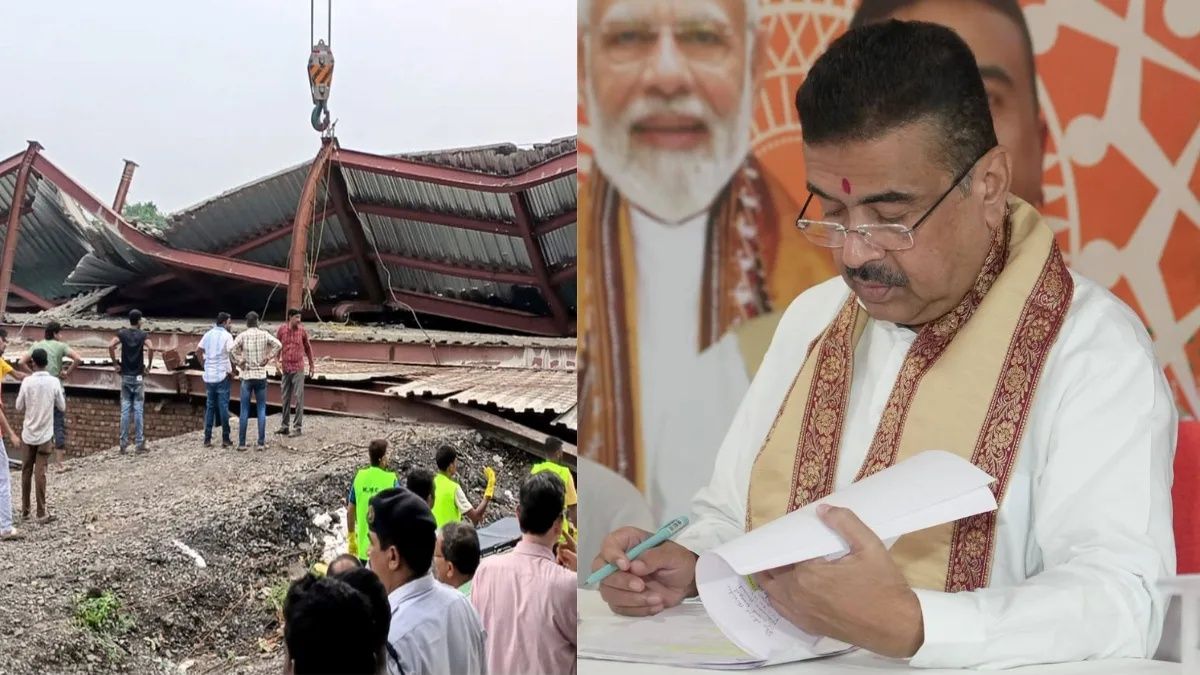
The death toll from the catastrophic warehouse collapse in Kolkata's Taratala locality has climbed to 11 as rescue teams continue their painstaking search through the rubble on the second day of operations. The latest victim's body was retrieved at approximately 1.15pm on Thursday, June 25, and brought to the Trauma Care Centre at SSKM Hospital, though the deceased's identity remains unconfirmed. Hundreds of workers may still be buried beneath the debris, prompting fears among officials and family members that the final casualty count could rise further before the rescue mission concludes.
The catastrophe has triggered an unprecedented inter-agency response showcasing coordination between federal and state authorities. Personnel from the Indian Army, the National Disaster Response Force (NDRF), and multiple civilian agencies have maintained a continuous presence at the site, utilising heavy machinery and specialized equipment to systematically remove tons of concrete and steel. The seamless cooperation between Centre and state representatives underscores the gravity with which India's national disaster management framework has responded to what appears to be a structural failure of significant proportions.
West Bengal Chief Minister Suvendu Adhikari used a legislative address to directly implicate the previous municipal administration in the disaster, asserting that the Taratala warehouse building received approval despite obvious structural inadequacies embedded in its design. He presented documentary evidence before the assembly purporting to show that critical flaws existed in the construction plan yet proceeded through official channels. The documents he cited, including those bearing the signature of erstwhile Kolkata Municipal Corporation (KMC) Mayor Firhad Hakim, suggest a troubling disconnect between regulatory oversight and actual construction standards during the prior Trinamool Congress (TMC)-led administration of the municipal body.
The Chief Minister's allegations extended beyond mere administrative negligence to insinuate systemic corruption. He characterized the pattern of approvals as reflective of what he termed a culture of "cut money"—illicit payments extracted by officials to facilitate expedited or lax approval processes—which he blamed for degrading Kolkata's structural safety. By linking building failures directly to corruption in the approval machinery, Adhikari positioned the disaster not as an isolated accident but as the inevitable consequence of institutional decay under the previous regime. His statements, delivered with supporting documentation, suggest investigators have identified specific points where professional judgment should have halted the project but apparently did not.
Law enforcement responses have been swift, with five individuals arrested within hours of the collapse. Those detained include the construction supervisor, the steel structure fabricator responsible for welding and assembly, the person leasing the land where the warehouse stood, a labour contractor-cum-Trimex supplier, and a broker allegedly instrumental in securing municipal approval. Notably absent from custody is the primary accused, identified as Azgar, who remains at large. The breadth of arrests across different facets of the construction and approval process suggests investigators are treating this as a complex case involving multiple layers of responsibility rather than attributing blame to any single actor.
Recognizing the broader systemic implications, Chief Minister Adhikari announced a moratorium on non-essential construction work across multiple jurisdictions, effective immediately for four weeks. The suspension applies to the entire Kolkata Municipal area and extends to surrounding regions including Rajarhat-New Town, Maheshtala, Budge Budge, Pujali, Bishnupur, Sonarpur, and Baruipur. During this period, all previously approved building plans within these territories will undergo comprehensive technical audits, effectively subjecting the institutional memory of past approvals to renewed scrutiny. This suspension, while economically disruptive for the construction sector, reflects a state-level commitment to preventing recurrence of similar failures.
To execute this ambitious audit initiative, the Chief Minister established a high-level oversight committee chaired by Additional Chief Secretary Rajesh Pandey. The committee's composition reveals the government's intent to apply multidisciplinary expertise to the review process. Members include senior state officials with administrative authority, plus external technical specialists from IIT Kharagpur, Rail India Technical and Economic Service (RITES), and Indian Railway Construction Limited (IRCON)—institutions with robust track records in structural assessment. The inclusion of representatives from the Fire Services and Public Works departments ensures that safety and engineering standards are evaluated comprehensively rather than through narrow bureaucratic lenses.
The establishment of this oversight mechanism carries significant implications for construction practices across West Bengal and potentially signals to other states the necessity of similar reforms. The participation of premier technical institutions lends credibility to the audit process and suggests officials recognise that municipal engineers and KMC staff—whose judgment clearly failed once before—cannot be entrusted unilaterally with re-evaluating their own previous decisions. This institutional design acknowledges that institutional capture and professional complacency may have contributed to the original failure.
Adhikari's public statements indicate the government intends to pursue vigorous accountability measures beyond criminal prosecution. He declared that individuals found culpable will face imprisonment and, more significantly, potential confiscation of personal assets to fund victim compensation. This provision representing a departure from standard criminal sentencing frameworks suggests authorities are contemplating measures that blur the line between criminal and civil liability. For Malaysian observers, this approach reflects how some Indian states are experimenting with enhanced remedial frameworks in cases of large-scale public harm stemming from official neglect.
The disaster exposes systemic vulnerabilities in how municipal authorities across South Asia manage building oversight and safety compliance. The warehouse collapse in Kolkata joins a troubling pattern of structural failures in major Indian cities where approval mechanisms have demonstrably failed to prevent construction of unsafe structures. For Malaysian construction professionals and municipal administrators, the Kolkata incident serves as a cautionary study in how corruption-enabled regulatory capture can transform nominally sound building codes into dead letters. The fact that documented structural flaws apparently proceeded through official approval channels suggests that regulatory capture had advanced so thoroughly that even obvious deficiencies encountered no institutional resistance.
As rescue operations continue and the human toll becomes clearer, the broader policy response crystallizing around comprehensive audits and external technical oversight may prove more consequential than any individual prosecutions. The commitment to suspend non-essential construction work, while economically painful, reflects recognition that incremental reforms to existing municipal structures have manifestly failed. Whether the four-week audit window and renewed external oversight prove sufficient to restore structural integrity to Kolkata's building approval process remains uncertain, but the scale of the response indicates state authorities have grasped that this particular failure demands more than routine administrative corrections.

