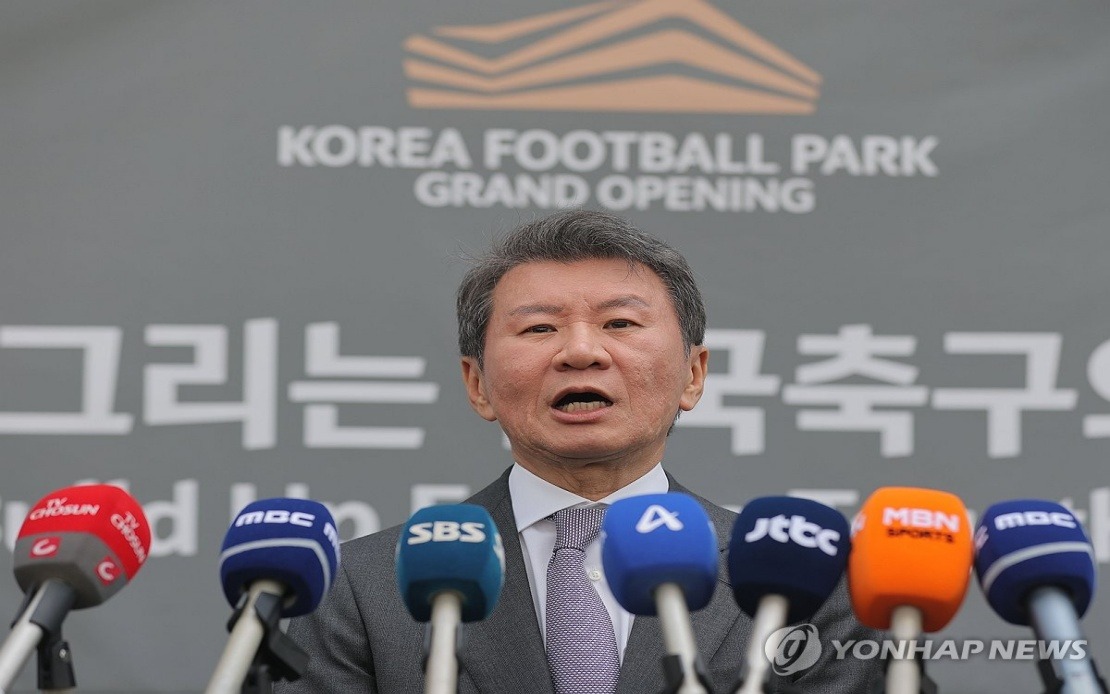
Chung Mong-Gyu, president of the Korea Football Association, has formally stepped down from his position after presiding over a final executive meeting at Korea Football Park in Cheonan, approximately 90 kilometres south of Seoul. The resignation came on Monday, marking an abrupt conclusion to his tenure weeks before the World Cup tournament itself concludes on July 20. His departure accelerates a timeline he had previously announced in late May, when he initially committed to leaving office only after the tournament's conclusion, signalling the severity of circumstances that prompted his early exit.
The decision follows South Korea's disappointing group stage elimination, a result that reverberated through the nation's football establishment and beyond. Coached by Hong Myung-bo, the squad accumulated merely three points from one victory and two defeats, finishing third in Group A and falling short of qualification as one of the eight best-performing third-place teams. This early exit proved particularly stinging given South Korea's historical status as a World Cup powerhouse. Coach Hong Myung-bo immediately resigned once the team's fate became mathematically certain, taking personal responsibility for the debacle before Chung followed suit.
Chung's departure caps a presidency increasingly defined by turbulence and institutional discord. Since July 2024, when he orchestrated Hong's appointment as national team coach, critics denounced the hiring process as opaque and lacking transparency. The controversy intensified considerably when South Korea's Ministry of Culture, Sports and Tourism initiated a comprehensive investigation into the KFA's operational practices throughout that year. The ministry's findings substantiated concerns about governance irregularities, concluding that Chung and other senior officials warranted disciplinary action. This institutional pressure combined with the World Cup failure to make his position untenable.
The relationship between the KFA and South Korea's sports ministry has deteriorated significantly. Beyond the initial investigation, the ministry has signalled intentions to conduct additional audits specifically examining how the World Cup campaign unfolded. The two bodies remain locked in legal disputes, reflecting deeper fractures in South Korean sports governance. Minister Chae Hwi-young has already begun signalling that electoral processes within the KFA require reassessment, suggesting governmental intervention may reshape how the association selects its leadership moving forward.
According to KFA protocols, one of the organisation's four vice presidents will assume interim leadership pending a formal election. Standard regulations ordinarily require succession elections within 60 days of a president's departure, though this timeline applies most strictly when the departing leader possessed less than one year of remaining tenure. Chung maintained approximately three years left in his fourth term, creating ambiguity about whether accelerated procedures apply. The specifics of this transition remain subject to interpretation and potential adjustment.
The electoral college responsible for selecting the next KFA president comprises a diverse coalition including heads of regional football associations, chief executives from K League clubs, active players, coaches, and referees. Last year's presidential election witnessed robust participation, with 183 of 192 eligible voters casting ballots. This broad-based electoral system theoretically ensures representation across football's stakeholder communities, though critics have questioned whether such mechanisms adequately reflect public sentiment or ensure competent governance.
Governmental scrutiny now extends to the election mechanism itself. Minister Chae publicly acknowledged concerns regarding current KFA electoral procedures, asserting that these processes must evolve in response to public disappointment over South Korea's World Cup performance. His rhetoric suggests the ministry views institutional reform as essential to restoring public confidence in Korean football's stewardship. This political pressure indicates that whoever succeeds Chung will inherit an office operating under intensified external oversight.
The Korean Sport and Olympic Committee, the nation's supreme sports authority, scheduled a general assembly for July 16 to examine potential governance reforms affecting its affiliated member organisations. The KSOC is exploring two significant modifications: extending the 60-day election window following a president's resignation and adopting direct popular voting systems rather than electoral college selection. These potential changes would fundamentally reshape how the KFA selects its leadership, potentially democratising a process currently confined to specialist stakeholders.
Chung's resignation statement acknowledged both accomplishment and failure during his presidency. He expressed gratitude toward football enthusiasts and apologised for instances when his leadership disappointed expectations. His carefully worded remarks attributed sporting successes to players and supporters while accepting personal responsibility for organisational missteps. This contrasts sharply with the combative tone he might have adopted, suggesting a pragmatic recognition that his position had become politically indefensible regardless of his accomplishments.
The timing of Chung's departure carries implications beyond Korean football's immediate institutional concerns. For Southeast Asian football observers, South Korea's crisis illustrates how tournament failure can precipitate comprehensive governance reviews and potential systemic restructuring. The World Cup exit demonstrated that even traditionally strong Asian footballing nations face accountability pressures from governments and publics. This precedent may influence how other regional football associations operate, particularly regarding transparency in hiring decisions and susceptibility to governmental intervention during periods of sporting underperformance.
Chung characterised Korean football as cyclical, expressing conviction that the sport would overcome adversity and ascend toward greater achievements as it had historically done. This statement projects optimism about the nation's footballing future while acknowledging current tribulations. His successors will inherit responsibility for executing this recovery narrative, operating under heightened scrutiny from governmental bodies, the sporting public, and international observers assessing whether Korean football can restore its traditional competitive standing.
The episode demonstrates how international tournament performance intersects with domestic governance structures across Asian sports. South Korea's World Cup disappointment triggered governance crises that extend far beyond pitch performance, affecting administrative processes and governmental relationships. The next KFA president, elected potentially under entirely reformed procedures, will oversee an organisation undergoing simultaneous competitive rebuilding and institutional restructuring. This convergence of sporting and administrative challenges will determine whether Korean football emerges strengthened from its current adversity.

