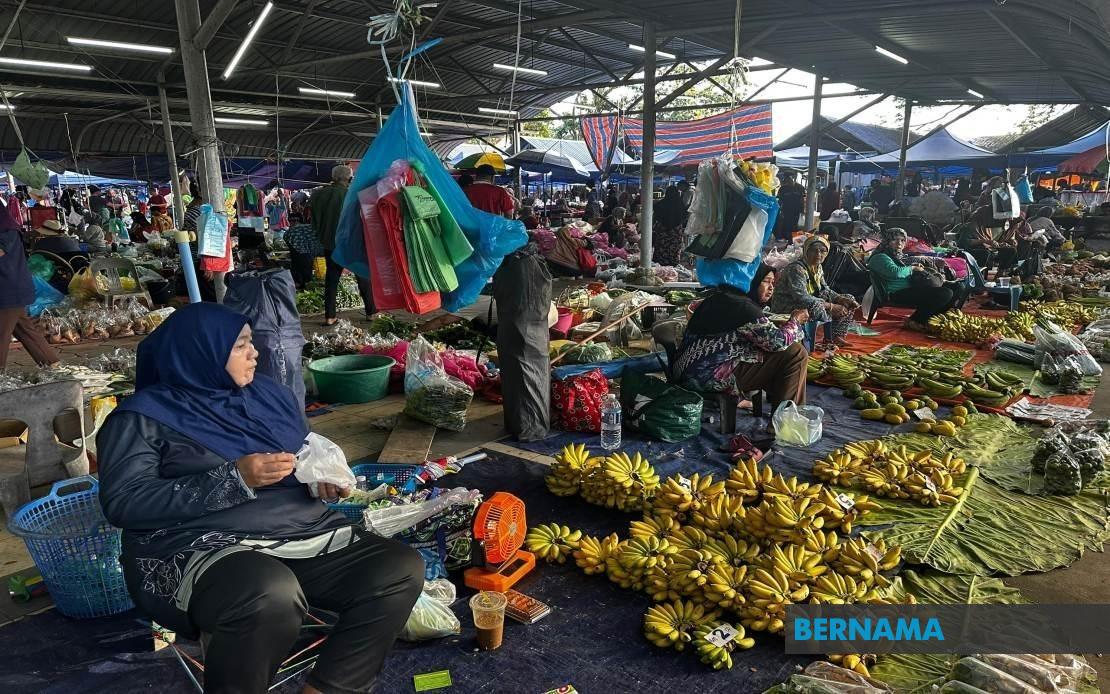
The prospect of elevating Kota Belud's venerable traditional market to UNESCO World Heritage Site status hinges on a substantial groundwork of scholarly investigation and cultural validation, Sabah's Deputy Minister for Tourism, Culture and Environment Dr Andi Md. Shamsureezal revealed during legislative proceedings in Kota Kinabalu this week. The announcement came in response to parliamentary enquiries about the state government's aspirations to secure international designation for both the market itself and recognition of the broader Kota Belud district as a protected cultural landscape.
The path toward UNESCO acknowledgement, Dr Andi explained, demands far more than enthusiasm and local pride. Nominees must navigate an intricate assessment framework that examines both the tangible dimensions of heritage—physical structures, archaeological layers, and architectural merit—alongside the immaterial cultural expressions that give a site meaning. In Kota Belud's case, this means cataloguing not merely the market's buildings or layout, but the episodic gathering traditions, vendor practices, ritual commerce patterns, and community memories embedded within generations of trading activity.
The nomination dossier itself represents a substantial undertaking. Applicants must compile exhaustive historical narratives supported by academic research, archival evidence, and contemporary documentation. For Kota Belud Tamu, this process requires assembling material about the market's origins, its evolution through colonial and post-independence periods, the indigenous trading communities it serves, and its continuing relevance to Sabah's cultural identity. UNESCO's evaluation committees expect applicants to demonstrate not merely local or national significance, but what officials term "Outstanding Universal Value"—proof that the site speaks to broader human heritage worthy of global preservation.
Such designation demands robust scientific backing. Archaeological surveys might be necessary to establish chronological depth, whilst cultural anthropologists would document intangible practices that define the Tamu experience. Historians must trace documentary evidence establishing the market's cultural trajectory, whilst conservation specialists assess the physical condition and vulnerability of existing structures. This layered investigation typically extends over multiple years, consuming substantial financial and human resources.
Sabah's government has already achieved preliminary success in this direction. Kota Belud secured international recognition when the Kinabalu UNESCO Global Geopark received formal designation in May 2023, positioning the district within a larger geographical and geological framework acknowledged by the United Nations Educational, Scientific and Cultural Organization. This geopark status itself provides a scaffolding upon which heritage nominations can build, though geopark and World Heritage designations operate through distinct evaluation criteria and processes.
Leveraging this geopark foundation, Sabah Parks—the governmental entity managing the protected zone—has already launched the "Tamu Geopark" initiative, an integrated programme that weaves together cultural interpretation with conservation objectives. The scheme presents Kota Belud's market as a living demonstration of indigenous commerce traditions, indigenous ecological knowledge, and community resilience. Through this framework, the market functions simultaneously as economic venue, cultural repository, and educational resource for visitors exploring the intersection of human settlement and natural environment.
The economic dimensions align strategically with conservation goals. By positioning the Tamu as a showcase for local gastronomy, traditional textile production, handicraft expertise, and regional products, the initiative creates revenue incentives for cultural maintenance. Vendors and artisans gain market access and tourist attention, whilst communities develop enterprise models grounded in heritage preservation rather than conflicting with it. This approach recognises that heritage sustainability requires not nostalgia but economically viable livelihoods for custodian communities.
For Malaysian policymakers and regional observers, Kota Belud's trajectory illustrates both the potential and complexity of UNESCO recognition strategies. Southeast Asian nations possess remarkable cultural assets—from Philippines rice terraces to Thai canal systems—yet securing international designation requires institutional capacity, sustained funding, and sophisticated documentation standards that not all communities easily access. Sabah's phased approach, beginning with geopark recognition before pursuing World Heritage status, offers a pragmatic model for other Malaysian states and regional governments navigating similar aspirations.
The timeline Dr Andi referenced signals realistic expectations. UNESCO nomination processes rarely conclude within two or three years; five to ten years represents typical duration from initial preparation through formal inscription. During this extended period, communities must maintain momentum despite bureaucratic patience tests, shifting political priorities, and competing resource demands. Kota Belud's advantage lies in existing geopark infrastructure and demonstrated government commitment, yet even these advantages cannot expedite fundamental research requirements.
For Kota Belud residents and the broader Sabah economy, eventual UNESCO recognition would reinforce the district's positioning as a cultural tourism destination, justifying infrastructure investment and potentially attracting international development support. However, Dr Andi's cautionary emphasis on documentation and research reflects institutional awareness that premature nomination submission—lacking adequate substantiation—risks rejection that would setback future applications. The deputy minister's message conveys both ambition and prudence: the goal remains achievable, but only through methodical, evidence-based preparation that respects UNESCO's rigorous standards whilst honouring Kota Belud's authentic heritage significance.

