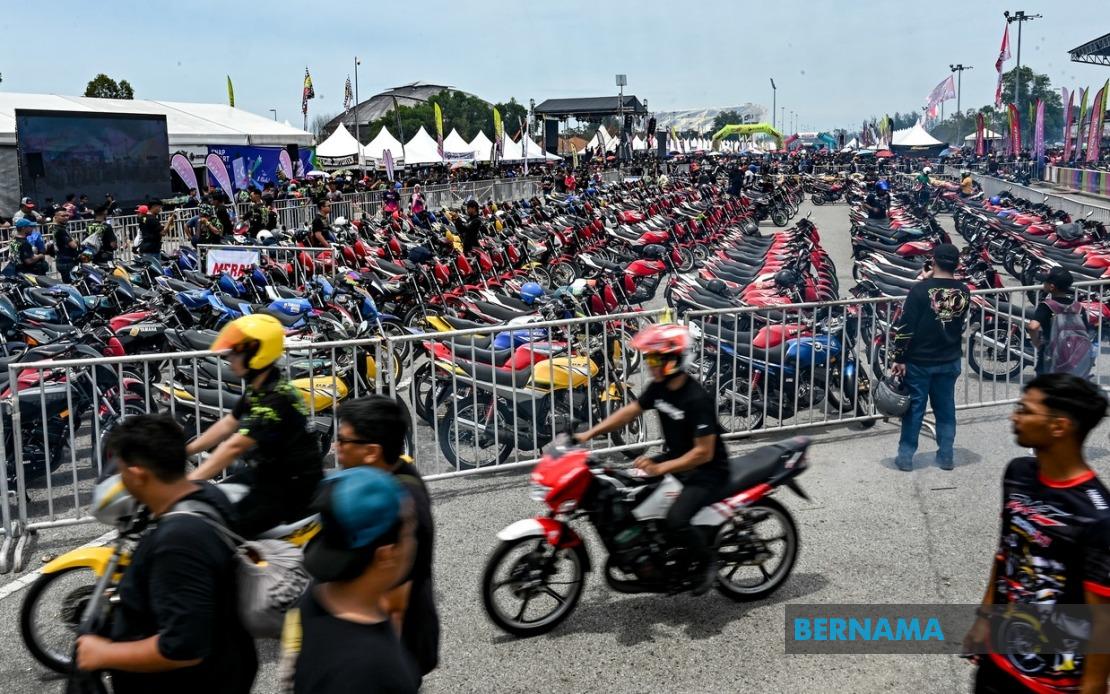
The Kuala Terengganu City Council (MBKT) found itself bearing a RM40,000 bill for sanitation operations following the RXZ Members 8.0 gathering at the Gong Badak Motor Racing Circuit near Kuala Nerus last weekend. The financial outlay underscores growing tensions between local authorities and event organisers over environmental responsibility, particularly as Terengganu positions itself as an emerging tourist destination.
Mayor Lizan Che Mamat revealed that the clean-up expenses encompassed compensating workers for overtime shifts, deploying additional waste collection vehicles, and maintaining extended operating schedules at the Sungai Ikan landfill facility. The council's investment in restoring the venue to acceptable conditions highlights the hidden infrastructure costs that municipalities absorb when large gatherings generate unexpected volumes of refuse. Such expenses, often invisible to the general public, represent a significant drain on council budgets that could otherwise fund preventative services or infrastructure maintenance.
The scale of the challenge became apparent when sanitation crews removed approximately 130 tonnes of solid waste from the event grounds. The debris consisted predominantly of food and beverage packaging, reflecting the consumption patterns typical of high-attendance outdoor gatherings. This volume necessitated substantially more collection runs than initially anticipated and forced the council to reassign personnel to emergency clean-up duties, stretching limited municipal resources.
Despite the availability of rubbish receptacles distributed throughout the venue, substantial littering persisted. Lizan acknowledged that the sheer scale of attendance—exceeding 100,000 visitors—may have rendered the initial number of bins inadequate for demand. Nevertheless, he emphasised that participants bore responsibility for disposing of waste responsibly at designated collection zones rather than discarding materials indiscriminately across the grounds. This tension between infrastructure provision and behavioural compliance remains a persistent challenge for event management in the region.
Facing recurrent pressures, MBKT is considering regulatory modifications that would transfer greater accountability to event organisers. The council plans to investigate whether implementing mandatory submission of comprehensive solid waste management strategies could serve as a prerequisite for event approval. Such requirements would oblige organisers to forecast refuse volumes, arrange adequate collection infrastructure, and coordinate disposal logistics before events commence, potentially preventing future cost overruns.
Simultaneously, the council is reviewing its cleaning deposit framework. Currently, organisers are required to post financial securities intended to offset municipal clean-up expenses. By recalibrating these deposit structures, MBKT aims to ensure that the financial responsibility for environmental remediation rests proportionately with event hosts rather than the public treasury. This approach aligns with principles of polluter-pays philosophy increasingly adopted across Asia-Pacific municipalities struggling with event-related sanitation challenges.
The situation reflects broader tensions within Terengganu's development strategy. State officials actively encourage tourism and major events as mechanisms for economic stimulation and international profile-raising. However, the environmental and financial consequences of hosting large gatherings frequently remain poorly quantified or inadequately addressed during the approval phase. The RXZ incident demonstrates the gap between promotional enthusiasm and operational capacity.
Malaysia's expanding event industry, particularly in secondary cities like Kuala Terengganu, often lacks mature frameworks for managing environmental externalities. Unlike established international destinations that have refined event management protocols over decades, Malaysian municipalities continue experimenting with regulatory approaches and cost-allocation mechanisms. The RM40,000 expenditure serves as a tangible metric for evaluating whether current systems adequately protect public finances while encouraging economic activity.
Lizan's statement that the council welcomes large-scale events reflects institutional ambivalence. While recognising tourism and local economic benefits, MBKT simultaneously bears costs that may outweigh direct municipal revenues from such activities. This dynamic pressures councils to either absorb losses, impose stricter regulations that deter organisers, or seek middle-ground solutions balancing growth aspirations with fiscal sustainability.
The council's broader message emphasised collective environmental stewardship. By framing cleanliness as a shared responsibility extending beyond municipal workers to individual participants and organisers, officials implicitly criticise visitor behaviour while acknowledging that regulatory mandates alone cannot ensure compliance. This rhetorical positioning reflects realistic understanding that Southeast Asian municipalities cannot indefinitely sustain uncompensated environmental remediation.
Looking forward, MBKT's proposed policy modifications will likely face negotiation with event organisers, who may resist additional regulatory burdens or deposit requirements. The outcome could establish precedent for other Terengganu municipalities and potentially influence approaches across Malaysia, where secondary cities increasingly compete for event hosting. How Kuala Terengganu balances economic development incentives against environmental and financial sustainability will determine whether the state can genuinely position itself as a premier event destination.
The RXZ Members 8.0 experience ultimately illustrates that successful event hosting requires sophisticated coordination spanning promotion, infrastructure provision, waste management, regulatory oversight, and behavioural compliance. As Malaysian cities expand their event portfolios, establishing clearer cost-responsibility frameworks and environmental standards early in the development process could prevent recurring financial surprises and preserve public confidence in strategic tourism initiatives.

