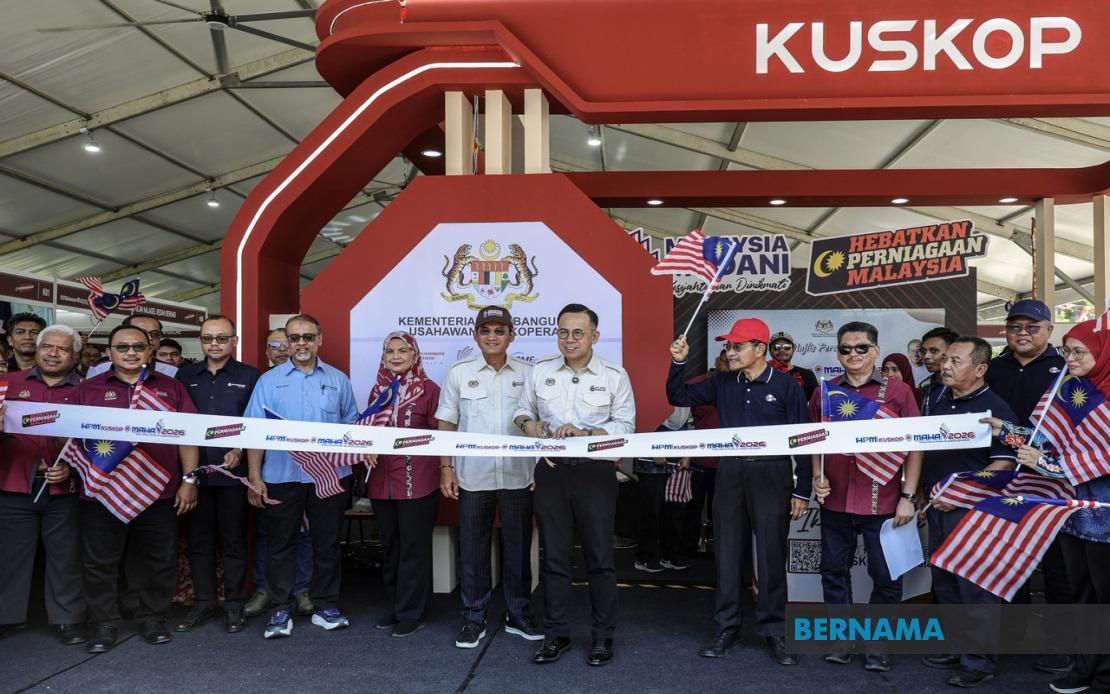
The Ministry of Entrepreneur and Cooperatives Development (KUSKOP) is pursuing an ambitious RM500,000 sales target through its debut presence at MAHA 2026, the biennial agricultural and agro-industrial exhibition currently underway in Serdang. The inaugural HPMKUSKOP@MAHA site represents a strategic push to elevate visibility and commercial opportunities for Malaysia's entrepreneurial ecosystem at one of the nation's largest trade showcases.
Minister Steven Sim revealed that the pavilion had already generated more than RM110,000 in turnover within the first few days of the event, suggesting momentum toward achieving the ministry's ambitious goal. The early sales performance underscores growing buyer interest in the diverse range of products and services represented at the KUSKOP-curated space, which functions as a concentrated marketplace for enterprise-focused businesses seeking broader market exposure.
The ministry mobilised approximately 66 companies, cooperatives, and micro, small and medium enterprises (MSMEs) to showcase their offerings under the KUSKOP banner. This aggregation strategy leverages the collective bargaining power and market reach of smaller businesses that might struggle to secure individual exhibition space at major events. By pooling resources and presenting a unified presence, KUSKOP provides participating enterprises with cost-effective access to a high-traffic commercial platform while enhancing the ministry's policy visibility.
Foot traffic at MAHA 2026 has exceeded initial projections, with visitor numbers surpassing 100,000 across the opening days. This robust attendance validates the exhibition's continued relevance as a destination event for agricultural stakeholders, agribusiness operators, and consumers interested in rural enterprise development. For KUSKOP's participating vendors, such volume represents exceptional conversion potential, particularly for businesses targeting bulk purchasing decisions or establishing distribution partnerships.
The pavilion's inaugural status carries symbolic weight within Malaysia's broader entrepreneurship narrative. KUSKOP's decision to establish a dedicated presence at MAHA reflects recognition that agricultural and rural sectors remain critical anchors for small business growth, particularly in communities beyond urban centres. This positioning aligns with government objectives to diversify rural income streams beyond traditional farming and to position agricultural development as an entrepreneurial springboard.
Datak Seri Khairul Dzaimee Daud, secretary-general of KUSKOP, accompanied Minister Sim during the formal inauguration, signalling institutional commitment to the initiative's success. The presence of senior leadership underscores that this pavilion represents more than a transactional exercise but rather a policy-level effort to demonstrate government support for cooperative and entrepreneurial participation in national economic platforms.
The parallel involvement of the Ministry of Agriculture and Food Security, represented by Minister Datuk Seri Mohamad Sabu, illustrates cross-ministerial coordination in advancing rural and enterprise development agendas. MAHA 2026's successful execution required collaboration across multiple government entities, each contributing expertise in their respective domains. This institutional integration demonstrates how Malaysia's federal structure can facilitate coordinated support for complex policy objectives spanning agriculture, entrepreneurship, and cooperative development.
For Malaysian MSMEs and cooperatives, participation in high-profile exhibitions like MAHA 2026 offers tangible benefits beyond immediate sales. Such platforms provide networking opportunities with suppliers, distributors, and potential business partners, while generating market intelligence about competitor offerings and consumer preferences. The concentrated timeframe of a trade show also permits businesses to conduct rapid testing of new products and messaging with a captive, relevant audience.
The RM500,000 sales target, while significant, reflects conservative pricing that accounts for the typical average transaction values within MSME and cooperative sectors. If achieved, this benchmark would validate demand for locally-produced entrepreneurial goods and services, potentially encouraging future participation from businesses currently hesitant about exhibition investment. Success would also strengthen KUSKOP's case for expanded exhibition programming and larger allocation of resources to entrepreneurial promotion through commercial platforms.
From a Southeast Asian perspective, Malaysia's institutional focus on cooperative development and MSME support through vehicle like MAHA pavilions contrasts with varying approaches across the region. Countries like Vietnam and Indonesia have pursued more aggressive direct-export promotion strategies, while Thailand emphasises royal patronage frameworks. Malaysia's multi-ministerial coordination and trade-show focused visibility suggests a model prioritising domestic market strengthening and backward integration before aggressive export orientation.
The exhibition's early performance also indicates receptiveness among Malaysian consumers and business buyers toward domestically-produced cooperative and MSME offerings. This sentiment carries implications for policy design around protectionist versus open-market approaches. Strong domestic appetite for locally-sourced entrepreneurial products suggests that support mechanisms focused on quality improvement and branding may yield greater return than those emphasising price competition or volume subsidies.
Looking forward, the success or underperformance of this inaugural KUSKOP pavilion will likely inform future exhibition strategy. Should the ministry exceed or substantially achieve its RM500,000 target, expect expanded presence at subsequent MAHA iterations and potentially expansion to other major trade platforms. Conversely, if sales disappoint, KUSKOP may pursue alternative promotional channels, potentially including e-commerce platforms or smaller, themed exhibitions targeting specific cooperative or MSME sectors.

