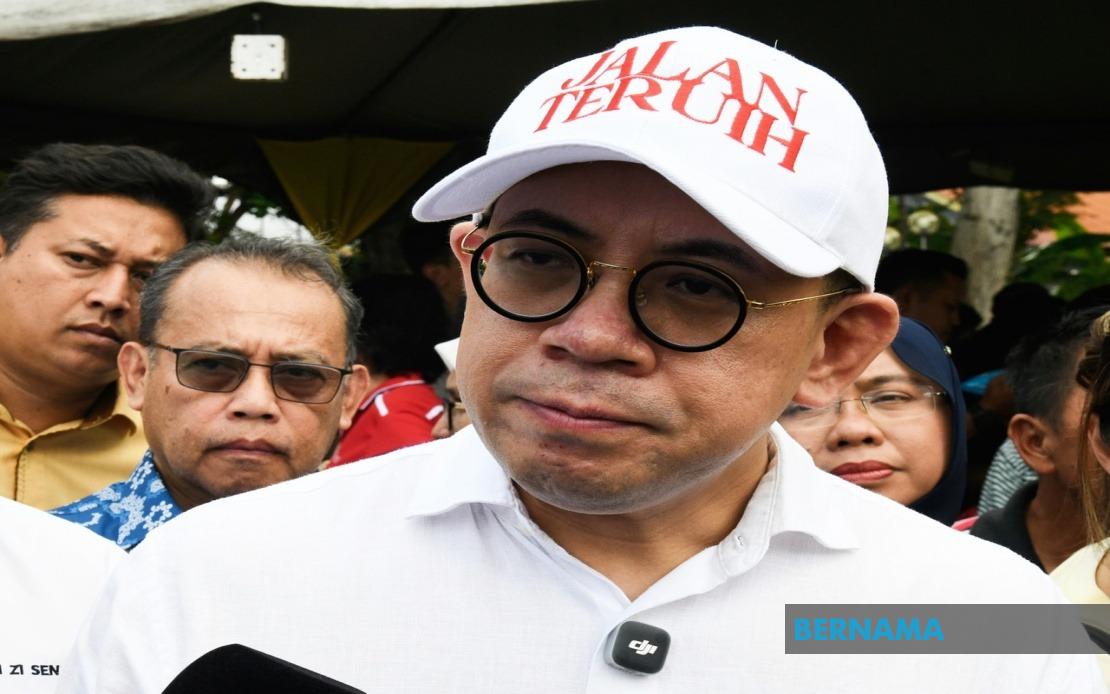
The Ministry of Entrepreneur Development and Cooperatives (KUSKOP) has embarked on an extended nationwide consultation process designed to solicit recommendations from the country's business community for inclusion in next year's federal budget submission. Minister Steven Sim Chee Keong announced the initiative during an event in Bukit Mertajam, signalling the ministry's commitment to ensuring grassroots entrepreneurs and cooperative operators have direct input into the government's fiscal planning cycle. The engagement programme, which involves representatives from small and medium enterprises, independent traders, business associations, and cooperative networks, is scheduled to run for approximately one to two months as part of the routine federal budget preparation schedule.
The timing of KUSKOP's consultation effort aligns with the broader budget cycle set out by Prime Minister Datuk Seri Anwar Ibrahim, who doubles as Finance Minister. Anwar has indicated that the government intends to commence drafting the 2027 Budget in September, with a parliamentary tabling anticipated for October. This timeline gives KUSKOP a defined window to consolidate feedback from various stakeholder groups before forwarding recommendations to the Ministry of Finance. The coordination between KUSKOP and the finance ministry reflects the growing recognition that policies affecting small business development must integrate voices from those operating in the marketplace, rather than being formulated solely through top-down government structures.
Underpinning the consultation framework is the ABCD model, an acronym encompassing four key policy pillars: Productivity Transformation, Bureaucratic Simplification, Access to Capital, and Market Accessibility. This structured approach channels stakeholder input toward clearly defined objectives rather than allowing discussions to become unfocused. The framework acknowledges that contemporary MSME challenges span multiple dimensions—business owners require not only financial resources but also streamlined regulatory processes, improved channels to reach customers, and technological support to enhance operational efficiency. By organizing consultations around these four themes, KUSKOP aims to generate targeted, actionable recommendations that address specific pain points experienced by entrepreneurs and cooperative societies across Malaysia.
The push for larger budget allocations to the MSME and cooperative sectors represents a strategic priority reflected in the ABCD framework. According to Sim, the proposals being gathered emphasize expanding financial support available to small enterprises while simultaneously reducing the operational burden they face. Reduced business costs—whether through lower licensing fees, simplified compliance requirements, or tax incentives—directly improve profit margins for operators working on thin margins. Coupled with enhanced government service delivery and industrial productivity initiatives, these measures signal an intention to create a more supportive ecosystem for enterprises outside the large corporate sphere. For Malaysian policymakers, this focus reflects awareness that MSMEs generate significant employment and contribute substantially to gross domestic product, making their competitiveness integral to broader economic health.
The engagement process itself demonstrates an ongoing commitment by KUSKOP to maintain regular dialogue with stakeholders beyond formal budget cycles. Sim noted that discussions with business representatives and cooperative leaders have been conducted consistently prior to the official 2027 Budget preparation commencing. This continuous engagement approach contrasts with periodic consultations and suggests an institutional recognition that policy development benefits from sustained relationship-building with constituents. Such dialogue provides early warning signals about emerging challenges in the entrepreneurial sector and creates opportunities for incremental policy refinement rather than sweeping changes based on limited input windows.
Parallel to the budget consultation efforts, KUSKOP simultaneously advanced its broader mission through the 2026 KUSKOP MADANI Sales programme launched at the Bukit Mertajam event. This initiative, now in its sixth iteration across Penang, merges direct consumer benefit with support for cooperative enterprises and expanded public service access. The programme enabled residents to purchase approximately 80 categories of goods at discounts ranging from 20 to 30 per cent, while 13 government agencies from federal, state, and municipal authorities set up service counters to offer direct assistance to the public. This combined approach—simultaneously addressing household cost-of-living pressures while creating sales opportunities for cooperative members—exemplifies integrated policy delivery that tackles multiple objectives through single events.
The inclusion of National Cooperative Movement of Malaysia (ANGKASA) president Datuk Seri Dr Abdul Fattah Abdullah in the Bukit Mertajam launch underscores the cooperative sector's prominence within KUSKOP's policy framework. Cooperatives represent a distinct business model with distinct stakeholder needs, often combining commercial operations with social objectives. Their presence in the budget consultation process ensures that cooperative-specific challenges—including capital formation through member savings, governance training, and market linkages—receive consideration alongside broader MSME concerns. This differentiation reflects understanding that cooperatives cannot be treated identically to conventional small businesses despite overlapping operational challenges.
For Malaysian entrepreneurs and small business operators, the budget consultation initiative offers tangible opportunity for advocacy. Industry associations and trader groups participating in the process can present empirical evidence regarding regulatory barriers, financing constraints, and market access difficulties. Responses from the government through the ABCD framework will indicate its willingness to address these issues through fiscal measures. The 2027 Budget will ultimately reveal how substantially KUSKOP's recommendations were incorporated—whether funding allocations genuinely expand for SMEs, whether bureaucratic simplification proceeds beyond rhetorical commitment, and whether market accessibility initiatives move beyond promotional events into structural market reforms.
The geographical distribution of consultation activities is particularly significant for Southeast Asian context. Malaysia comprises diverse economic zones ranging from urban commercial centers to rural agricultural regions, with varying levels of MSME concentration and cooperative penetration. By conducting nationwide engagements, KUSKOP acknowledges regional economic heterogeneity and seeks input reflecting these differences. A hawker operator in Kuala Lumpur faces different challenges than a rural cooperative processing agricultural products in Perlis. Nationwide consultation maximizes the likelihood that budget proposals will address this geographic diversity rather than privileging particular regions or sectors.
The philosophical orientation articulated by Prime Minister Anwar—that economic growth must translate into tangible improvements in citizens' living standards rather than remaining an abstract statistical indicator—provides the broader context within which KUSKOP's consultation operates. This perspective positions MSME and cooperative development not merely as sectoral economic policy but as instrumental to distributing economic gains across society. By strengthening small entrepreneurs' competitiveness and financial viability, government policies address inequality concerns while simultaneously building resilience into the broader economy. The 2027 Budget will demonstrate the extent to which this philosophy translates into concrete fiscal commitments.
As the consultation period unfolds over the coming weeks, stakeholders will calibrate their proposals to maximize alignment with the ABCD framework's stated priorities. KUSKOP's challenge will involve synthesizing potentially divergent recommendations into coherent budget proposals that the Ministry of Finance can accommodate within fiscal constraints. The quality of the 2027 Budget's entrepreneurship-focused provisions will ultimately depend on both the specificity of stakeholder input and the government's commitment to translating consultation outcomes into legislation and budgetary allocation. For Malaysia's broad MSME ecosystem, this budget cycle represents an important moment to shape the policy environment for the years ahead.

