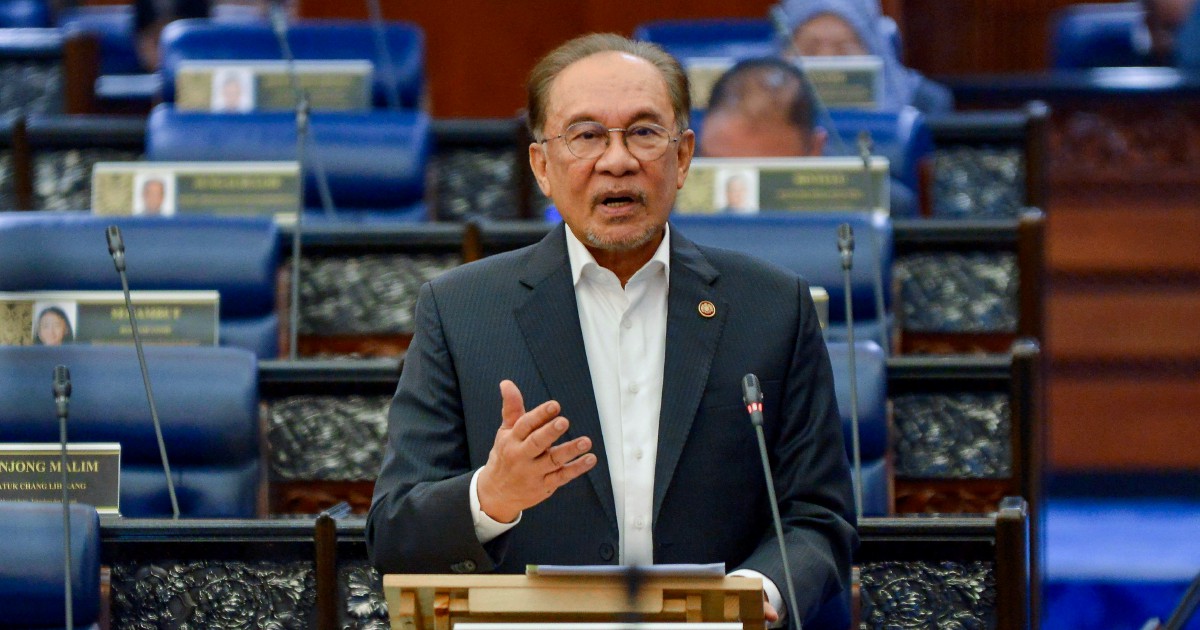
The growing disconnect between Malaysia's pension fund investment performance and its mounting liability burden has emerged as a pressing fiscal challenge, according to Prime Minister Datuk Seri Anwar Ibrahim. Retirement Fund Incorporated (KWAP), the country's primary pension fund manager, has generated RM12.9 billion in annual investment earnings—a substantial figure that nonetheless covers only approximately 29 percent of the government's total pension obligations. The remaining RM32 billion gap underscores the structural pressures facing Malaysia's social security system and raises critical questions about long-term sustainability.
KWAP, which manages retirement benefits for millions of Malaysian civil servants and government employees, operates under considerable constraints. The fund's investment returns, while respectable by regional standards, reflect the inherent limitations of a pension system that has accumulated decades of obligations without corresponding adjustments to contribution levels or benefit structures. The RM45 billion annual pension bill represents a direct claim on the federal budget, effectively transferring the funding burden from the investment portfolio to taxpayers through general revenue. This arrangement has created a situation where government finances face mounting pressure as the retiree population continues to expand.
The pension funding shortfall has significant implications for Malaysia's fiscal sustainability and budgetary flexibility. Every ringgit that KWAP fails to generate through investment returns must be sourced from government revenues that could otherwise support infrastructure, education, healthcare, or other development priorities. For a country managing multiple economic challenges including post-pandemic recovery, inflation control, and infrastructure modernisation, this represents a substantial constraint on policy options. The Anwar administration has inherited a system where pension liabilities compound annually, demanding increasingly larger budget allocations simply to maintain current benefit levels.
Regional context provides perspective on Malaysia's pension challenge. Several Southeast Asian neighbours face similar demographics-driven pressures as ageing populations claim larger shares of government spending. Thailand, Indonesia, and the Philippines all grapple with pension systems where investment returns fall short of obligations. However, Malaysia's relatively mature pension infrastructure means the structural problems have already crystallised into concrete budget pressures, unlike less-developed systems that still have time for gradual reform. The Malaysian situation illustrates how demographic trends translate into fiscal reality within 20 to 30 years of system maturation.
The composition of KWAP's investment portfolio influences both current earnings and future risk. Pension funds typically balance pursuit of higher returns through equity exposure against preservation of capital through fixed-income instruments. KWAP's RM12.9 billion return must be understood within this context—it reflects decisions about asset allocation made under various economic conditions. Market volatility, interest rate movements, and currency fluctuations all affect year-to-year performance. The fund's long-term average returns may exceed those of individual years, but this variability compounds planning difficulties for government budgets that depend on pension fund contributions.
Political and economic dimensions of the pension problem remain deeply contested. Some policymakers argue for raising civil service contribution rates, spreading costs more widely through the working population. Others emphasise that modest government salaries would become less competitive if employee pension contributions increased substantially. Benefit adjustments present equally difficult choices—reducing pension levels for current or future retirees risks political backlash and affects living standards for vulnerable populations. Yet maintaining current trajectory guarantees that pension spending will consume an ever-larger share of the federal budget, squeezing other government functions.
The RM45 billion annual pension obligation extends beyond immediate budget concerns to reflect systemic questions about Malaysian governance and public sector sustainability. This figure encompasses pensions for military personnel, police officers, healthcare workers, teachers, and civil administrators—workers whose retirement security represents a social contract underpinning public service stability. Unlike private sector pensions, which can be adjusted through market mechanisms and business decisions, government pensions reflect political commitments that prove difficult to modify once established. Successive administrations have essentially postponed hard choices, leaving current policymakers to confront accumulating obligations.
International experience suggests several policy pathways, though each involves difficult tradeoffs. Some countries have gradually extended retirement ages, improving the ratio of contributing workers to pensioners. Others have implemented means-testing for benefits, concentrating public resources on lower-income retirees while reducing payments to wealthier pensioners. Some have shifted portions of public sector employees into hybrid systems combining defined-benefit pensions with defined-contribution components. Malaysia has explored some of these options incrementally, but comprehensive reform remains politically fraught.
The Anwar administration's acknowledgment of the pension funding gap signals recognition that the situation demands policy attention. Strategic options include reforming KWAP's investment approach to pursue higher returns through adjusted asset allocation, restructuring contribution schemes to spread costs more equitably, adjusting benefit formulas for future recipients, or some combination thereof. Each approach involves real consequences for government finances, public employee compensation, or retiree living standards. The RM32 billion annual gap represents not merely a statistical problem but a genuine resource constraint that will shape Malaysia's fiscal trajectory for decades.
Moving forward, policymakers must balance immediate fiscal pressures against longer-term sustainability. The current system, where a substantial government subsidy is required annually to cover pension obligations, reflects choices made decades earlier that have become institutionalised. Reversing or significantly modifying these commitments proves politically difficult and economically disruptive. However, allowing the pension gap to expand unchecked guarantees that future governments will face even starker choices between supporting retirees and investing in economic development. The challenge confronting Malaysia resembles that faced by advanced economies that have already experienced demographic transitions—containing long-term costs while maintaining social cohesion and economic dynamism.

