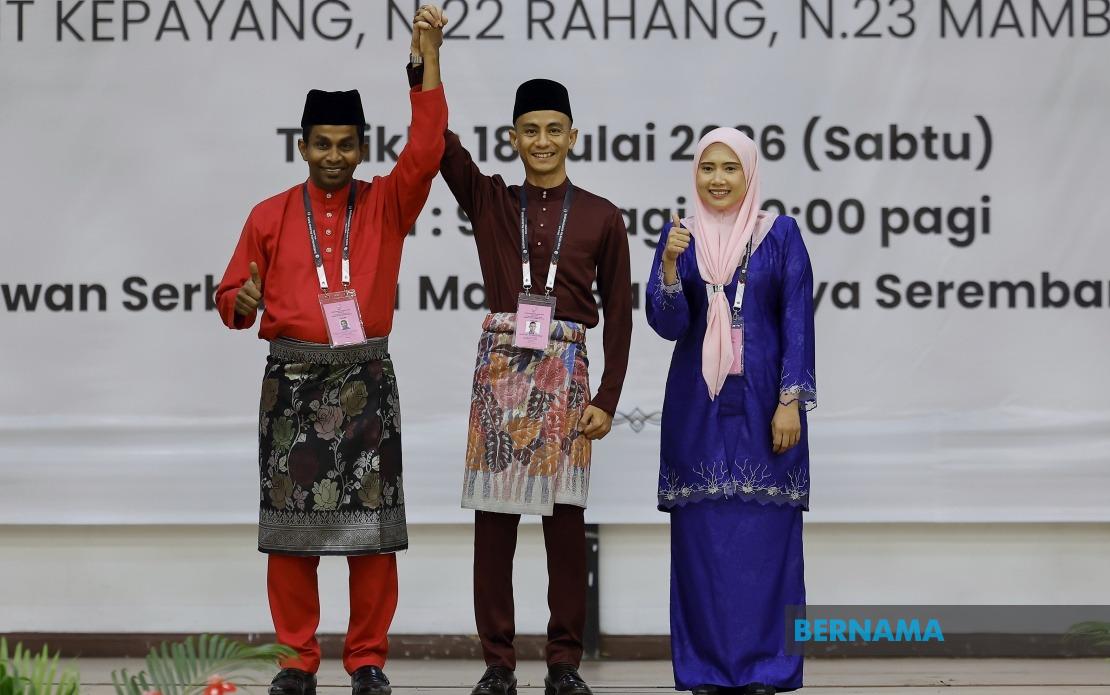
In his electoral debut, PKR's Datuk Ahmad Faez Abdul Razak is stepping into a keenly contested three-way race for the Labu state seat in the 16th Negeri Sembilan state election. The property developer expressed a mixture of anticipation and nervousness about his candidacy, yet projected confidence built on nearly three years of groundwork within the constituency. Speaking after his nomination was filed in Seremban, Ahmad Faez indicated that his tenure engaging with residents had revealed growing public appetite for change, positioning him as a formidable challenger in what remains a tightly fought battle.
The Labu seat has become emblematic of rapid transformation reshaping parts of Negeri Sembilan. Located within the sprawling Malaysia Vision Valley development corridor—a vast industrial and residential zone spanning between 11,000 and 12,000 hectares—the constituency faces mounting pressure to accommodate economic expansion without alienating its established communities. Ahmad Faez framed his candidacy around navigating this precise tension: harnessing growth potential while preserving the wellbeing of ordinary residents whose livelihoods and social fabric could be disrupted by unchecked development. This pitch directly addresses anxieties many constituencies across Malaysia harbour as urbanisation accelerates, particularly in states undergoing structural economic shifts.
Drawing on his background in property development, Ahmad Faez positioned his professional expertise as a distinct asset. Unlike candidates from pure political or civil service backgrounds, he contended he understands the mechanics of balancing commercial imperatives with community safeguards. His manifesto prioritises establishing a dedicated community centre and recreational facility for youths, addressing what he identified as a conspicuous gap in local infrastructure. Such targeted proposals resonate in constituencies where younger demographics feel marginalised by development agendas that prioritise industrial zones and residential complexes over social amenities. The absence of youth-focused spaces in Labu suggests an opportunity to differentiate his candidacy through concrete, implementable commitments rather than broader pledges.
The Malaysia Vision Valley framework represents both opportunity and challenge for Labu's future trajectory. Ahmad Faez acknowledged that the project promises considerable employment generation for residents, yet underscored that such benefits remain contingent on careful stewardship. Without deliberate intervention, rapid industrialisation can bypass local workers through skills mismatches, inflate living costs, or concentrate wealth among external investors. His framing suggests recognition that economic growth divorced from inclusive local participation breeds resentment—a lesson evident across Malaysian constituencies where development has benefited outsiders more than settled communities. The implicit message to voters is that his mandate would centre protecting their interests against predatory or inequitable development models.
The political landscape in Labu has shifted markedly since 2023. Incumbent Mohamad Hanifah Abu Baker of Bersatu secured victory with a modest 1,640-vote majority, edging out the previous PH-PKR candidate Datuk Ismail Ahmad. That slender winning margin, whilst decisive, suggests the electorate remains fluid and responsive to fresh approaches. The constituency's 32,884 registered voters represent a concentrated pool where on-the-ground engagement and credible local connection carry outsized influence. Ahmad Faez's extended presence in Labu over nearly three years may have cultivated familiarity and trust that candidates parachuting in closer to election day cannot replicate. In Malaysian politics, such grassroots investment often translates into organisational advantage and voter receptivity.
Election Commission scheduling has compressed the campaign cycle, with early voting on July 28 and polling day on August 1. This abbreviated timeframe rewards candidates with established networks and brand recognition. Ahmad Faez's prior involvement in Labu's civic and development discourse positions him advantageously compared to less visible challengers. However, his electoral inexperience also presents vulnerability; veteran politicians typically navigate tight timelines more deftly, and his nervous admission about first-time candidacy could invite questioning about readiness for assembly-level responsibilities. Opponents may exploit this perceived lack of electoral experience to raise competence concerns among undecided voters.
The three-cornered contest introduces complexity absent from straight two-way fights. Mohamad Hanifah's Bersatu affiliation reflects the coalition's repositioning after splitting from Pakatan Harapan, whilst Barisan Nasional candidate Siti Nur Umaira Hasim represents the traditional establishment coalition. Ahmad Faez must navigate a fractured opposition landscape where anti-PH and anti-BN sentiment may not concentrate behind a single challenger. The constellation of candidates could see vote-splitting that benefits Mohamad Hanifah if PH and BN voters divide their opposition, or it could create openings if either incumbent party faces internal erosion. Malaysian state elections increasingly demonstrate volatility precisely because three-way contests defy traditional swing calculations.
Ahmad Faez emphasised that initiatives launched by the Negeri Sembilan state government, aligned with federal policies, had strengthened public confidence in the current administration. This messaging attempts to tie local governance to broader policy coherence, suggesting that voting PH would strengthen the continuity and effectiveness of existing developmental frameworks. For constituencies experiencing rapid change, such messaging has potency if the electorate perceives government competence. Conversely, if residents feel neglected by state or federal administration despite articulated policies, this framing can backfire by associating Ahmad Faez with perceived inadequacies.
The stakes extend beyond Labu's parochial interests. Negeri Sembilan is among Malaysia's smaller states by population, yet its electoral composition influences overall coalition mathematics in state-level politics. Should PH recapture Labu and gain ground elsewhere, it could reshape the state assembly's balance. Conversely, if BN and Bersatu consolidate strength, it signals declining PH momentum in state contests—a pattern with implications for federal political calculations. Labu thus functions as both a specific constituency contest and a microcosm of broader coalition dynamics playing out across Malaysian electoral politics.
Ahmad Faez's electoral project ultimately hinges on whether voters prioritise his professional credentials and local tenure over incumbent advantage or rival party loyalty. His framing around development stewardship and community facilities offers a substantive policy dimension that contrasts with purely oppositional campaigns. Yet converting months of constituency engagement into electoral victory requires mobilising supporters effectively during an accelerated campaign. The mixed emotions he acknowledged reflect the genuine uncertainty inherent in debut candidacies, particularly in constituencies where margins prove narrow and loyalties fluid. How Labu voters respond will reveal whether such development-focused, locally-rooted campaigns can displace incumbent administrations in competitive Malaysian state contests.

