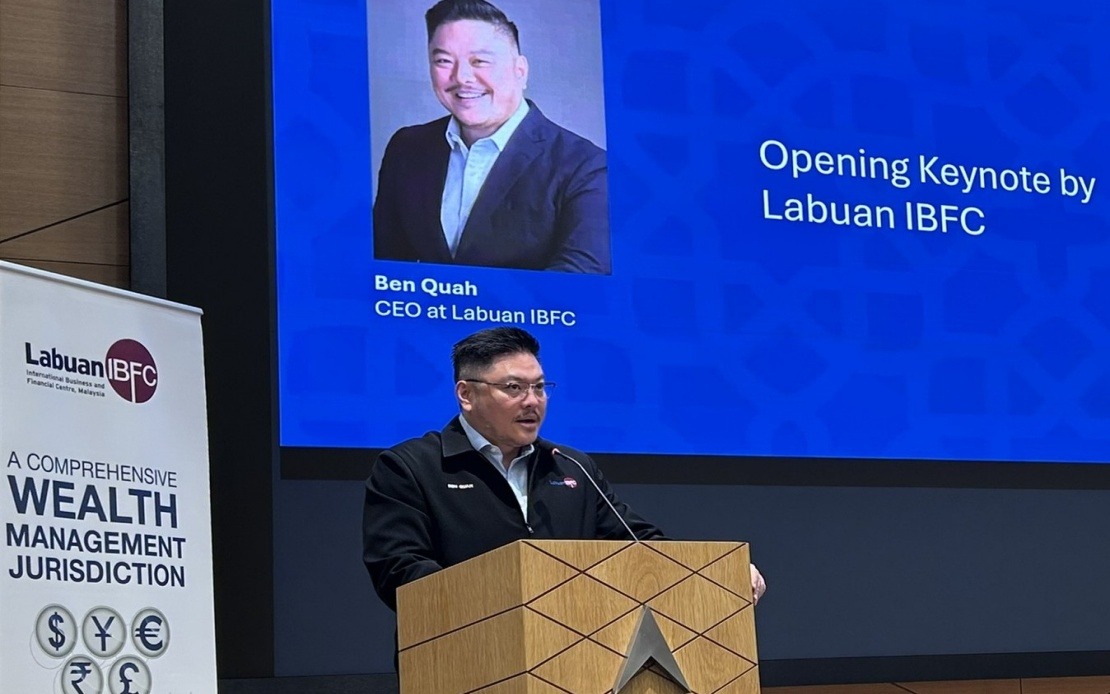
Three major industry organisations have joined forces to elevate standards in Islamic wealth planning across Malaysia, recognising the growing complexity of managing and transferring assets in an increasingly globalised financial landscape. Labuan IBFC Incorporated, the marketing arm for Labuan International Business and Financial Centre, convened the 'Islamic Wealth & Legacy Forum 2026 - Beyond Faraid: Islamic Wealth Governance, Labuan Structures and Legacy Continuity' in Kuala Lumpur this month, bringing together estate planning professionals, Shariah advisers, trust specialists, wealth managers and legal practitioners to explore contemporary approaches to preserving and transferring wealth across generations.
The collaborative initiative, organised alongside the Association of Shariah Advisors in Islamic Finance Malaysia (ASAS) and the Society of Trust and Estate Practitioners (STEP) Malaysia, addresses a critical gap in how Malaysian families structure their Islamic wealth planning. While traditional faraid—the Islamic law of inheritance—provides foundational principles, modern wealth management often requires layered structures that extend beyond these traditional frameworks while maintaining strict Shariah compliance. The forum framework acknowledges this reality by examining not just how to administer estates within Islamic law, but how to complement those principles with contemporary financial instruments and international best practices.
Ben Quah, chief executive officer of Labuan IBFC Inc, positioned the forum within a broader strategic context during his keynote address. He emphasised that as families accumulate assets across multiple jurisdictions and asset classes, they require flexible solutions that simultaneously offer asset protection, tax efficiency, and long-term continuity. Labuan IBFC Inc, as an international financial centre specialising in Islamic finance, can facilitate cross-border structures that complement Malaysia's growing prominence as a global Islamic wealth management hub. The centre's regulatory framework and expertise in structuring Islamic financial products align with Malaysia's broader ambitions to become a preferred destination for global Islamic private wealth management.
Farah Deba, chair of STEP Malaysia, articulated the unique value proposition of the three-organisation partnership in her remarks. Each entity brings distinct but complementary capabilities to the table: STEP practitioners serve as ongoing advisers to families navigating multi-generational wealth decisions; Labuan IBFC provides technical expertise in cross-border structuring and international family office solutions; while ASAS ensures that all arrangements remain grounded in rigorous Shariah interpretation and governance. This complementarity reflects a mature understanding that effective Islamic wealth planning requires expertise across multiple professional domains working in concert rather than isolation.
The forum's thematic focus on moving beyond faraid represents an important conceptual shift in Malaysian wealth planning discourse. The phrase 'beyond faraid' does not signify departure from Islamic principles, but rather an acknowledgment that faraid constitutes only one layer of a comprehensive estate plan. For many high-net-worth Malaysian families with diverse asset holdings—real estate in multiple countries, business interests, investment portfolios, and intellectual property—relying solely on faraid principles may leave significant planning gaps. The forum examined how wills, trusts, gifts, life insurance products (takaful), and other structures can work alongside faraid to achieve clients' intentions more fully.
Practical challenges in Muslim estate administration formed the morning session's focus, recognising that translating succession intentions into effective legal and financial arrangements presents genuine technical difficulties. Estate administrators often confront scenarios where faraid alone produces outcomes misaligned with the deceased's wishes or family circumstances, or where assets held in different jurisdictions fall under conflicting legal systems. The forum brought together experienced practitioners to discuss real-world solutions: how proper documentation can ensure arrangements comply with both Shariah requirements and relevant civil jurisdictions; how governance structures can maintain continuity of wealth management across family transitions; and how professional administration can prevent disputes and costly litigation.
The afternoon sessions addressed implementation mechanics with specificity. Liquidity planning emerged as a key consideration—ensuring that estates have sufficient cash or liquid assets to cover liabilities, taxes, and distributions without forcing the sale of core assets at disadvantageous times. Takaful products, as Shariah-compliant insurance alternatives, can bridge liquidity gaps while providing protection against specific risks. Trusts, properly structured within Islamic frameworks, can hold and manage assets while ensuring distributions follow Shariah principles. The panellists outlined how these various instruments could be combined to support wealth preservation objectives, manage business succession risks, and facilitate intergenerational wealth transfer while minimising taxation and administrative friction.
Shariah governance emerged throughout as a unifying theme. Yusaini Yusof, exco member of ASAS, articulated in closing remarks that robust Shariah governance ensures estates are structured correctly, implemented consistently, and ultimately serve Maqasid Shariah—the higher objectives of Islamic law relating to protection of religion, life, intellect, family, and property. This framing elevates Shariah governance beyond procedural compliance toward purposeful alignment with Islamic values. For practitioners, this implies that wealth plans should not merely tick technical Shariah compliance boxes but should actively support the client's broader religious and family values objectives.
The forum builds upon a memorandum of understanding between Labuan IBFC Inc and ASAS established to deepen collaboration on Islamic wealth planning matters. This formal partnership signals sustained institutional commitment rather than ad-hoc cooperation. For the broader Malaysian financial services industry, the convergence of these three bodies suggests an emerging ecosystem approach to Islamic wealth management—one where regulators, professional associations, and international financial centres work synergistically to develop standards, training, and best practices.
For Malaysian families with significant assets, this institutional development carries practical implications. The rising professionalism and coordination among Islamic wealth planning providers reduces risks that clients receive fragmented advice or arrangements that fail under stress. Families increasingly have access to practitioners trained in both traditional Islamic jurisprudence and contemporary financial structures. For wealth managers and advisers, the forum represents an opportunity to enhance skills and stay current with evolving best practices in a rapidly professionalising field.
The timing of the forum also reflects Malaysia's strategic positioning within regional Islamic finance. As the region's preeminent Islamic financial centre, Malaysia competes with other jurisdictions to attract high-net-worth individuals seeking Shariah-compliant wealth management solutions. Initiatives strengthening the professional ecosystem and demonstrating sophisticated expertise in complex wealth planning matters enhance Malaysia's competitive advantage. The forum's emphasis on Labuan structures and cross-border solutions positions Malaysia as offering not just Islamic financial products, but integrated solutions for families managing global affairs.
Looking forward, ASAS's commitment to continue supporting the Islamic wealth planning journey through greater engagement and elevated professionalism across the Shariah fraternity suggests sustained momentum in this direction. As Malaysian family wealth continues accumulating—driven by successful business creation, professional careers, and real estate appreciation—demand for sophisticated, trustworthy guidance on wealth transfer will intensify. The institutional frameworks, professional standards, and collaborative relationships being established through forums such as this position Malaysia's financial services industry to meet that demand effectively.

