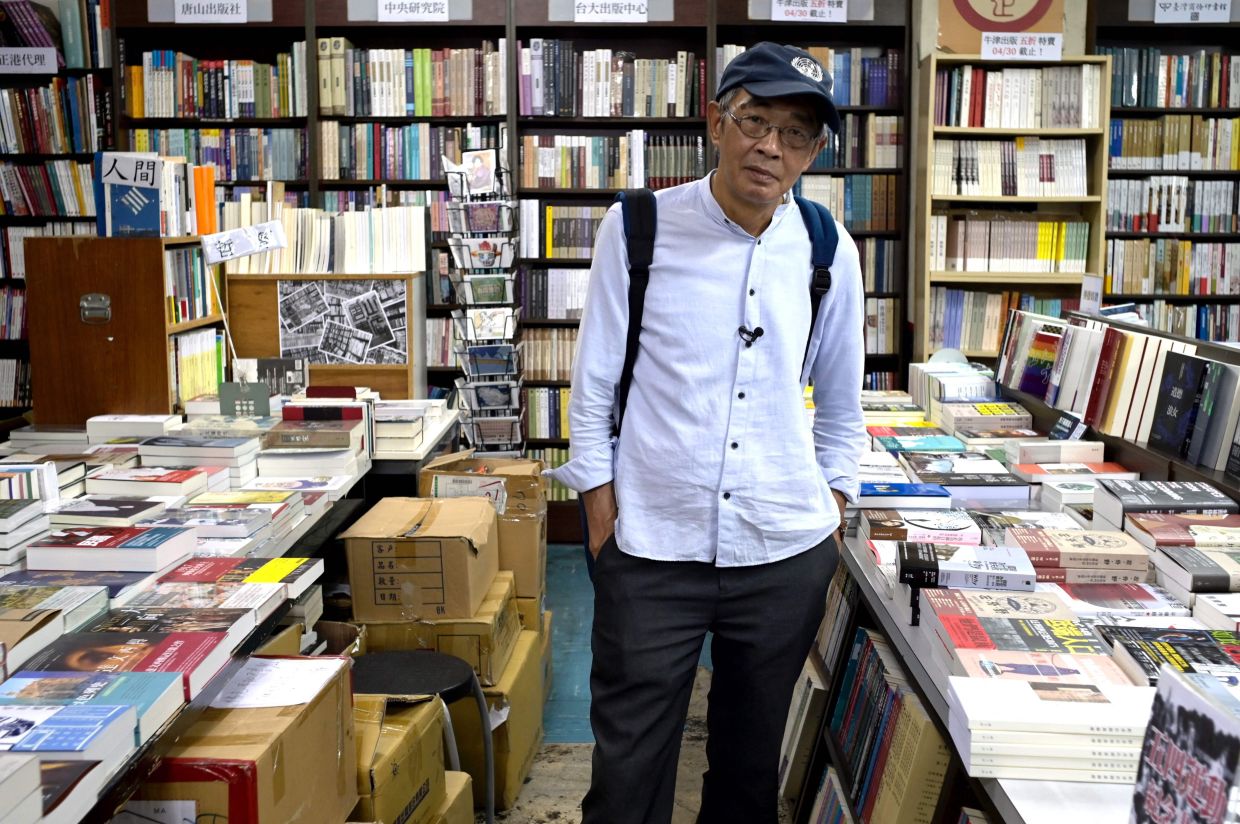
Lam Wing-kee, the Hong Kong bookseller whose mysterious detention in 2015 transformed him into a symbol of Beijing's tightening grip over the city, has died in Taiwan at the age of 70. The Central News Agency of Taiwan reported his death on Thursday evening following a cancer relapse that had hospitalised him at MacKay Memorial Hospital in Taipei. He fell into a coma the day before his passing, marking the end of a life defined by his defiant stand against mainland China's encroachment on Hong Kong's freedoms.
Lam's death resonates far beyond the publishing world, representing a symbolic loss for those who watched his case unfold as a defining moment in Hong Kong's struggle for freedom of expression. As the manager of Causeway Bay Books, a Hong Kong bookstore that specialised in publications unavailable on the mainland—including books purporting to expose secrets about Chinese leaders—Lam had become an unlikely custodian of dissent. His bookstore served as a gateway to information that Beijing deemed subversive, a quiet but unmistakable challenge to the Communist Party's information monopoly.
Lam's ordeal began in late 2015 when he was among five people affiliated with Causeway Bay Books who vanished without explanation. The circumstances of their disappearances alarmed Hong Kong and the international community, as the disappearances raised urgent questions about whether mainland authorities were operating with impunity within Hong Kong's borders. Unlike Gui Minhai, the publisher and part-owner of the bookstore who disappeared from Thailand and was later sentenced to 10 years in prison on charges of illegally providing intelligence overseas, Lam eventually resurfaced to tell his harrowing account.
In an act of remarkable courage in 2016, Lam held a packed press conference in Hong Kong to recount his detention. He described being seized by Chinese authorities in October 2015 after crossing the border into Shenzhen, then being blindfolded for a gruelling 13-hour train journey to Ningbo in eastern China. There he was confined to a room under constant surveillance by rotating teams of guards for five months—a period designed to break his spirit and extract cooperation. He was subsequently forced to appear on Chinese state television to confess to crimes he did not commit, a humiliating performance orchestrated to legitimise his detention after the fact.
Lam's testimony contradicted official Chinese accounts and exposed the mechanisms of extrajudicial control that Beijing employed against perceived enemies of the state. His willingness to speak publicly about his experience, despite the obvious risks, demonstrated a form of moral courage that resonated with those fighting to preserve Hong Kong's autonomy. He became a living embodiment of the principle that some individuals would endure torture and imprisonment rather than allow their persecution to pass unwitnessed or unchallenged.
The years following his release saw Lam navigate an increasingly hostile environment in Hong Kong. Fearing further legal troubles amid the deteriorating situation in the territory, he relocated to Taipei in 2019 and reopened Causeway Bay Books there in 2020. The move itself was significant—it demonstrated both the vulnerability of those who had challenged Beijing and the comparative haven that Taiwan represented for Hong Kong's dissident community. Yet even in Taiwan, exile brought its own hardships, and Lam's cancer diagnosis last year marked the beginning of a final struggle against illness.
Taiwan's President Lai Ching-te acknowledged Lam's passing with a Facebook tribute that elevated him beyond a mere bookstore operator to a figure of historical significance. Lai wrote that Lam had demonstrated to the world "how precious freedom is" through his "ordinary yet steadfast" testimony, framing his life as a contribution to the collective understanding of what democracy requires. The presidential statement underscored how Lam's personal suffering had acquired symbolic weight within Taiwan's own ongoing debate about safeguarding democratic values against external pressure.
The broader context of Lam's death illuminates the transformation of Hong Kong over the past decade. The territory has undergone a dramatic shift from a relatively open society to one where Beijing's security apparatus operates with minimal institutional constraint. Following the massive pro-democracy protests of 2019, authorities have systematically dismantled avenues for dissent. A 2024 national security law has provided the legal framework for intensified surveillance and control, with Hong Kong police arresting two individuals in June for operating a bookstore suspected of selling publications deemed seditious and accepting funding from foreign political organisations.
Lam's trajectory—from ordinary bookstore manager to political prisoner to exile—encapsulates the precarious position of those who resist authoritarian pressure in Hong Kong and across the region. His decision to bear witness publicly to his detention, despite the personal cost, created a historical record that authorities cannot erase. The placement of a white rose outside Causeway Bay Books in Taipei by an unnamed Hong Kong visitor suggests that his story continues to inspire acts of quiet remembrance among those who value freedom of expression.
For readers and policymakers across Southeast Asia, Lam's life and death offer cautionary lessons about the fragility of institutional protections for free speech when political will to defend them weakens. His case demonstrates that individual acts of defiance, while meaningful, cannot substitute for systemic safeguards. Taiwan's treatment of Lam as a valued resident and symbol of freedom stands in contrast to the fate that befell him in Hong Kong, raising questions about how the region's democracies can more robustly protect those fleeing authoritarian persecution.
The loss of Lam Wing-kee marks the passing of a man who refused to let his suffering be weaponised for propaganda purposes. Instead, he transformed his ordeal into testimony—a deliberate act of witnessing that documented the reality of Beijing's methods. In doing so, he provided an invaluable service to historical memory and to those struggling to preserve spaces for dissent in an increasingly constrained landscape. His death represents not merely the end of an individual life, but a reminder of the human costs exacted by the erosion of freedoms that many in the region had taken for granted.

