The economic partnership between Laos and Vietnam is gathering momentum, with bilateral trade reaching US$1.47 billion during the opening seven months of 2026. This substantial figure reflects the two countries' intensifying commercial relationship and their shared commitment to regional economic development through strategic connectivity projects. The achievement was underscored at the mid-year review of the Laos-Vietnam and Vietnam-Laos Joint Cooperation Committees held in Danang City on August 27, where senior officials from both nations evaluated progress and charted the course for the remainder of the year.
The composition of this trade reveals Laos's significant export orientation toward its neighbour, with goods shipments valued at approximately US$1 billion accounting for roughly two-thirds of the total exchange. Vietnamese imports into Laos reached US$420 million during the same period, indicating an asymmetrical but complementary trade dynamic that has characterised the relationship for years. This pattern reflects Laos's reliance on Vietnamese markets for agricultural and mineral products, while Vietnamese manufacturing and processed goods find ready consumers across the border.
The bilateral meeting, co-chaired by Laos's Deputy Prime Minister and Minister of Finance Santiphab Phomvihane and Vietnam's Minister of Finance Ngo Van Tuan, revealed that development targets embedded in the 2026 cooperation plan were largely being met. Officials expressed satisfaction with implementation progress during the initial eight months, though both delegations acknowledged lingering challenges requiring continued attention and collaborative problem-solving to ensure promised initiatives materialise on schedule.
At the heart of this economic expansion lies an ambitious infrastructure agenda designed to physically bind the two nations and facilitate the seamless movement of goods, people, and energy across their shared border. The Vientiane-Hanoi Expressway represents perhaps the most transformative project, promising to dramatically slash transit times and transportation costs between the capitals. Similarly, the planned Vientiane-Vung Ang Railway would create an additional arterial link connecting Laos's landlocked interior to Vietnam's coastal outlets, enabling more efficient logistics and reducing dependence on existing routes.
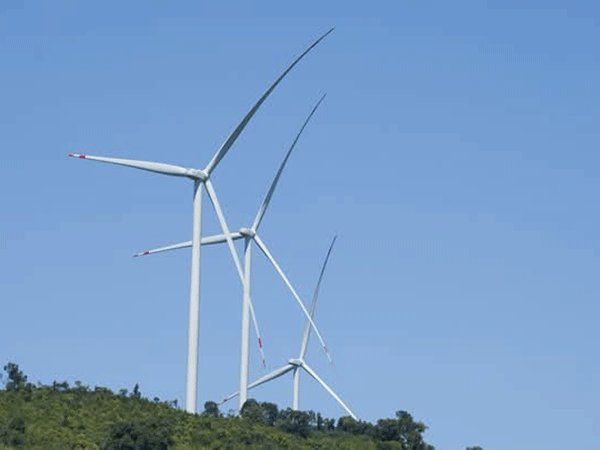
Beyond transport infrastructure, the two countries are advancing complementary initiatives in energy sector cooperation. Research into a proposed 500-kilowatt transmission line linking the two nations is progressing, reflecting Laos's potential as a hydroelectric power exporter and Vietnam's energy security requirements. Cross-border electricity trading arrangements are also being developed, positioning Laos as a crucial component of Southeast Asia's emerging regional energy grid. This dimension of cooperation carries significance for broader ASEAN energy integration strategies and climate commitments.
The infrastructure blueprint extends to logistics facilities and pipeline infrastructure, with both sides committed to developing warehouse capacity and oil transportation networks to support increased commercial volumes. These projects address practical bottlenecks that currently constrain trade growth and investment flows. Officials specifically prioritised creating an investment environment attractive to Vietnamese enterprises seeking to establish or expand operations in Laos, recognising that foreign direct investment and technology transfer constitute essential complements to trade growth.
For Malaysia and other Southeast Asian economies, this Laos-Vietnam integration trajectory carries important implications. The strengthening of the Indochinese peninsula's internal connectivity contributes to a multipolar regional architecture where subregional economic clusters develop alongside broader ASEAN frameworks. As Laos and Vietnam deepen their ties through transport corridors and energy linkages, the competitive dynamics affecting Malaysian trade and investment positions in the region may shift, particularly in sectors such as logistics, manufacturing, and renewable energy. Malaysian companies operating in Indochina must monitor these developments closely to identify emerging opportunities and competitive pressures.
The partnership extends beyond commercial exchanges into development cooperation. Vietnam has been implementing several capacity-building projects in Laos, including the Xaysomboun Provincial Agricultural Technical Centre, the Savannakhet Provincial Technical and Vocational School, and expansion initiatives at Vangvieng district hospital and the Laos-Vietnam Friendship University. These initiatives demonstrate Vietnam's investment in human capital development across its smaller neighbour, strengthening institutional ties and creating networks of trained professionals whose careers intertwine the two societies.
Looking forward, the two nations have committed themselves to implementing a Laos-Vietnam Cooperation Plan for 2026-2030 that will formalise their development partnership across multiple domains. Officials pledged to translate high-level intergovernmental agreements into detailed work programmes with clear accountability mechanisms and timelines. Political and foreign affairs cooperation remains foundational, with both sides recognising that stable diplomatic relations and aligned international positioning create the enabling environment for economic initiatives to flourish.
The prioritisation of major investment projects by Vietnamese enterprises in Laos signals Beijing's and Hanoi's wider strategic interest in consolidating influence within the Indochinese subregion. As China's Belt and Road Initiative reshapes connectivity across Asia, Vietnam and Laos are leveraging bilateral mechanisms to ensure their partnership reflects shared interests rather than external pressures. The emphasis on Vietnamese investment in Laos, coupled with accelerated infrastructure development and expanded bilateral trade, positions the relationship as increasingly central to Indochina's economic future.
For Southeast Asian observers, this trajectory underscores the region's emerging multipolar character. While ASEAN-wide initiatives such as the ASEAN Regional Forum and East Asia Summit remain important, bilateral and subregional arrangements between individual member states are generating significant economic dynamism. The Laos-Vietnam partnership demonstrates how complementary economies with geographic proximity and political alignment can forge deep integration through sustained infrastructural investment and institutional cooperation, creating models potentially applicable elsewhere in the region.

