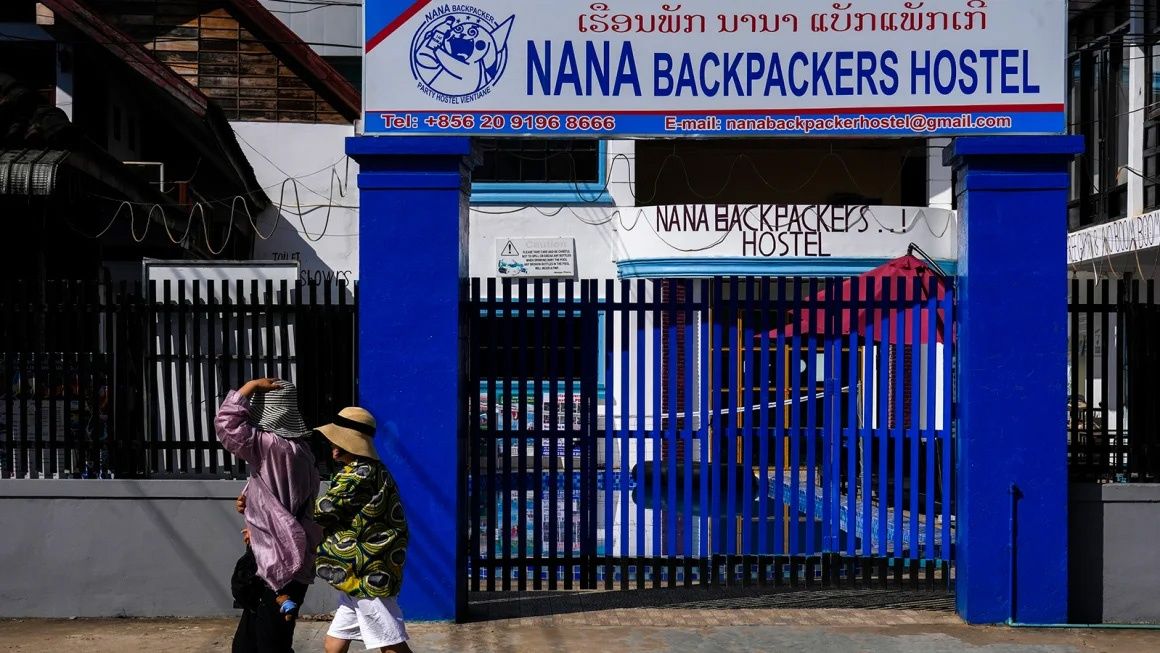
A distillery owner in Laos faces charges of selling harmful food and operating an illegal business following the deaths of six foreign tourists who consumed poisoned alcohol at a backpacker hostel in Vang Vieng last November. The charges, announced by Lao authorities on Friday, carry maximum penalties of four years imprisonment and a fine if the accused is convicted. However, the decision has provoked international dismay over what many regard as grossly insufficient accountability for a tragedy that claimed the lives of young people from Denmark, Australia, Britain, and the United States.
Two Danish women, Anne-Sofie Orkild Coyman, 20, and Freja Vennervald Sorensen, 21, died alongside Australian teenagers Bianca Jones and Holly Morton-Bowles, both 19, British lawyer Simone White, 28, and American James Louis Hutson, 57. The victims had consumed what authorities believe was methanol-contaminated vodka at the Nana Backpacker Hostel, where they were offered complimentary shots before heading to other venues. When the Australian teens failed to check out as planned, they were discovered severely ill and subsequently airlifted to Thai hospitals, where they succumbed to the poisoning.
Denmark's foreign ministry, citing Lao authorities, noted that the case will formally remain open for fifteen years, leaving the possibility that prosecutors could pursue more serious charges such as negligent homicide if sufficient evidence emerges. This caveat provided little consolation to grieving families who view the current charges as a symbolic minimisation of their loss. Danish Foreign Minister Lars Løkke Rasmussen expressed profound disappointment that the indictment failed to reflect the gravity and scope of the tragedy, acknowledging the evidentiary challenges while simultaneously questioning how a prosecution could proceed on such minor grounds when six people lay dead from poisoned alcohol.
Australia's response has been particularly forceful. Prime Minister Anthony Albanese and Foreign Minister Penny Wong dispatched a senior envoy to Vientiane to formally object to the charges and demand a more thorough investigation. Wong stated she was "deeply frustrated and bitterly disappointed" that authorities were not pursuing the most serious charges available under Lao law. Australian officials summoned Laos' ambassador to Canberra to convey the government's position. The Australian families held a press conference on Friday morning before the official announcement, anticipating the inadequate charges and expressing their anguish publicly.
Bianca Jones' mother, Michelle, captured the raw emotion underlying the families' response. "It's like their lives didn't even matter," she said, describing how the teenagers were simply engaging in a normal rite of passage of young backpackers seeking adventure. Shaun Bowles, father of Holly Morton-Bowles, characterised the legal proceedings as "mind-boggling," questioning whether potential visitors would feel safe travelling to a destination where authorities appeared to place minimal value on tourist safety and seemed willing to obscure rather than investigate serious crimes.
A particularly troubling detail emerged regarding Freja Vennervald Sorensen's case. Her parents revealed that no autopsy was performed on their daughter, and the death certificate attributed her death to cardiac arrest—a natural cause—rather than methanol poisoning. They told Danish public broadcaster DR that they have received minimal information since her death and expressed shock that methanol contamination could occur despite their daughter's careful precautions throughout her travels. The family has now resolved to raise awareness about methanol poisoning risks facing tourists in Southeast Asia.
Methanol contamination represents a persistent public health crisis extending far beyond Laos and tourist contexts. Doctors Without Borders data indicates that Indonesia, India, and Russia report the highest incidence of suspected methanol poisoning cases globally. The chemical is sometimes deliberately added to cheap spirits as an economical substitute for ethanol, though poisoning can also result from the byproducts of poorly distilled home-brew liquor inadvertently entering commercial supply chains. In impoverished regions where genuine alcohol remains expensive, methanol poisoning claims a steady toll among local populations, often receiving minimal official attention or investigation.
Vang Vieng's particular appeal to international backpackers—offering inexpensive accommodation, adventure sports, and a reputation for permissive nightlife—creates an environment where both legitimate and illicit alcohol flows freely. The hostel's practice of offering complimentary shots to guests reflects common marketing tactics in Southeast Asia's competitive budget tourism sector, yet the source and composition of such beverages often remains unverified. The tragedy underscores how casual tourism economics can interact dangerously with weak regulatory oversight in countries with limited resources for food and beverage safety enforcement.
Laos, as a landlocked communist one-party state, maintains strict information control and limited transparency in its legal system. The government granted local media and concerned embassies access to announce the charges but denied international press coverage, preventing independent verification of evidence presented or procedural details. This opacity has deepened international frustration, as families and governments cannot independently assess whether prosecutors have adequately investigated the distillery owner's actions or whether other culpable parties remain uncharted. Britain, represented through embassy vehicles at the announcement, has similarly signalled concern, though formal statements from the Morrison family remain unavailable.
The minimal charges filed against the distillery owner must be understood within Laos' broader institutional context. The country ranks among Southeast Asia's poorest nations, with limited judicial resources and little international pressure for stringent enforcement in cases involving foreign nationals. The decision to prosecute on minor charges rather than pursue negligent homicide or more serious offences may reflect either insufficient investigative capacity or deliberate choices to avoid casting Laos' tourism sector in an unfavourable light. Such calculations prioritise economic interests over justice, precisely the appearance that families and allied governments now contest.
Looking forward, Denmark, Australia, Britain, and the United States are coordinating with affected families to determine next steps. These may include diplomatic pressure, requests for reinvestigation, or mechanisms for ensuring accountability beyond Laos' borders. The case has exposed vulnerabilities in international tourism safety standards and the limited recourse available when preventable tragedies occur in developing destinations with weak institutional accountability. For Malaysian and regional readers, the Vang Vieng incident serves as a sobering reminder that budget travel, whilst economical and culturally enriching, carries genuine risks in jurisdictions where health and safety oversight cannot be assumed equivalent to home-country standards.

